Five Years at the Bottom: How Bangladesh Became the World’s Most Corrupt Country
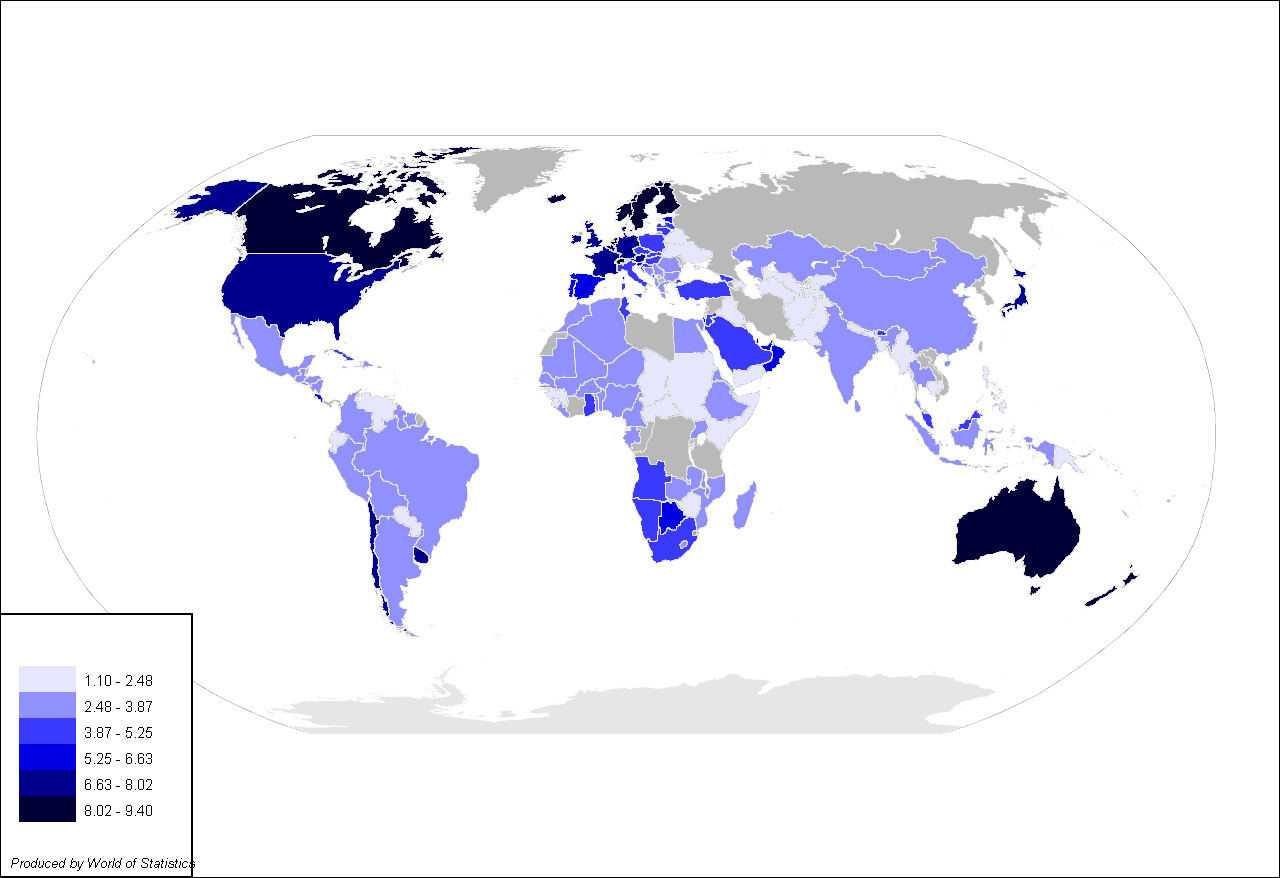
In October 2001, Transparency International published its annual Corruption Perceptions Index. Bangladesh sat at the very bottom — dead last out of 91 countries surveyed, with a score of 1.2 out of 10.
Nobody in Dhaka was surprised. But nobody expected what came next.
For five consecutive years — 2001, 2002, 2003, 2004, and 2005 — Bangladesh held the same position. Rock bottom. The world’s most corrupt nation. A title that no country had ever held for that long.
The man who presided over this unprecedented stretch was Tarique Rahman. Operating from Hawa Bhaban, his parallel government office in Gulshan, he turned Bangladesh into what US Ambassador James Moriarty would later call “a symbol of kleptocratic government.”
The Numbers
Transparency International’s Corruption Perceptions Index ranked countries on a scale of 0 to 10, where 0 meant a country was perceived as entirely corrupt and 10 meant entirely clean. Bangladesh’s scores during the BNP-Jamaat era:
2001: Score 1.2 — Ranked last out of 91 countries
2002: Score 1.2 — Ranked last out of 102 countries
2003: Score 1.3 — Ranked last out of 133 countries
2004: Score 1.5 — Ranked last out of 146 countries
2005: Score 1.7 — Ranked last out of 159 countries
Each year, the index expanded to include more nations. Each year, Bangladesh still found itself at the bottom. By 2005, when TI surveyed 159 countries, Bangladesh remained the single most corrupt nation on the planet. That meant it ranked below countries ravaged by civil war, below military dictatorships, below narco-states.
The Daily Star headline on October 19, 2005 said it plainly: “TI brands Bangladesh most corrupt for fifth time.”
What the Index Actually Measured
The CPI was not a measure of individual corruption cases or prosecuted offenses. It was a composite index drawing from multiple international surveys — assessments by business executives, country analysts, and risk consultants from institutions including the World Economic Forum, the Economist Intelligence Unit, and the World Bank.
These were not political opponents or partisan actors. They were multinational business people and independent analysts who had direct experience operating in Bangladesh’s commercial environment. Their perceptions were shaped by what they encountered: kickbacks on government procurement, bribes for licences, extortion at every level of bureaucracy.
Transparency International was clear about what the scores represented. Peter Eigen, TI’s chairman, stated in 2002:
“Corrupt political elites in the developing world, working hand-in-hand with greedy business people and unscrupulous investors, are putting private gain before the welfare of citizens and the economic development of their countries.”
That description fit Bangladesh with surgical precision.
The Hawa Bhaban Machine
The corruption was not incidental. It was organized.
Hawa Bhaban — Tarique Rahman’s political office in Dhaka’s Gulshan neighbourhood — functioned as a parallel government. Tarique, as senior vice-chairman of BNP and son of Prime Minister Khaleda Zia, controlled a patronage network that reached into every ministry, every state-owned enterprise, and every major procurement decision.
The US Embassy in Dhaka documented the scale in a classified cable dated November 3, 2008, later released by WikiLeaks. Ambassador James Moriarty wrote:
“Tarique is a symbol of kleptocratic government and violent politics in Bangladesh.”
The cable listed specific corruption transactions:
Siemens: Tarique received approximately 2% commission on all Siemens deals in Bangladesh, paid in US dollars. The case was pursued by the US Department of Justice’s Asset Forfeiture unit and the FBI.
Harbin Company (Chinese): Paid $750,000 to Tarique. The money was physically transported to Singapore for deposit at Citibank.
Monem Construction: Paid $450,000 in bribes to Tarique for government contracts.
Kabir Murder Case: Tarique accepted 210 million taka ($3.1 million) to obstruct a murder prosecution. Sanvir Sobhan, son of the Bashundhara Group chairman, had been accused of killing Humayun Kabir. Tarique took the money to make the case disappear.
Zia Orphanage Trust: Tarique looted 20 million taka from a fund designated for orphans. The money was diverted to purchase land and finance BNP election campaigns.
Al Amin Construction: The owner was threatened with closure of his business unless he paid $150,000 to Tarique.
Ambassador Moriarty’s conclusion was unambiguous:
“In short, much of what is wrong in Bangladesh can be blamed on Tarique and his cronies. His flagrant disregard for the rule of law has provided potent ground for terrorists to gain a foothold in Bangladesh.”
The same cable noted that through 2006, “the nation topped Transparency International’s ranking of the world’s most corrupt governments four years in a row” and that “corruption has lowered Bangladesh’s growth rate by two percent per year.”
The BNP Response: Shoot the Messenger
Rather than address the findings, BNP leaders attacked Transparency International directly.
When Bangladesh was ranked last for the fifth consecutive year in 2005, BNP officials questioned the methodology. They claimed the CPI was based on “perceptions” rather than hard data — as if the experience of hundreds of international business people and risk analysts operating in Bangladesh was irrelevant.
Some BNP voices even suggested that TI was politically motivated, working at the behest of Western governments hostile to Bangladesh. This was a familiar playbook: when the evidence is devastating, attack the source.
But Transparency International was not a partisan organisation. It had no stake in Bangladeshi politics. Its rankings covered every country in the world, and Bangladesh’s position at the bottom was consistent across multiple independent surveys, each using different methodologies and different respondent pools. The convergence was overwhelming.
The later BNP-aligned revisionist narrative — that the 2001 CPI actually measured perceptions from the final year of the preceding Awami League government (2000), not the BNP era — is technically half-true. The 2001 index did incorporate survey data from the previous year. But it also captured data from 2001 itself, when BNP was already in power. And the subsequent four indices — 2002 through 2005 — were unambiguously measuring perceptions formed entirely during BNP-Jamaat rule. There is no version of reality in which five consecutive last-place finishes belong to anyone else’s tenure.
The Cost of Corruption
The WikiLeaks cable cited a damning statistic: corruption reduced Bangladesh’s economic growth by an estimated 2% per year during the BNP era.
For a country where per capita income was among the lowest in the world, that was catastrophic. Two percent of GDP, year after year, meant billions of dollars in lost development, lost infrastructure, lost opportunity. It meant hospitals that were never built, schools that were never opened, roads that were never paved — because the money went into private pockets instead.
The World Bank estimated at the time that global bribery cost the developing world roughly $1 trillion annually. Bangladesh, with its population of 140 million people, was contributing more than its proportional share.
The International Fallout
Bangladesh’s corruption ranking had concrete diplomatic consequences.
In 2008, Ambassador Moriarty invoked Presidential Proclamation 7750 to request that Tarique Rahman be banned from entering the United States for “egregious political corruption.” The US government formally designated him a corrupt official. He was barred from American soil.
The Siemens case led to active FBI and DOJ investigations. In September 2018, FBI Special Agent Debra LaPrevotte flew to Dhaka and testified before a Bangladeshi court that the FBI had found Tarique Rahman and Giasuddin Al Mamun had siphoned Tk 20.41 crore to a Singaporean bank account. Tarique’s lawyers boycotted the hearing. The court convicted him anyway.
The UN pulled its observers from Bangladesh’s 2007 election preparations, citing the impossibility of a free vote under those conditions. The European Union followed. The international community’s judgment was unified: Bangladesh under BNP had become too corrupt to trust with its own democratic process.
The Paradox of Improvement
There is an irony worth noting. Bangladesh’s CPI score did inch upward during the BNP era — from 1.2 in 2001 to 2.0 by 2006. Some BNP defenders point to this as evidence of improvement.
But a score of 2.0 out of 10 is still abysmal. It means Bangladesh was still perceived as overwhelmingly corrupt — just slightly less overwhelming than before. Moving from catastrophic to merely disastrous is not a success story. A patient whose temperature drops from 107°F to 104°F is still in critical condition.
And the slight improvement was largely driven by the creation of the Anti-Corruption Commission in 2004, a reform forced by international pressure. The ACC was deliberately weakened from birth — underfunded, understaffed, and structurally dependent on the government it was supposed to investigate. It was a Potemkin institution: a reform in name only.
What Happened After
When the caretaker government took power in January 2007, it launched the most aggressive anti-corruption drive in Bangladesh’s history. Dozens of politicians, including Tarique Rahman himself, were arrested. The Anti-Corruption Commission was finally given real authority. The CPI score ticked up slightly to 2.1 — still terrible, but the best Bangladesh had ever managed.
Then the Awami League returned to power in 2009. Over the next fifteen years, the CPI score stagnated and eventually declined. By 2024, Bangladesh scored 23 out of 100 on the new scale — its worst performance in thirteen years, ranking 151st out of 180 countries. Transparency International attributed the decline to deep political influence over oversight bodies, weak enforcement of anti-corruption laws, and the declining autonomy of the Anti-Corruption Commission.
The lesson is clear. Both major parties have been corrupt. But the BNP-Jamaat era was distinguished not by ordinary corruption — it was distinguished by the sheer scale, the brazenness, and the global recognition. Five consecutive years at the bottom of the world’s most respected corruption index. That is not a political talking point. That is a documented historical fact.
Why It Still Matters
In March 2025, the Appellate Division acquitted Tarique Rahman in the money laundering case. Every major corruption conviction from the BNP era has been overturned since the 2024 political change. The court records have been rewritten. The convictions have been erased.
But the Transparency International rankings cannot be appealed. The WikiLeaks cables cannot be acquiesced. The FBI testimony cannot be dismissed as partisan. The five years at the bottom of the CPI are etched into the international record.
Tarique Rahman may have been acquitted in a Dhaka courtroom. But the world’s verdict was delivered long ago — and it was unanimous.
Sources: Transparency International CPI Reports 2001-2006; WikiLeaks Cable 08DHAKA1143_a (US Embassy Dhaka, Nov 3, 2008); The Daily Star, Oct 19, 2005; Gulf News, Sep 15, 2018 (FBI Agent Debra LaPrevotte testimony); US Department of Justice Country Conditions Report; World Bank Governance Indicators; Anti-Corruption Commission Bangladesh records.
Leave a Reply