This is a deep dive from the 1/11 Chronicle series. Every claim is sourced from international reports, court records, and verified journalism.
The Night That Exposed a State-Level Arms Pipeline
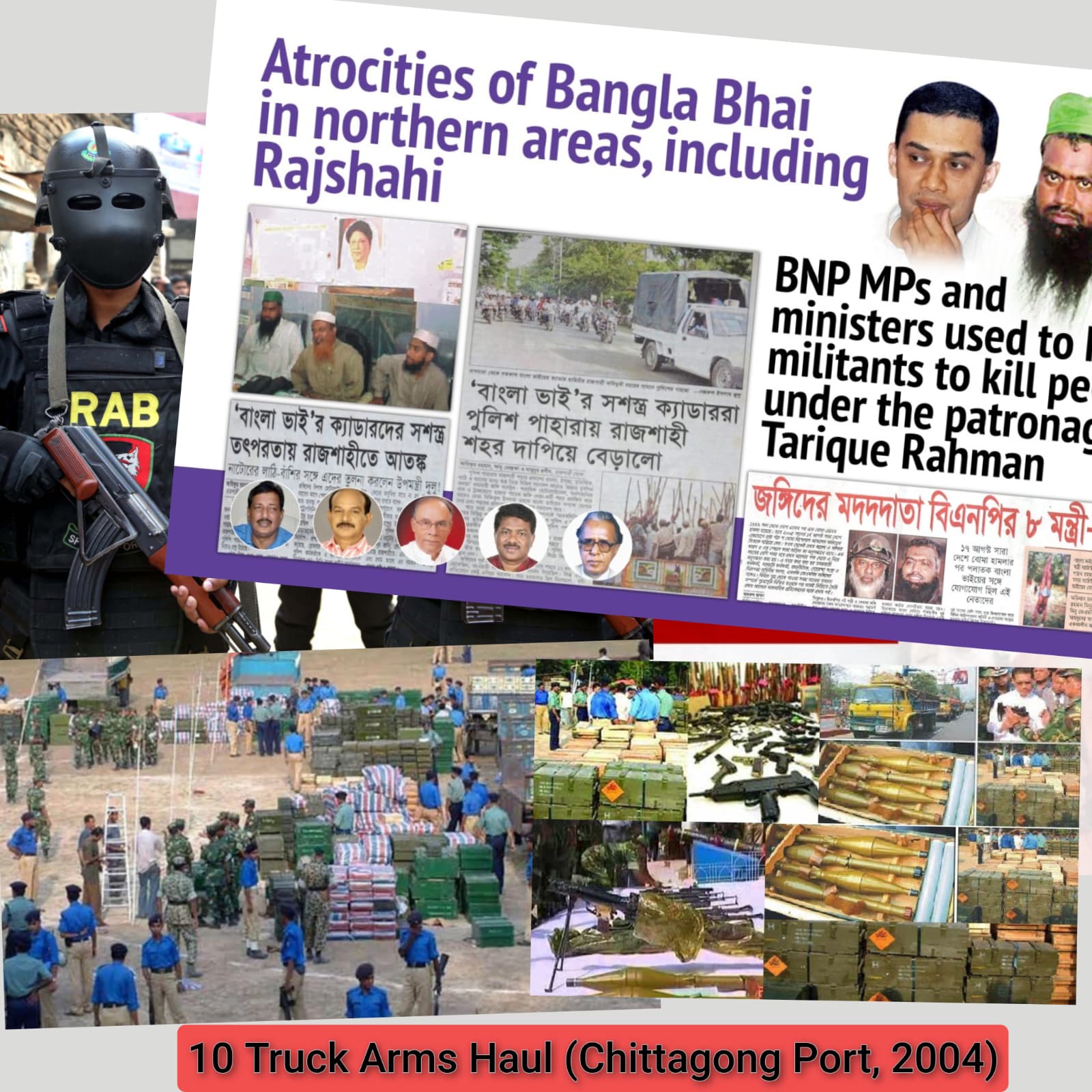
On the night of April 1, 2004, police and Coast Guard, acting on a tip-off, interrupted the loading of weapons onto ten trucks at the Chittagong Urea Fertilizer Limited (CUFL) jetty on the Karnaphuli River, Chittagong.
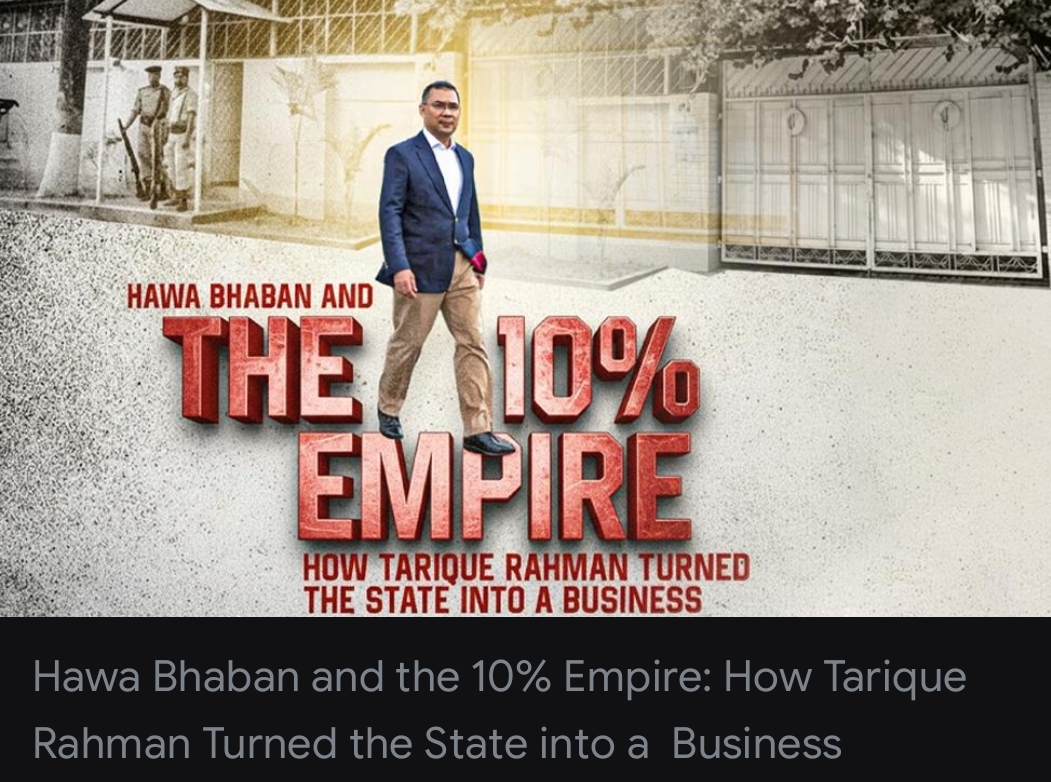
Hawa Bhaban and the 10% Empire — How Tarique Rahman turned the state into a business. The arms haul operated under this shadow government.
What they found was staggering. This would become the largest arms smuggling incident in the history of Bangladesh.
What Was Inside Those 10 Trucks
| Item | Quantity |
|---|---|
| Sophisticated firearms (various types) | 4,930 |
| Grenades | 27,020 |
| Rocket launchers | 840 |
| Rockets | 300 |
| Grenade launching tubes | 2,000 |
| Magazines | 6,392 |
| Bullets | 1,140,520 |
Read those numbers again. Over one million rounds of ammunition. 840 rocket launchers. Nearly five thousand firearms. This wasn’t a back-alley gun deal — this was a military-scale operation.
Who Were the Weapons For?
The weapons were intended for the United Liberation Front of Asom (ULFA), a militant group fighting for Assam’s independence from India.
ULFA military wing chief Paresh Baruah, who was living in Dhaka at the time, was among the 50 persons charged. Indian intelligence confirmed the connection definitively.
“The arms were meant not only for ULFA but also for a few other rebel groups in India’s Northeast to destabilize the country.” — Major General Gaganjit Singh, retired Indian intelligence officer (India Today, February 2023)
International arms were being trafficked through Bangladesh to destabilize a neighboring country. And elements of the Bangladesh state apparatus didn’t just know — they were involved.
DGFI and NSI Involvement — Under Oath
Two accused persons, Md Hafizur Rahman and Din Mohammad, submitted statements to the Metropolitan Magistrate on March 2, 2009, revealing:
- The arms were being smuggled under the direct supervision of ULFA leader Paresh Baruah
- Numerous men associated with the BNP-led government and Jatiya Party, including members of parliament, government officials, and leaders of National Security Intelligence (NSI) and Directorate General of Forces Intelligence (DGFI), were aware of the operation
- Hafizur’s earlier confessions were never recorded, and officials warned him against making statements — threatening him with death
This wasn’t rogue actors operating in the shadows. This was state intelligence agencies facilitating international arms trafficking.
Who Was Charged — The Names
50 persons were charged in the smuggling case, 52 in the arms case. The key figures tell the story of how deep the rot went:
- Motiur Rahman Nizami — Jamaat-e-Islami chief, former Industries Minister in the BNP government
- Lutfozzaman Babar — former State Minister for Home Affairs
- Major General Rezzakul Haider Chowdhury — former Director General of NSI
- Brigadier General Abdur Rahim — former Director General of NSI
- Nurul Amin — former Additional Secretary, Industries Ministry
- Wing Commander Shahabuddin Ahmed — former NSI director
- Paresh Baruah — ULFA military wing chief
- Mohshin Talukder — MD of Chittagong Urea Fertiliser Limited
- AKM Enamul Haque — General Manager, CUFL
Ministers. Intelligence chiefs. Military officers. Industry heads. A foreign militant commander living freely in Dhaka. This was the full apparatus of a state-sponsored arms pipeline.
What the BBC Said
“The Indian authorities have long complained that Bangladesh has become a safe haven for insurgent groups active in north-eastern Indian states.” — BBC News, February 2005
The Court Verdicts — And Then the Acquittals
2014: Justice
On January 30, 2014, a special court in Chittagong sentenced Paresh Baruah and 13 others to death, including Nizami and Babar.
2024-2025: Every Conviction Overturned
Following the July 2024 political change:
- December 18, 2024: High Court acquitted Lutfozzaman Babar and 5 others (including Maj Gen Rezzakul Haider Chowdhury)
- January 14, 2025: High Court acquitted Babar and Chowdhury in the Arms Act case; Paresh Baruah’s sentence reduced from death to 14 years; four others reduced to 10 years
The men convicted of running the largest arms smuggling operation in Bangladesh’s history — involving state intelligence agencies, military-grade weapons, and international militant groups — walked free.
The Questions That Remain
If the BNP government knew nothing about 10 trucks loaded with nearly 5,000 guns and a million bullets being loaded at a government-owned jetty in Bangladesh’s biggest port — then they were catastrophically incompetent.
If they knew — and the court testimony says they did — then they were complicit in international arms trafficking that could have destabilized an entire region.
Either way, this is not a footnote in history. This is one of the most serious crimes ever committed under a Bangladeshi government.
And every person convicted for it is now free.
📎 Sources:
- India Today — “The arms were meant not only for ULFA…” (February 2023)
- BBC News — “Bangladesh has become a safe haven…” (February 2005)
- Times of India — Death sentence coverage (January 2014)
- Bangladesh Metropolitan Magistrate Court — Confessional statements (March 2009)
- Special Court, Chittagong — Verdict (January 30, 2014)
- Bangladesh High Court — Acquittal orders (December 2024, January 2025)
Leave a Reply