Read Part 1, Part 2, and Part 3
Six years of festering rot. Minority persecution, state-sponsored extremism, grenade attacks, arms trafficking, a world record in corruption, bombs in 63 districts — Bangladesh was a ticking time bomb.
In October 2006, it finally exploded.
🔴 Election Commission Hijacked & the K.M. Hasan Controversy
After BNP’s term ended, a caretaker government was supposed to take over to conduct fair elections. Under the constitution, the last retired Chief Justice would lead it.
But BNP had rigged the game in advance — they extended the Chief Justice’s retirement age specifically so Justice K.M. Hasan would get the role. The opposition said: this man is not neutral, this election will not be fair.
🔴 October 28, 2006 — The Logi-Boitha Massacre
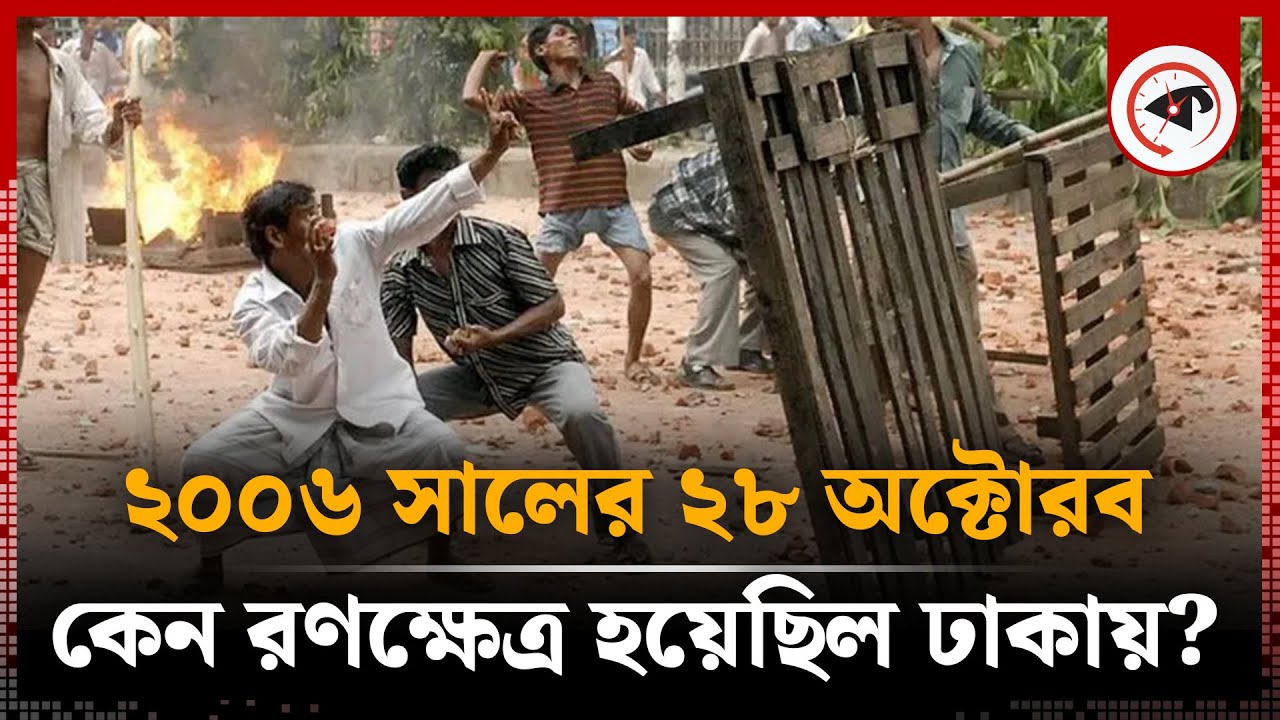
Paltan Moar. The heart of Dhaka.
Political workers faced off with bamboo poles and oars. People beaten to death in broad daylight. Blood-soaked streets. Men dying on live television — and no one could stop it.
Then came the prolonged shutdowns and deadlock. October 28, 2006 to January 9, 2007 — two and a half months of the country burning. Dozens killed. Thousands injured. The economy paralyzed. Ordinary people held hostage.
🔴 The President Becomes Caretaker Chief — The Ultimate Farce
When K.M. Hasan refused the role under political pressure, President Iajuddin Ahmed seized the position of Chief Advisor himself.
The President — appointed during BNP’s tenure — would now oversee the election? It was a slap in the face of democracy.
🔴 The United Nations’ Final Warning
The situation had deteriorated so badly that the UN sent a message: if they supported such a questionable election, Bangladeshi peacekeepers could be removed from international missions.
UN peacekeeping isn’t just a point of pride for the Bangladesh Army — it’s a massive economic and diplomatic pillar. This threat was the final straw.
🔴 January 11, 2007 — That Historic Night
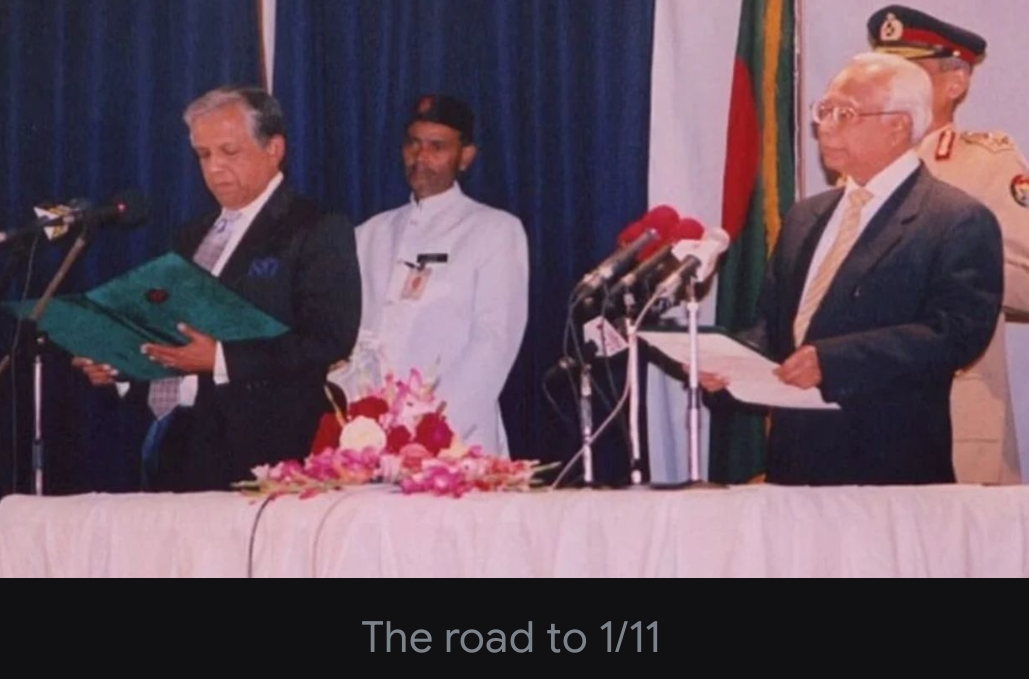
The oath ceremony that marked the beginning of the caretaker government — the road to January 11, 2007
9 PM. A state of emergency declared nationwide.
Iajuddin Ahmed resigned. A neutral caretaker government was formed — Dr. Fakhruddin Ahmed became Chief Advisor.
And then began the work that no one had done for six years:
- 12.1 million fake voters removed — photo voter ID rolls created for the first time
- 160 politicians, bureaucrats & businessmen charged with corruption — including Tarique Rahman
- Political extortion and thuggery shut down
- Ordinary people could finally sleep without fear
🔴 Was 1/11 Perfect?
No. No military intervention ever is. There were human rights violation allegations during the emergency too.
But the question is — did 1/11 come from nowhere?
Absolutely not.
- 18,000+ minority women raped
- 24 killed in a grenade attack on a political rally
- International arms trafficking through state channels
- World’s most corrupt country 5 years running
- Simultaneous bombings in 63 districts
- 600+ extrajudicial killings
- Systematic efforts to destroy democracy
These aren’t opinions. These are facts documented by Human Rights Watch, BBC, Amnesty International, International Crisis Group, Transparency International, and Bangladesh’s own courts.
They call 1/11 a crime today.
But was 2001 to 2006 not a crime?
Now you have both sides. The decision is yours.
📎 Sources: Human Rights Watch, BBC News, Amnesty International, International Crisis Group, Transparency International, Minority Rights Group, Bangladesh court rulings & judicial commission reports
Leave a Reply