
“They said it was heart attacks. Forty-four heart attacks in 86 days — all in military custody. The youngest was sixteen.”
On October 16, 2002, the BNP government of Prime Minister Khaleda Zia launched Operation Clean Heart — a joint military-police anti-crime operation that deployed over 40,000 security personnel across Bangladesh. The stated goal was to restore law and order. What followed was 86 days of mass arrests, systematic torture, and at least 44 deaths in custody — deaths the government blamed on “heart attacks.”
When it ended on January 9, 2003, the BNP government passed an indemnity law granting blanket legal immunity to every security official involved. No one was ever prosecuted. The indemnity act stood for over a decade before Bangladesh’s High Court finally struck it down as unconstitutional in 2015 — by which point justice for the victims was a distant memory.
This is the story of Operation Clean Heart: how the BNP government weaponized the military against civilians, killed at least 44 people in custody, and then legalized its own impunity.
The Official Justification
By mid-2002, Bangladesh was gripped by rising crime. The BNP government — already one year into its term — faced mounting criticism for its failure to maintain law and order. Armed robberies, kidnappings, and political violence had become daily occurrences.
Rather than strengthen policing through institutional reform, the Khaleda Zia government chose a military solution. On October 16, 2002, Operation Clean Heart was launched with a massive deployment:
- 24,023 army personnel
- 339 navy personnel
- Police, Ansar (paramilitary), and BDR (border guards)
- Total: over 40,000 security personnel conducting sweeping operations nationwide
The operation lasted 86 days, ending on January 9, 2003. Official statistics claimed impressive results:
- 11,245 suspects arrested
- 2,028 firearms seized
- Nearly 30,000 rounds of ammunition recovered
But behind the statistics lay a far darker reality.
The Death Toll: “Heart Attacks” in Custody
The BNP government officially acknowledged only 12 deaths during the entire operation — and claimed every single one died of “heart attacks.”
Independent investigations told a radically different story:
| Source | Reported Deaths |
|---|---|
| Government official claim | 12 (“all heart attacks”) |
| The Daily Star / domestic media | 44 died in custody |
| Human Rights Watch | At least 60 killed |
| International Commission on Shari’ah for Finance (ICSF) | At least 60 extrajudicially executed |
The World Organisation Against Torture (OMCT) published urgent interventions documenting 44 custody deaths, over 11,000 arrests, and widespread torture. OMCT explicitly warned of the “risk of impunity” — a warning that proved prophetic.
The Victims: Names, Ages, Stories
These were not abstract statistics. They were people — farmers, students, laborers, political activists, a film director, a rickshaw puller, a 73-year-old man, and a 16-year-old boy. Below are some of the documented cases:
Shafiqul Islam — Age 16
The youngest documented victim. A Jatiyotabadi Chattra Dol activist (the BNP’s own student wing), Shafiqul was killed when security forces fired on protesters in Bogra. Even supporters of the ruling party were not safe from the operation they ordered.
Nabi Hossain Khan — Age 50
A rickshaw puller from Narsinghdi. After being detained by the army, his body was found in a pond. The army claimed he had escaped custody.
Rashedul Hasan — Age 35
An assistant film director. Died on November 7, 2003, after being held in military custody. No explanation was provided for how a healthy 35-year-old suffered a fatal “heart attack” while detained.
Haji Abul Kashem — Age 73
The oldest documented victim. Died in Tangail General Hospital after being taken into custody by security forces. A 73-year-old man, detained in a supposed anti-crime sweep, dead in a hospital bed.
Political Targeting
The operation wasn’t just about crime. It was about politics. Among those detained:
- Saber Hossain Chowdhury — Awami League leader, detained during the operation
- Sheikh Fazlul Karim Selim — cousin of Sheikh Hasina, detained
- The army raided the Awami League office and seized party documents
- Multiple Awami League activists were among the dead — suggesting the operation was used as a tool of political repression
This pattern — using state security operations to target political opponents under the cover of “law enforcement” — would become a hallmark of BNP governance.
Shoot-at-Sight Orders
DMP Commissioner Ashraful Huda — the same officer who would later be convicted (2 years) for his role in covering up the August 21, 2004 grenade attack — issued shoot-at-sight orders during the operation.
Human Rights Watch‘s Asia Director Brad Adams publicly criticized the shoot-at-sight directive, calling it a license for extrajudicial killing. HRW documented that security forces used the broad mandate of the operation to settle personal and political scores.
“The shoot-at-sight orders and complete lack of accountability created conditions for systematic abuse. Security forces operated with the understanding that they would never face consequences.”
— Human Rights Watch assessment of Operation Clean Heart
The Indemnity Act: Legalizing Murder
What happened next was perhaps more shocking than the operation itself.
On January 9, 2003 — the very day Operation Clean Heart officially ended — the BNP government issued the Joint Drive Indemnity Ordinance. On February 24, 2003, it was approved by parliament.
The law provided blanket legal immunity to every security official who participated in the operation. Its language was sweeping:
No member of the armed forces or law enforcement agencies shall be liable to any criminal prosecution or civil claim for any casualty, damage to life and property, violation… during the operation.
— Joint Drive Indemnity Ordinance, 2003
In plain language: the government killed at least 44 people, then passed a law making it illegal to prosecute anyone for those deaths.
The United Nations Office of the High Commissioner for Human Rights (OHCHR) condemned the ordinance. International human rights experts expressed grave concern that the indemnity law would institutionalize impunity and prevent victims’ families from ever seeking justice.
Prominent Bangladeshi voices also spoke out:
- Sultana Kamal, one of Bangladesh’s most respected human rights activists, publicly criticized the indemnity ordinance as a violation of fundamental rights
- Justice Shamsuddin Chowdhury Manik criticized both the military operation and the subsequent indemnity law
The Indemnity Act Struck Down — 12 Years Later
The indemnity ordinance stood as law for over a decade. During that time, not a single security official was ever prosecuted for the custody deaths.
On June 14, 2012, lawyer Z.I. Khan Panna filed a petition challenging the constitutionality of the ordinance. On July 29, 2012, the High Court asked the government to explain why it should not declare the ordinance illegal and order Tk 1 billion in compensation to victims’ families.
Finally, in November 2015, the High Court — in a landmark verdict by Justice Moyeenul Islam Chowdhury and Justice Ashraful Kamal — declared the Joint Drive Indemnity Ordinance unconstitutional and illegal, scrapping it entirely.
But by 2015, the damage was permanent. Thirteen years had passed. Evidence had degraded. Witnesses had scattered. The families of the 44+ victims had lived for over a decade knowing that their government had legalized the killings of their loved ones. The High Court ruling was a moral victory — but no practical justice followed.
The Pattern: Clean Heart → RAB
Operation Clean Heart was not an isolated incident. It was a prototype.
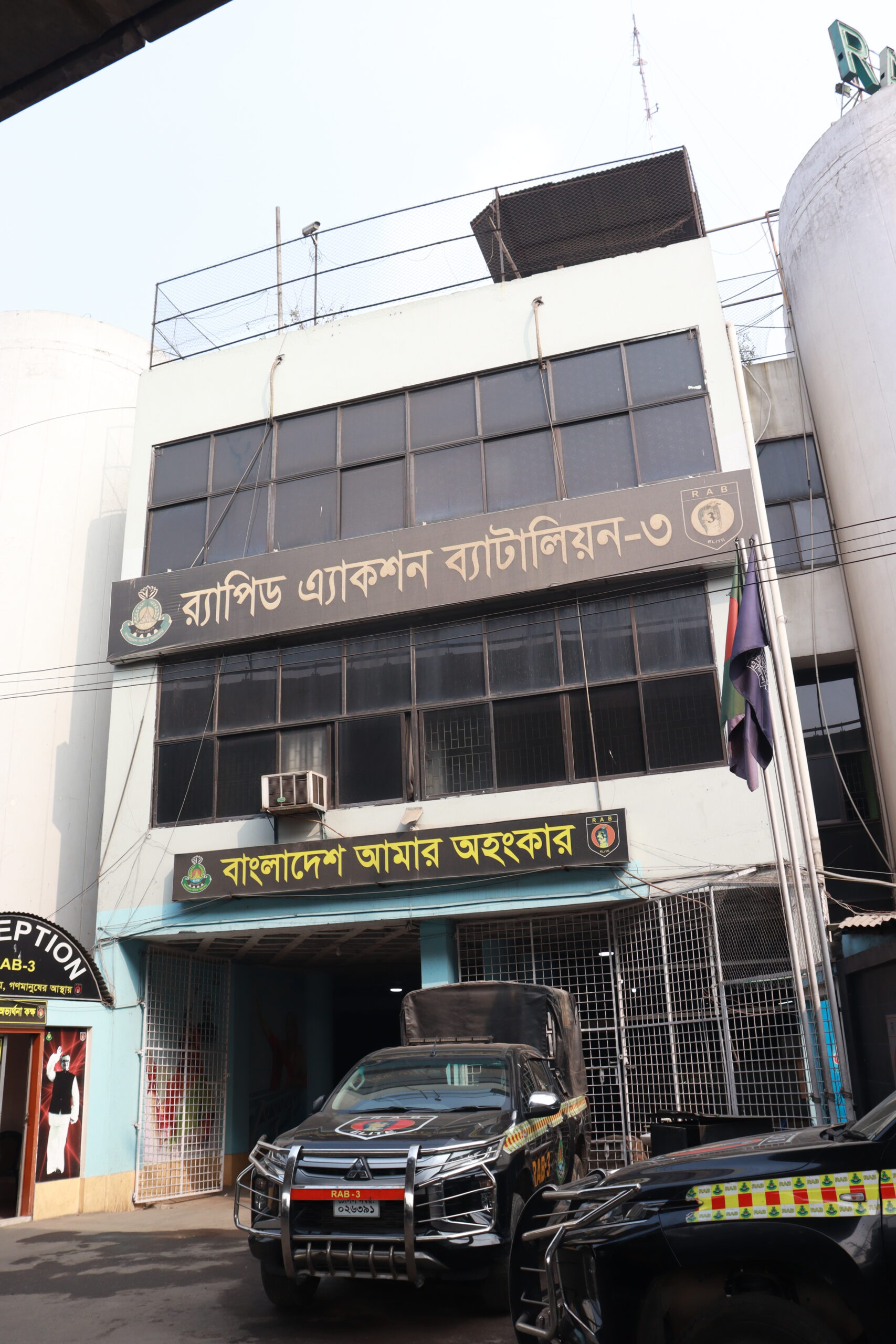
When the operation ended in January 2003, the BNP government did not return to normal policing. Instead, it created something worse. In 2004, the government established the Rapid Action Battalion (RAB) — a permanent elite security force that institutionalized the same methods Operation Clean Heart had piloted: detention, torture, and extrajudicial execution.
Under BNP rule (2004-2006), RAB killed at least 367 people in so-called “crossfire” encounters (Human Rights Watch). By March 2010, that number had reached 622 — per RAB’s own Director General’s admission. The youngest victim was 14 years old.
In 2021, the US Treasury Department imposed Global Magnitsky sanctions on RAB and seven current and former officials for “serious human rights violations” — extrajudicial killings, enforced disappearances, and torture. The force that BNP created, America blacklisted.
The thread from Operation Clean Heart to RAB to US sanctions is unbroken: a government that discovered it could kill with impunity in 2002 built a permanent institution to do so from 2004 onward.
Context: What Was Really Happening in 2002
Operation Clean Heart did not exist in a vacuum. It launched during a period when the BNP-Jamaat coalition was engaged in systematic state violence on multiple fronts:
- 2001 Post-Election Violence: The BNP-Jamaat coalition’s victory was followed by targeted attacks on Hindu minorities — over 18,000 rapes, thousands of homes burned, temples destroyed. A judicial commission later identified 25 BNP-Jamaat ministers and MPs as complicit.
- The Shamsunnahar Hall Raid (July 2002): Just months before Operation Clean Heart, Bangladesh Police — under State Home Minister Lutfozzaman Babar’s authority — raided a women’s dormitory at Dhaka University, assaulting over 200 female students.
- Rising Militancy: The BNP-Jamaat government was simultaneously providing tacit protection to Islamist militant groups including Harkat-ul-Jihad-al-Islami (HuJI) and Jamaat-ul-Mujahideen Bangladesh (JMB), which would later carry out the Chittagong arms haul and the August 21 grenade attack.
The BNP’s record during this period reveals a government that used the military against its own citizens while simultaneously protecting terrorist organizations operating within its borders.
What the International Community Said
“The government’s Joint Drive Indemnity Ordinance, 2003, which shields from prosecution all military personnel who participated in Operation Clean Heart, sets a dangerous precedent and violates Bangladesh’s obligations under international human rights law.”
— UN OHCHR statement, 2003
“At least 44 people died in custody during Operation Clean Heart, with the government describing all deaths as resulting from ‘heart attacks’ — a claim that lacks any credibility.”
— World Organisation Against Torture (OMCT), Urgent Intervention
“Between January and October 2005 alone, an estimated 300 persons were killed at the hands of security forces.”
— Human Rights Watch World Report 2006, documenting the escalation from Operation Clean Heart to RAB
The Legacy
Operation Clean Heart lasted 86 days. Its consequences lasted decades.
It established a template that the BNP government would follow repeatedly: use overwhelming state force against civilians, deny accountability, and legislate impunity. The same pattern appears in the creation of RAB, in the cover-up of the August 21 grenade attack, and in the state facilitation of the Chittagong arms haul.
For the families of the 44+ victims, there has been no justice. The indemnity act may have been struck down in 2015, but no prosecutions have followed. The perpetrators — from the security officers who carried out the killings to the political leaders who ordered the operation — have never faced accountability.
The 44 who died in custody during Operation Clean Heart are among the forgotten victims of BNP rule. Their names appear in human rights reports and court filings, but never in the narratives that BNP and its allies promote about Bangladesh’s history.
This article is for them.
Sources
- Human Rights Watch — “Judge, Jury, and Executioner” (December 2006)
- World Organisation Against Torture (OMCT) — Urgent Intervention on Operation Clean Heart
- UN Office of the High Commissioner for Human Rights (OHCHR) — Statement on Bangladesh Indemnity Ordinance, 2003
- The Daily Star — Coverage of Operation Clean Heart custody deaths (2002-2003)
- Ain O Shalish Kendra (ASK) — Documentation of extrajudicial killings
- Amnesty International — Bangladesh reports (2002-2003)
- US Treasury Department — Global Magnitsky Sanctions on RAB (December 2021)
- High Court Division, Supreme Court of Bangladesh — Judgment on Joint Drive Indemnity Ordinance (November 2015)
- International Crisis Group — “Bangladesh Today” (October 2006)
Bangladesh Untold documents the BNP-Jamaat era (2001-2006) using international sources, court records, and verified reporting. Every claim is sourced. Read the full archive →
Leave a Reply