At 5:22 PM on August 21, 2004, Bangabandhu Avenue in Dhaka became a killing ground.
Thirteen grenades rained into a crowd of 20,000 people. Military-grade Arges grenades — the kind used in wars, not street protests — thrown from rooftops by twelve men who had prayed together that afternoon, eaten lunch, and listened to a sermon on jihad before taking their positions.
Sixteen people died where they fell. Eight more died later from their injuries. Twenty-four in total. Hundreds more were maimed, deafened, blinded, left carrying shrapnel in their bodies for the rest of their lives.
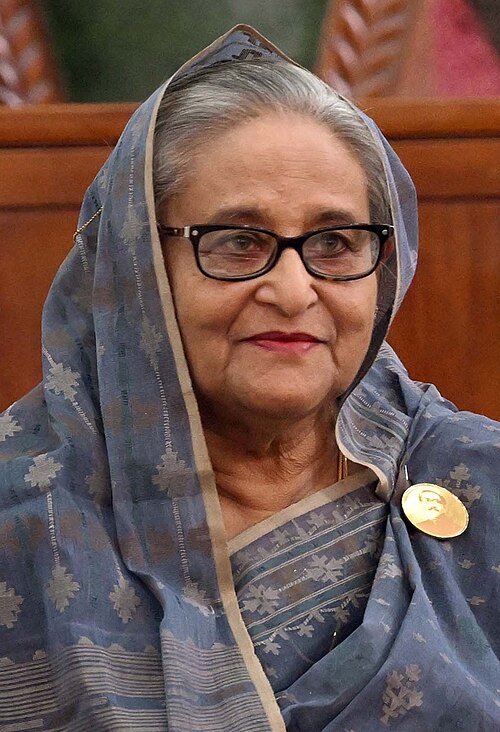
Sheikh Hasina survived. The attack was designed to kill her. It didn’t. But it killed twenty-four other people — party leaders, activists, ordinary Bangladeshis who came to a political rally and never went home.
Their names were buried almost immediately. The government refused to register criminal cases. The crime scene was washed with detergent. Two unidentified dead were hurriedly buried in the middle of the night. The official story blamed a petty criminal from Noakhali named Joj Mia, who had been tortured into a false confession.
This article is about the twenty-four people who actually died. About who they were. About the systematic effort to make the state’s role invisible. And about what it means that the men convicted of planning the massacre were acquitted — every last one — within days of each other in late 2024.
The Attack: What Actually Happened
The rally was called to protest a bombing in Sylhet that had targeted Awami League workers. By 5 PM, Bangabandhu Avenue was packed. Sheikh Hasina finished her speech from the back of a truck being used as a stage.
The rooftops around her had been cleared. The volunteer security teams — Sechchasebak and Chhatra League — who would normally have secured those positions were turned away. The rooftops were closed.
Twelve men had been placed there instead.
Abu Jandal threw the first grenade. The rest followed. Thirteen grenades in seconds, into a crowd with nowhere to run.
“The specialised deadly Arges grenades that are used in wars were blasted at the Awami League’s central office on 23 Bangabandhu Avenue in broad daylight with the help of the then state machinery.”
That wasn’t a journalist’s opinion. That was Judge Shahed Nuruddin of Speedy Trial Tribunal-1, delivering the 2018 verdict that sentenced nineteen people to death and nineteen others — including Tarique Rahman, son of Prime Minister Khaleda Zia — to life imprisonment.
The 24 Who Died
The attack killed 24 Awami League leaders, activists, and supporters.
1. Ivy Rahman — née Jebun Nahar Ivy. She was the Awami League Women’s Affairs Secretary. She was also the wife of Zillur Rahman, who would later become President of Bangladesh. She was gravely wounded on the 21st and fought for her life for three days. She died on August 24, 2004.
2. Mahbubur Rahman — Sheikh Hasina’s personal bodyguard. He died at the scene, shielding her from the blast. His name appears in every court record of the attack.
3–24 — Twenty-two other Awami League leaders and activists. Among those confirmed dead in reporting by The Daily Star, Bangladesh Sangbad Sangstha, and court records: Nazmul Huda Sagar, Liakat Hossain, Surendra Nath Dey Suren, Momtaz Begum, Md. Abu Taher, and nineteen others whose names are preserved in the 12,000-page trial judgment.
The State Moved to Erase Them
Within hours of the attack, the cover-up began. It was not chaotic or improvised. It was systematic.
Bangladesh Police refused to register a criminal case. Awami League filed a First Information Report. Police declined. They registered only a general diary — a clerical notation, not an investigation.
The crime scene was washed with water and detergent. Evidence was destroyed before forensic teams could collect it. Recovered grenades were deliberately destroyed rather than preserved.
Two unidentified bodies were buried in the middle of the night — hurriedly, without documentation. The Supreme Court Bar Association later accused the government of evidence destruction.
The government refused to hand over the bodies of the victims to their families, according to Sheikh Hasina’s own account.
The BNP government then invented a story. The Crime Investigation Department produced “Joj Mia” — Jamal Ahmed, a petty criminal from Noakhali. He confessed on June 26, 2005. He had been tortured into it. The story collapsed under investigative journalism within months.
A one-man judicial commission led by Justice Joynul Abedin then blamed the attack on “a neighbouring country.” The Daily Star called Abedin “a shame for the judiciary.”
Who Planned the Attack
When the military-backed caretaker government took office in January 2007, a real investigation began. Mufti Abdul Hannan — chief of Harkat-ul-Jihad-al-Islami (HuJI) — confessed in November 2007. He named names. He described the planning meetings at Hawa Bhaban — Tarique Rahman’s political office.
The 2018 verdict named the architects:
Tarique Rahman — Sentenced to life imprisonment. Used Hawa Bhaban as the coordination point for the plot.
Lutfozzaman Babar — State Minister for Home Affairs. Sentenced to death. Ran the police, ran the intelligence chain, ensured the crime scene was washed and the FIR rejected.
Abdus Salam Pintu — Sentenced to death. His home was a planning venue. His brother distributed the grenades.
Harris Chowdhury — Political Secretary to PM Khaleda Zia. Sentenced to life.
Brigadier General Abdur Rahim — Director General of NSI. Sentenced to death.
Brigadier General Rezzakul Haider Chowdhury — Director General of DGFI. Sentenced to death.
The attack was code-named internally: “Light Snacks for Sheikh Hasina” (Bengali: Sheikh Hasina ke nashta korano). It had a code name. It had reconnaissance the day before. It had a logistics chain reaching from Dhaka to Pakistan. Twenty-four people died in an operation given a jokey code name by the men who planned it.
The Acquittals — Everything Undone
On October 1, 2018, a court convicted 49 people. Nineteen death sentences. Nineteen life terms, including Tarique Rahman. The verdict ran to 12,000 pages.
On December 1, 2024, the High Court acquitted everyone. Tarique Rahman. Lutfozzaman Babar. All nineteen sentenced to death. All nineteen sentenced to life. On September 4, 2025, the Appellate Division dismissed a retrial petition, making the acquittal final.
The same court system reversed every finding — not because new evidence emerged, but because the political winds changed. Tarique Rahman is now Prime Minister of Bangladesh, sworn in February 17, 2026.
The Cover-Up Is the Confession
A government with nothing to hide does not wash a crime scene with detergent. It does not refuse victims’ bodies. It does not torture a petty criminal into a false confession. It does not convene a commission that blames a neighbouring country.
The BNP did all of these things. The pattern is consistent across Shamsunnahar, the arms haul, and August 21: violence at the highest levels, scapegoats at the lowest, state machinery ensuring no evidence survives.
Ivy Rahman died on August 24 — three days after the grenades. The other twenty-two were party workers and supporters who came to a rally against terrorism on a Saturday afternoon. They were killed by state-sponsored terrorism.
The men who planned their deaths were convicted by a court that spent years examining the evidence. Those convictions were erased. The twenty-four are still dead. That has not changed.
Sources: Wikipedia — 2004 Dhaka grenade attack; Human Rights Watch; The Daily Star archives; Speedy Trial Tribunal-1 verdict (October 2018), Judge Shahed Nuruddin; Mufti Abdul Hannan confessional statement (November 2007); US Embassy WikiLeaks cables (2005); International Crisis Group Asia Reports; BBC News.
Leave a Reply