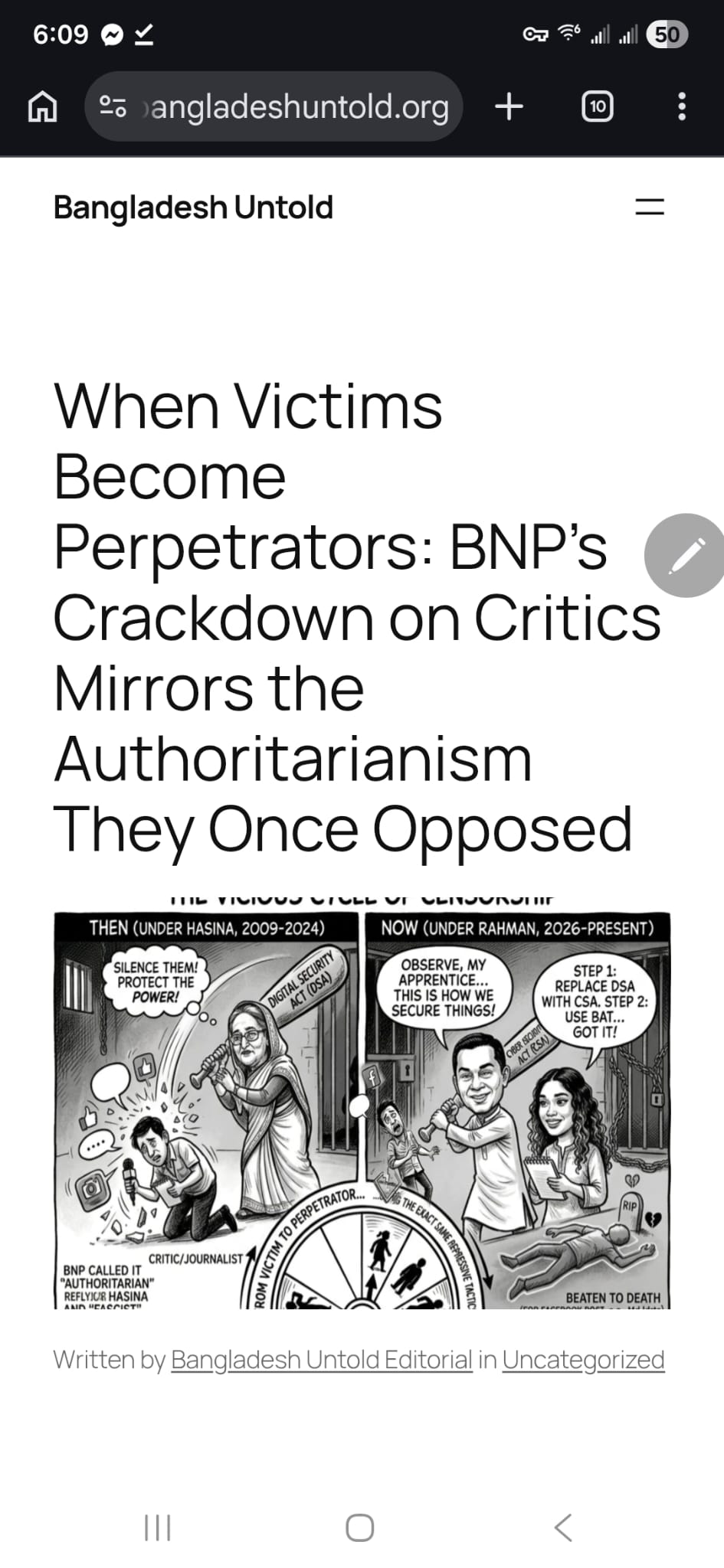
Author: Bangladesh Untold Editorial

  • The 24 Martyrs of August 21: Who They Were, How They Died, and Why the State Tried to Erase Them

    The 24 Martyrs of August 21: Who They Were, How They Died, and Why the State Tried to Erase Them

    At 5:22 PM on August 21, 2004, Bangabandhu Avenue in Dhaka became a killing ground.

    Thirteen grenades rained into a crowd of 20,000 people. Military-grade Arges grenades — the kind used in wars, not street protests — thrown from rooftops by twelve men who had prayed together that afternoon, eaten lunch, and listened to a sermon on jihad before taking their positions.

    Sixteen people died where they fell. Eight more died later from their injuries. Twenty-four in total. Hundreds more were maimed, deafened, blinded, left carrying shrapnel in their bodies for the rest of their lives.

    Sheikh Hasina survived. The attack was designed to kill her. It didn’t. But it killed twenty-four other people — party leaders, activists, ordinary Bangladeshis who came to a political rally and never went home.

    Their names were buried almost immediately. The government refused to register criminal cases. The crime scene was washed with detergent. Two unidentified dead were hurriedly buried in the middle of the night. The official story blamed a petty criminal from Noakhali named Joj Mia, who had been tortured into a false confession.

    This article is about the twenty-four people who actually died. About who they were. About the systematic effort to make the state’s role invisible. And about what it means that the men convicted of planning the massacre were acquitted — every last one — within days of each other in late 2024.


    The Attack: What Actually Happened

    The rally was called to protest a bombing in Sylhet that had targeted Awami League workers. By 5 PM, Bangabandhu Avenue was packed. Sheikh Hasina finished her speech from the back of a truck being used as a stage.

    The rooftops around her had been cleared. The volunteer security teams — Sechchasebak and Chhatra League — who would normally have secured those positions were turned away. The rooftops were closed.

    Twelve men had been placed there instead.

    Abu Jandal threw the first grenade. The rest followed. Thirteen grenades in seconds, into a crowd with nowhere to run.

    “The specialised deadly Arges grenades that are used in wars were blasted at the Awami League’s central office on 23 Bangabandhu Avenue in broad daylight with the help of the then state machinery.”

    That wasn’t a journalist’s opinion. That was Judge Shahed Nuruddin of Speedy Trial Tribunal-1, delivering the 2018 verdict that sentenced nineteen people to death and nineteen others — including Tarique Rahman, son of Prime Minister Khaleda Zia — to life imprisonment.


    The 24 Who Died

    The attack killed 24 Awami League leaders, activists, and supporters.

    1. Ivy Rahman — née Jebun Nahar Ivy. She was the Awami League Women’s Affairs Secretary. She was also the wife of Zillur Rahman, who would later become President of Bangladesh. She was gravely wounded on the 21st and fought for her life for three days. She died on August 24, 2004.

    2. Mahbubur Rahman — Sheikh Hasina’s personal bodyguard. He died at the scene, shielding her from the blast. His name appears in every court record of the attack.

    3–24 — Twenty-two other Awami League leaders and activists. Among those confirmed dead in reporting by The Daily Star, Bangladesh Sangbad Sangstha, and court records: Nazmul Huda Sagar, Liakat Hossain, Surendra Nath Dey Suren, Momtaz Begum, Md. Abu Taher, and nineteen others whose names are preserved in the 12,000-page trial judgment.


    The State Moved to Erase Them

    Within hours of the attack, the cover-up began. It was not chaotic or improvised. It was systematic.

    Bangladesh Police refused to register a criminal case. Awami League filed a First Information Report. Police declined. They registered only a general diary — a clerical notation, not an investigation.

    The crime scene was washed with water and detergent. Evidence was destroyed before forensic teams could collect it. Recovered grenades were deliberately destroyed rather than preserved.

    Two unidentified bodies were buried in the middle of the night — hurriedly, without documentation. The Supreme Court Bar Association later accused the government of evidence destruction.

    The government refused to hand over the bodies of the victims to their families, according to Sheikh Hasina’s own account.

    The BNP government then invented a story. The Crime Investigation Department produced “Joj Mia” — Jamal Ahmed, a petty criminal from Noakhali. He confessed on June 26, 2005. He had been tortured into it. The story collapsed under investigative journalism within months.

    A one-man judicial commission led by Justice Joynul Abedin then blamed the attack on “a neighbouring country.” The Daily Star called Abedin “a shame for the judiciary.”


    Who Planned the Attack

    When the military-backed caretaker government took office in January 2007, a real investigation began. Mufti Abdul Hannan — chief of Harkat-ul-Jihad-al-Islami (HuJI) — confessed in November 2007. He named names. He described the planning meetings at Hawa Bhaban — Tarique Rahman’s political office.

    The 2018 verdict named the architects:

    Tarique Rahman — Sentenced to life imprisonment. Used Hawa Bhaban as the coordination point for the plot.

    Lutfozzaman Babar — State Minister for Home Affairs. Sentenced to death. Ran the police, ran the intelligence chain, ensured the crime scene was washed and the FIR rejected.

    Abdus Salam Pintu — Sentenced to death. His home was a planning venue. His brother distributed the grenades.

    Harris Chowdhury — Political Secretary to PM Khaleda Zia. Sentenced to life.

    Brigadier General Abdur Rahim — Director General of NSI. Sentenced to death.

    Brigadier General Rezzakul Haider Chowdhury — Director General of DGFI. Sentenced to death.

    The attack was code-named internally: “Light Snacks for Sheikh Hasina” (Bengali: Sheikh Hasina ke nashta korano). It had a code name. It had reconnaissance the day before. It had a logistics chain reaching from Dhaka to Pakistan. Twenty-four people died in an operation given a jokey code name by the men who planned it.


    The Acquittals — Everything Undone

    On October 1, 2018, a court convicted 49 people. Nineteen death sentences. Nineteen life terms, including Tarique Rahman. The verdict ran to 12,000 pages.

    On December 1, 2024, the High Court acquitted everyone. Tarique Rahman. Lutfozzaman Babar. All nineteen sentenced to death. All nineteen sentenced to life. On September 4, 2025, the Appellate Division dismissed a retrial petition, making the acquittal final.

    The same court system reversed every finding — not because new evidence emerged, but because the political winds changed. Tarique Rahman is now Prime Minister of Bangladesh, sworn in February 17, 2026.


    The Cover-Up Is the Confession

    A government with nothing to hide does not wash a crime scene with detergent. It does not refuse victims’ bodies. It does not torture a petty criminal into a false confession. It does not convene a commission that blames a neighbouring country.

    The BNP did all of these things. The pattern is consistent across Shamsunnahar, the arms haul, and August 21: violence at the highest levels, scapegoats at the lowest, state machinery ensuring no evidence survives.

    Ivy Rahman died on August 24 — three days after the grenades. The other twenty-two were party workers and supporters who came to a rally against terrorism on a Saturday afternoon. They were killed by state-sponsored terrorism.

    The men who planned their deaths were convicted by a court that spent years examining the evidence. Those convictions were erased. The twenty-four are still dead. That has not changed.


    Sources: Wikipedia — 2004 Dhaka grenade attack; Human Rights Watch; The Daily Star archives; Speedy Trial Tribunal-1 verdict (October 2018), Judge Shahed Nuruddin; Mufti Abdul Hannan confessional statement (November 2007); US Embassy WikiLeaks cables (2005); International Crisis Group Asia Reports; BBC News.

  • গণভোট: 47 Million Voted Yes. Then BNP Refused the Oath.

    গণভোট: 47 Million Voted Yes. Then BNP Refused the Oath.

    On February 12, 2026, nearly 77 million Bangladeshis voted.

    They voted for a new parliament. And on the same ballot, they voted on something that had never happened in Bangladesh before — a genuine public referendum on how the country should be governed.

    The question was simple: Do you approve the July National Charter and its proposed reforms to the constitution?

    68.26 percent said yes. That is 47.2 million people — more than the entire population voted in Bangladesh’s first three referendums combined under Ziaur Rahman and Ershad, both of which delivered suspiciously perfect 94-98% results under military rule. This time, the process was open. The result was real. It was the most credible public mandate in Bangladeshi constitutional history.

    Within five days, the Bangladesh Nationalist Party — the same party that won a two-thirds majority in that election — refused to take the oath that would make those reforms legally possible.

    This is the story of গণভোট — the Gonovote — what it was, what it promised, and why BNP is now systematically gutting it.


    What Is the Gonovote?

    গণভোট means “people’s vote.” In Bangla, it is the word for referendum.

    The February 12 referendum was officially called the July National Charter (Constitutional Amendment) Implementation Order, 2025. Its common name: the Gonovote. Its website: gonovote.gov.bd.

    It was held simultaneously with the 13th parliamentary election — a deliberate design choice. Muhammad Yunus’s interim government wanted voters to decide on the shape of Bangladesh’s political future at the same moment they chose their representatives. One vote, two decisions.

    The ballot asked voters to approve four interconnected proposals drawn from the July National Charter — an 84-point reform blueprint that 33 political parties, including BNP, negotiated and signed on October 17, 2025 after nine months of consensus talks.

    Those four proposals were:

    • A permanent, strengthened caretaker government system to oversee future elections, with a reformed Election Commission that no single party can control
    • A 100-member Senate (upper house) to balance the current single-chamber parliament, with seats distributed by proportional representation based on each party’s share of the national vote
    • 30 constitutional reforms with full party consensus — including term limits for the prime minister (maximum 10 years), the deputy speaker position guaranteed to the opposition, opposition-chaired parliamentary committees, expanded fundamental rights, and judicial independence
    • All other Charter reforms, to be implemented according to each party’s stated commitments

    The turnout was 60 percent. The yes vote was 68 percent. For context: when Ziaur Rahman held his referendum in 1977, the turnout was 88 percent and the yes vote was 98.88 percent. That number was manufactured. This one was not.


    What the July Charter Actually Does

    To understand why BNP is resisting, you have to understand what these reforms would actually change.

    Bangladesh’s 1972 constitution concentrated almost all executive power in the Prime Minister. Over fifty years, that concentration became pathological. The Prime Minister controlled parliament through party discipline rules that made MPs who voted against the party line liable for losing their seats. The President was ceremonial — constitutionally required to act on the PM’s advice for almost everything. The Election Commission, the judiciary, the Anti-Corruption Commission — all appointments ultimately flowed through the Prime Minister’s office.

    Sheikh Hasina took that structure and weaponized it to a degree Bangladesh had not seen before. She ran elections in 2014 and 2018 that international observers described as neither free nor fair. She had critical judicial rulings reversed. She used the Digital Security Act to jail journalists. By 2024, Freedom House had classified Bangladesh as “Not Free.”

    The July Charter is a systematic attempt to dismantle the architecture that made all of that possible.

    Its key structural changes:

    Prime ministerial term limits. One person cannot serve as prime minister for more than ten years total. This alone would have prevented everything that happened under Hasina’s fifteen-year rule.

    A 100-member Senate. Constitutional amendments would require majority approval in both houses. Today, a party with a two-thirds majority in the single-chamber parliament can rewrite the constitution however it chooses. The Senate makes that impossible without broader political consensus.

    Proportional representation for the Senate. Seats distributed by vote share, not seat share. This is the clause BNP hates most. In the 2026 election, BNP won 212 seats on roughly 50 percent of the national vote. Under FPTP, that translates to a two-thirds parliamentary majority. Under proportional representation for the Senate, BNP would get roughly 52-53 of 100 seats — meaning they cannot dominate the upper house the way they dominate the lower. Under seat-based allocation (what BNP wants instead), they would get 70 seats. The difference between those two numbers is the difference between a check on power and the absence of one.

    The caretaker government. Reinstated and permanently embedded in the constitution. No future government can unilaterally abolish it again, as Hasina did in 2011 — the move that made the rigged elections of 2014 and 2018 possible.

    Judicial independence. The Supreme Court gets control over appointing lower court judges. The Supreme Judicial Council is empowered. The Chief Justice is no longer subject to political age-extension manipulation — the exact trick BNP used in 2006 to try to rig the caretaker system in their favor before 1/11.

    Appointment committees. The ACC, Election Commission, PSC, Human Rights Commission — all now appointed by committees that must include opposition representatives. No single party controls the referees of the system.

    Article 70 abolished. MPs can vote against their party without losing their seat. This is the clause that turned Bangladesh’s parliament into a rubber stamp. Under Article 70, a parliamentarian who crosses party lines is automatically disqualified from their seat. Abolishing it means MPs become actual legislators rather than vote-counters for the party whip.

    Taken together, these reforms would make it structurally harder for any future government to do what Hasina did — or what BNP did between 2001 and 2006. That is precisely why BNP is resisting them.


    BNP Said Yes. Then Said No.

    Here is what makes BNP’s current position so striking: they signed the Charter.

    On October 17, 2025, BNP Secretary-General Mirza Fakhrul Islam Alamgir put his signature on the July National Charter at the South Plaza of the Jatiya Sangsad. BNP was signatory number seven of twenty-six parties.

    They filed nine notes of dissent alongside that signature — formal written objections to specific provisions. But they signed.

    During the campaign, Tarique Rahman told supporters in Rangpur to vote yes in the referendum. As late as January 30, 2026, he publicly endorsed the yes vote. BNP’s official position, on paper, going into the February 12 election, was that they supported the Gonovote.

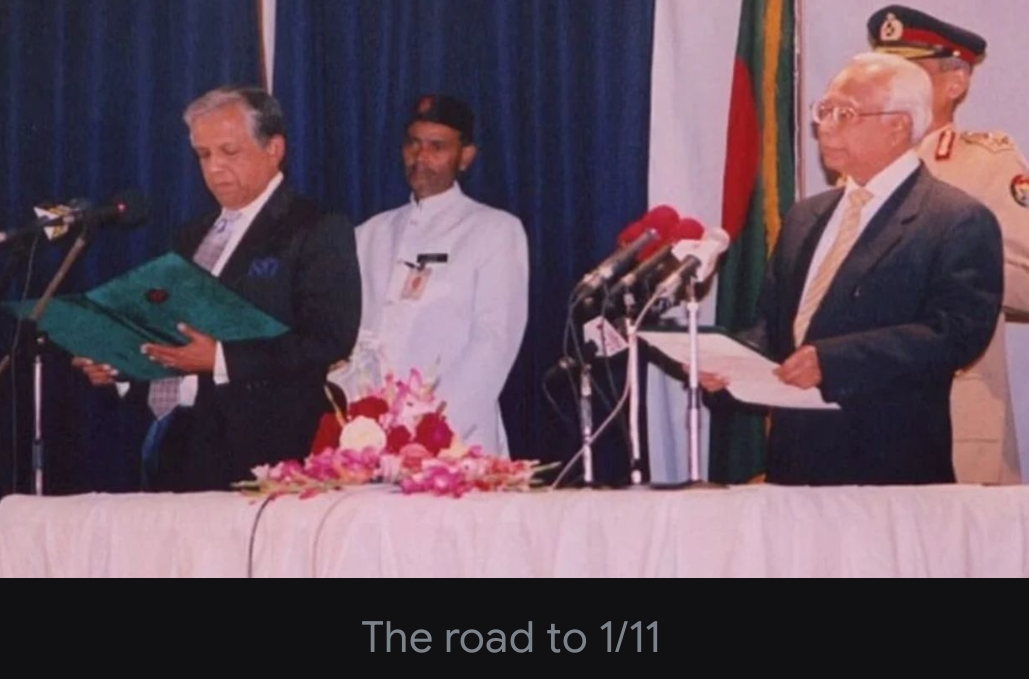
    On February 17, the newly elected BNP MPs were sworn into parliament. The ceremony included two oaths: the standard constitutional oath as MPs, and a second oath as members of the Constitutional Reform Council — the body that would have 180 working days to enact the Charter’s changes into law.

    BNP MPs took the first oath. They refused the second.

    All of them. Every BNP MP elected on February 12, representing over two-thirds of parliamentary seats.

    BNP’s justification, delivered by standing committee member Salahuddin Ahmed: the Constitutional Reform Council had not yet been approved by parliament as a constitutional body, therefore the oath was invalid. He simultaneously insisted BNP was “committed and pledged to implement the July National Charter exactly as it was signed.”

    The contradiction is not subtle. You cannot be “committed to implement” a charter while refusing to take the oath that constitutes the only body legally empowered to implement it.

    The practical result: without BNP MPs, the Constitutional Reform Council lacks the two-thirds presence required to function. The reforms endorsed by 47 million Bangladeshi voters cannot move forward.


    The Senate Trap

    BNP’s real problem with the Charter is not procedural. It is mathematical.

    In the 2026 election, BNP won 212 out of 299 contested seats on roughly 50 percent of the national vote. Their allies added a few more. The Jamaat-NCP alliance won 77 seats on about 38 percent of the vote. Under the current system, BNP’s seat count gives them a two-thirds majority — the threshold to amend the constitution unilaterally.

    The Charter’s proposed Senate would destroy that advantage.

    The referendum explicitly approved — in Question B of the ballot, directly and unambiguously — that the upper house would be formed based on proportional representation of votes in the national election. This was not buried in a note of dissent. It was one of the four questions voters said yes to.

    Under proportional vote share: BNP gets 52-53 Senate seats. Jamaat-NCP alliance gets 38. Independent and smaller parties share the rest. BNP cannot pass constitutional amendments alone. They would need to negotiate.

    Under BNP’s preferred system — seats proportional to parliamentary seats, not votes — BNP gets 70 of 100 Senate seats. They maintain effective control of both chambers.

    Professor Asif Nazrul of Dhaka University put it plainly to Al Jazeera: “The BNP favours forming the upper house in proportion to parliamentary seats, while Jamaat and the NCP prefer proportional representation. Resolving this dispute remains a key challenge.”

    One legal analyst told The Business Standard that the referendum ballot is unambiguous: “In Question Two, there is no reference to the July Charter definition. It clearly states that the upper chamber will be formed through proportional representation and that constitutional amendments will require 51% approval.” There is no legal reading that gives BNP room to substitute seats for votes.

    Yet BNP’s election manifesto explicitly states that if it comes to power, it will form the upper house based on seat numbers. A government representative of Muhammad Yunus’s office pointed out the obvious: “The manifesto given by BNP was not directly presented to the public through any vote. But people directly voted on the issue of forming the upper house of parliament on the basis of proportional votes.”

    BNP’s counter: the Implementation Order’s legal clause states that parties that win the election may take decisions “as convenient according to its manifesto.” They argue this gives them the right to substitute their manifesto position for the referendum result on any provision where they filed a note of dissent.

    This argument would mean a party can sign a reform charter, campaign on a yes vote in a referendum endorsing that charter, and then immediately after winning use their parliamentary majority to implement a different version of the charter they prefer. The voters who endorsed the proportional Senate on February 12 would have no recourse.


    Why This Matters Beyond the Technicalities

    Bangladesh has held referendums before. Three of them.

    In 1977, under General Ziaur Rahman — Tarique Rahman’s father — the turnout was 88 percent and 98.88 percent voted yes. No democratic process produces those numbers. It was a legitimacy exercise for a military government.

    In 1985, under General Ershad, 94.11 percent voted yes. Same story.

    In 1991, a genuine referendum restored parliamentary democracy. 84.38 percent voted yes, though turnout was only 35 percent.

    The February 2026 referendum produced 68 percent support on 60 percent turnout. Those are real numbers. They reflect genuine division — 32 percent voted no, and in eleven constituencies including Gopalganj and the Chittagong Hill Tracts, the no vote won outright. Real referendums have regional variation and real opposition. This one did.

    The people who voted yes were not voting for an abstract principle. They were voting for specific structural changes: a caretaker government that cannot be abolished by whoever is in power, a Senate that prevents any one party from rewriting the constitution alone, an end to the prime ministerial dominance that produced 2014 and 2018. They were voting for a system that makes another Hasina impossible — and, implicitly, another BNP 2001-2006 impossible too.

    BNP won the election on the promise of reform. Their election slogan was built on the July Movement’s energy. They signed the Charter. Their leader told people to vote yes. 47 million people voted yes.

    And then, five days after the election, their MPs refused the oath that would make it real.


    The Pattern Bangladesh Keeps Repeating

    In 2001, BNP came to power after five years of Awami League rule. One of their first acts was to weaken the institutions that constrained them — the Election Commission, the judiciary, the caretaker framework.

    In 2008, the Awami League came to power promising reform. In 2011, they abolished the caretaker government — the single most important check on electoral manipulation — using their parliamentary majority. The referendums of 2014 and 2018 followed.

    The July Charter exists because both parties, given unchecked power, reached for more of it. The Senate with proportional representation, the appointments committees, the term limits, Article 70’s abolition — every single one of these reforms is specifically designed to prevent the pattern from repeating.

    BNP has a two-thirds majority. Under the current constitution, that means they can amend anything they want without negotiating with anyone. The Charter, if implemented fully, would end that. Which is exactly why they are not implementing it fully.

    Lawyers, analysts, and opposition parliamentarians — including Jamaat-e-Islami and the National Citizen Party — are calling out the contradiction. The students who led the July Movement, who formed the NCP, who put their bodies between Hasina’s security forces and the country’s future, watched BNP MPs decline the oath that would have honored that movement’s demands.

    Oxford’s Blavatnik School of Government put it bluntly: “The central question now is whether the government will implement the Charter, or reinterpret it through the lens of its own manifesto.”

    The 180-day clock for the Constitutional Reform Council started ticking on February 17. BNP MPs have not yet joined the Council. No Council means no constitutional amendments. The deadline will arrive. And if BNP’s position does not change, the most credible public mandate in Bangladeshi constitutional history will expire unimplemented.

    47 million people voted yes. The party that asked them to is now the reason their vote might mean nothing.


    What Happens Now

    The Constitutional Reform Council requires formation within the 180-day window. Bangladesh’s Constitution does not explicitly authorize referendums — meaning the entire legal basis for the Gonovote faces potential court challenges if BNP decides to use that route.

    The Jamaat-NCP alliance, the student movement organizations, and civil society groups are applying pressure. Street protests have already begun in Dhaka over BNP’s oath refusal.

    The key outstanding disputes, as of April 2026:

    • The Senate formula — proportional votes (Charter’s text, referendum’s mandate) vs. proportional seats (BNP’s manifesto). BNP has a two-thirds majority to pass their version unilaterally if they choose to.
    • The party chief clause — the Charter says the prime minister should not simultaneously serve as party chief. Tarique Rahman is currently both Prime Minister and BNP Chairman. BNP’s manifesto does not include this reform.
    • Appointment committees — BNP dissented on the process for appointing the Bangladesh Bank governor, the Energy Regulatory Commission, the ACC, PSC, Comptroller and Auditor General. These are all the institutions where political control matters most.

    The Gonovote passed. The yes votes are in the gazette. The legal mandate exists.

    Whether it survives depends on whether a party with a two-thirds parliamentary majority chooses to implement a reform package specifically designed to prevent any party with a two-thirds majority from having unchecked power.

    History is not optimistic.


    Sources


    Bangladesh Untold documents the factual record of Bangladesh’s political history using international reports, diplomatic records, court documents, and verified journalism. We do not accept advertising or political funding.

  • Shamim Iskander Part 3: 36 Witnesses, Case Discharged, VIP in Parliament

    Shamim Iskander Part 3: 36 Witnesses, Case Discharged, VIP in Parliament

    Part 3 of the Shamim Iskander series. Part 1: Looting Biman Airlines | Part 2: 17 Years, No Job, Luxury Life

    The case had 36 witnesses.

    It had a 57-page ACC charge sheet. It had bank records showing a man with no employment for 17 consecutive years somehow owning houses on two continents, a Barclays Platinum credit card in London, and a luxury SUV in Dhaka. It had investigators who had done the work — traced the money, identified the properties, documented exactly how Tk 1.33 crore in assets and Tk 81.81 lakh in concealed wealth appeared from nowhere.

    On March 25, 2025, a Dhaka court discharged the case.

    Exactly twelve months later, Shamim Iskander — Khaleda Zia’s younger brother, the man those 36 witnesses were prepared to testify against — sat in the VIP gallery of Bangladesh’s newly inaugurated 13th Parliament. His wife Kaniz Fatema was beside him. So was Shahina Khan Bindu, the elder sister of Prime Minister Tarique Rahman’s wife.

    No cameras caught anything awkward. No press release mentioned the ACC case. He was simply there, as a guest of the new government, honored and unremarkable.

    This is how accountability ends in Bangladesh. Not with a verdict. With a seating arrangement.


    What the Charge Sheet Said

    The ACC filed the original case on 5 May 2008. The charge sheet followed on 18 August 2008. Both were specific documents built on specific evidence — not political declarations.

    Shamim Iskander had left his job as a Biman flight engineer and, from 1991 onward, held no documented employment. No salary. No business registration. No professional income visible to tax authorities. For seventeen years, on paper, he was a man with almost nothing.

    What investigators actually found:

    • A house in Australia
    • A house in Canada
    • A Barclays Platinum credit card — a product that requires demonstrating substantial wealth to obtain in the UK
    • A luxury SUV, seized by Dhaka police
    • Bank transactions flagged in a parallel NBR inquiry involving his son Fayek Iskander

    His own declaration to the ACC: approximately Tk 4 crore in assets plus 75 tola of gold. Investigators documented a further Tk 20.47 lakh beyond even that figure — and acknowledged they were likely seeing only the visible surface.

    The 36 witnesses knew where the money came from. So did anyone who had read Part 1 of this series.

    Between 2001 and 2006, while Khaleda Zia governed Bangladesh as Prime Minister, Shamim Iskander ran Biman Bangladesh Airlines. Not officially — he held no title. But he controlled which staff were transferred and fired. He decided which aircraft Biman leased and at what price. He determined which foreign maintenance companies won contracts, usually routed through his brother-in-law Shamsul Haque, who acted as their local agent in Dhaka. Shamsul Haque fled the country after the January 11, 2007 emergency and has been in London ever since.

    The results were documented in Biman’s own records: Tk 250 crore in lease expenditures for aircraft that could have been purchased outright for less. Tk 40 crore in commissions. A defective Airbus acquired at Tk 100 crore over five years — against a market value of Tk 62 crore. By the end of 2006, Biman’s own pilots and staff had revolted openly against Shamim’s interference. Accounts from the time describe a crowd that nearly became a mob.

    The money that built those Australian and Canadian houses came from Biman. The witnesses in the 2008 case knew this. Thirty-six of them were prepared to say so under oath.


    Seventeen Years in Court, Then Gone

    The case was filed in the window created by the 1/11 caretaker government — the military-backed administration that arrested both Khaleda Zia and Sheikh Hasina in 2007 and launched the most aggressive anti-corruption drive in Bangladesh’s history. That government was temporary by design. It handed power to the Awami League after the December 2008 elections.

    What followed was seventeen years of procedural drift.

    The Awami League kept the case alive as political currency — proof of BNP corruption to wave at election time — while showing no urgency about actually finishing it. Hearings were adjourned. Witnesses were summoned and rescheduled. The charge sheet gathered age.

    Then August 5, 2024: Sheikh Hasina boarded a military helicopter and left Bangladesh. The Awami League’s fifteen-year government collapsed in an afternoon. Muhammad Yunus was installed as head of an interim administration. And within months, courts across Dhaka began quietly working through the backlog of BNP-era cases — in reverse.

    Tarique Rahman’s money laundering conviction — upheld by the High Court in 2016, confirmed by the Supreme Court, carrying a 7-year sentence — was acquitted by the Appellate Division on 6 March 2025. Nineteen days later, on March 25, Shamim Iskander’s case was discharged.

    These were not independent judicial outcomes. They were the same outcome, applied systematically.

    Discharge is a specific legal finding. It does not mean a defendant was found innocent. It means the court determined the case was insufficient to proceed to full trial. The distinction matters — because 36 witnesses and a documented asset trail across three countries is not normally what “insufficient” looks like. What changed between 2008 and 2025 was not the evidence. What changed was who controlled the government.


    The Erasure Is the Message

    BNP spent years arguing that every case filed during the 1/11 period was fabricated — politically motivated prosecutions dressed up as anti-corruption work. This was always a convenient claim, made by defendants who had strong incentives to discredit the cases against them.

    But consider what that claim actually requires you to believe about the Shamim Iskander case specifically.

    You would have to believe that ACC investigators fabricated or manufactured evidence of houses in Australia and Canada. That they invented a Barclays Platinum credit card. That they created false bank records implicating his sons. That 36 witnesses — individuals who agreed to testify and give sworn statements — were all coordinated participants in a political conspiracy rather than people who had actually seen and experienced what the charge sheet described.

    Or the alternative: the evidence was real. A man with no documented income for seventeen years accumulated international property and luxury assets because his sister was Prime Minister and he used that access to extract money from a national institution. The ACC documented it. Thirty-six witnesses confirmed it. And the case was discharged because the political environment had shifted, not because the facts had changed.

    There is no version of this that leaves the judiciary looking like an independent institution.


    The Gallery Photograph

    The VIP gallery of the 13th Parliament’s inaugural session was not a random collection of people.

    It was a portrait of who Bangladesh now belongs to. Tarique Rahman’s in-laws. Senior BNP figures. And Shamim Iskander — the Prime Minister’s uncle by marriage, the man who looted Biman for five years, the man 36 witnesses were prepared to testify against, the man whose case was discharged twelve months before he took his seat.

    The Dhaka Tribune photograph from that session shows him settled in the gallery, unremarkable, a face among faces. His wife beside him. Shahina Khan Bindu nearby.

    Bangladesh Untold has documented everything that preceded that photograph: the Biman lease contracts, the commission structures, the defective aircraft, the maintenance kickbacks, the ACC investigators who built the case, the charge sheet they filed, the witnesses they assembled. All of it is documented. All of it is sourced. None of it was in the VIP gallery caption.

    The photograph is public record. So is everything that preceded it. The distance between those two facts is what this project exists to close.


    While His Father Was Rehabilitated

    On December 15, 2025 — three months before the parliamentary ceremony — a different Iskander was in the news.

    Fasbir Iskander accepted the Study UK Alumni Award 2026 in the Business & Innovation category at the Radisson Blu in Dhaka. The award recognized his work as co-founder and publisher of The Front Page (@thefrontpagebd), a digital media platform with 212,000 Instagram followers that describes itself as “Bangladesh’s first forum and citizen journalism platform.”

    Fasbir — also written Fasbeer in some records — studied at Royal Holloway and UCL, both University of London institutions. He co-founded The Front Page on November 20, 2020, with Shah Md. Akib Majumder, who serves as Chief Editor. In a 2024 interview with The Prestige magazine, Akib explained why they started the platform: because of “lack of freedom of speech for almost 17 years.” That is BNP’s precise political narrative for the Awami League period. It is not presented as a political position. It is presented as a founding principle.

    During the July 2024 uprising, Fasbir was in the United States. He ran The Front Page’s coverage solo during the internet blackout, then assembled 20 to 30 international volunteers from Canada, Australia, Japan, Romania, Germany, Malaysia, the UK, and the US. He describes this as “standing with the students.”

    In no interview, in no award citation, in no media profile, is Fasbir Iskander identified as Khaleda Zia’s nephew. His father is never named. The family connection — to the Prime Minister, to the man in the VIP gallery, to the subject of the ACC corruption case with 36 witnesses — does not appear anywhere in The Front Page’s public materials.

    212,000 followers are reading content produced by a platform whose founder has an undisclosed direct family relationship with the current Prime Minister. That is not independent journalism. That is something else wearing its clothes.

    Part 4 of this series will document The Front Page in full: its editorial patterns, its coverage of BNP and Awami League, its business model, and what “Bangladesh’s first citizen journalism platform” looks like when you know who built it and why.


    What Remains

    The ACC charge sheet filed on August 18, 2008 still exists.

    The statements from 36 witnesses still exist.

    The property records for the Australian and Canadian houses still exist.

    The Barclays Platinum credit card records still exist.

    The Biman lease contracts, the commission payments, the correspondence that went through Khaleda Zia’s PM office — Khaleda’s personal secretary confirmed that Shamim visited the Hatiazar office regularly — all of it still exists.

    The court issued a discharge. It did not erase the documents. It did not interview the 36 witnesses and find them dishonest. It did not examine the Australian and Canadian property records and find them fabricated. A discharge is a procedural finding about whether a case should proceed to trial. It is not a historical verdict on whether the events described in the charge sheet occurred.

    Shamim Iskander is free. He sat in the VIP gallery. His son wins UK journalism awards. His family is rehabilitated.

    The documents are still here.

    So are we.


    Sources

    • The Daily Star (July 20, 2008): “Shamim rode on Biman” — investigation into Shamim Iskander’s control of Biman Bangladesh Airlines during 2001–2006
    • The Daily Star (May 5, 2008): ACC case filed against Shamim Iskander and Kaniz Fatema
    • The Daily Star (August 18, 2008): ACC charge sheet submitted — 36 witnesses named, Tk 1.33 crore illegal acquisition, Tk 81.81 lakh concealed assets
    • The Daily Star (March 25, 2025): Dhaka court discharges Shamim Iskander and Kaniz Fatema
    • Dhaka Tribune (March 2026): Shamim Iskander and Kaniz Fatema photographed in VIP gallery, 13th Parliament inaugural session
    • The Daily Star, Dhaka Mirror, The Federal, BD Pratidin (December 30, 2025): Shamim Iskander present at Evercare Hospital at Khaleda Zia’s death alongside Tarique Rahman and family members
    • The Prestige (November 19, 2024): Interview with Fasbir Iskander and Shah Md. Akib Majumder, co-founders of The Front Page — founding motivation, July 2024 coverage, editorial claims
    • Study UK Alumni Awards 2026: Fasbir Iskander named winner, Business & Innovation category; ceremony at Radisson Blu Dhaka, December 15, 2025
    • ACC/NBR Bank Inquiry (2008): Fayek Iskander flagged for unexplained wealth transactions
    • Bangladesh High Court (July 21, 2016): Tarique Rahman sentenced to 7 years for money laundering, Tk 20 crore fine
    • Bangladesh Appellate Division (March 6, 2025): Tarique Rahman acquitted in money laundering case
    • Human Rights Watch Bangladesh reports (2001–2007)
    • Transparency International Corruption Perceptions Index (2001–2005): Bangladesh ranked most corrupt country globally for five consecutive years

    Bangladesh Untold documents the factual record of Bangladesh’s political history using international human rights reports, diplomatic records, court documents, and verified investigative journalism. We do not accept advertising or political funding. All articles are published with full source citations.

    Part 4 — The Front Page: When the Prime Minister’s Nephew Runs “Independent” Media — publishes next week.

  • Khaleda’s Orphanage Trust: How Tk 2.1 Crore Meant for Orphans Was Stolen

    Khaleda’s Orphanage Trust: How Tk 2.1 Crore Meant for Orphans Was Stolen


    The Zia Orphanage Trust was established in the name of a former president and war hero. It was meant to shelter Bangladesh’s most vulnerable children — orphans with nothing and no one. Instead, court records show, it became a vehicle to enrich one of Bangladesh’s most powerful political families. What follows is the documented story of how Khaleda Zia and her son Tarique Rahman were convicted of stealing from a children’s charity — and how those convictions were later erased as if they never happened.

    The Trust That Was Never Really About Orphans

    The Zia Orphanage Trust was established in 1991, named after the late President Ziaur Rahman — Khaleda Zia’s husband, the founder of the Bangladesh Nationalist Party (BNP), and a decorated Liberation War commander. On paper, the trust’s mandate was noble: raise funds from domestic and international donors and channel them into orphan welfare.

    In practice, investigators and courts would later find, the trust was managed not as a charity but as a political asset — a receptacle for foreign donations that were diverted away from orphans and into the pockets of the Zia family.

    The scale was not enormous in absolute terms. The Anti-Corruption Commission (ACC) calculated the embezzlement at over Tk 2.1 crore (approximately US $305,000 at the time of charges). But the symbolism cut deep: money donated internationally in the name of Bangladesh’s orphans, siphoned by the former Prime Minister and her son who would himself later become Prime Minister.

    The Investigation and Charges

    The case did not emerge in a vacuum. Following the January 11, 2007 political intervention that removed the BNP caretaker government from power, a sweeping anti-corruption drive was launched. The ACC, operating with unprecedented independence under the military-backed caretaker administration, investigated Bangladesh’s political elite.

    What investigators found in the Zia Orphanage Trust accounts led to formal charges in 2009. The ACC accused:

    • Khaleda Zia — former Prime Minister, chairperson of BNP, head of the Zia family
    • Tarique Rahman — Khaleda’s eldest son, then BNP Senior Vice Chairman, living in London
    • Several others involved in the trust’s management

    The core allegation: foreign donations intended for orphan welfare were received into the trust’s accounts and then misappropriated. The trust did not use those funds to build orphanages, feed children, or provide education. The money flowed elsewhere.

    Five Years in Court: The Trial

    The case moved slowly through Bangladesh’s court system — a process that took nearly a decade from initial charges to verdict. Khaleda Zia and BNP consistently maintained the case was politically motivated retaliation by the Awami League government of Sheikh Hasina, which came to power in January 2009.

    The trial was heard at a Special Court in Dhaka. Tarique Rahman, who had left Bangladesh following his arrest and release during the 2007–2008 emergency period, participated through legal representatives. He would not return to Bangladesh for years.

    On 8 February 2018, the Special Court handed down its verdict:

    Khaleda Zia was convicted and sentenced to 5 years’ imprisonment.

    Tarique Rahman was convicted and sentenced to 10 years’ imprisonment (in absentia, as he remained in London).

    Khaleda Zia, then 72 years old, was taken into custody and transferred to a jail inside Bangabandhu Sheikh Mujib Medical University (BSMMU) — a converted room that served as her “cell” given her age and health conditions. She would remain imprisoned, with brief medical releases, until the change of government in 2024.

    The High Court Enhancement — October 2018

    Khaleda Zia’s legal team immediately appealed the conviction. But the process moved in the opposite direction to what BNP hoped.

    On 30 October 2018, the High Court did not reduce or overturn the sentence — it enhanced it. Khaleda Zia’s 5-year sentence was increased to 10 years’ rigorous imprisonment.

    This was a significant escalation. A 10-year sentence under Bangladeshi law would keep her imprisoned until well into her late 70s, and effectively ended any realistic prospect of her returning to active politics in the near term. Combined with the separately proceeding Zia Charitable Trust case (which would add more years), Khaleda Zia was facing the prospect of spending the rest of her active life incarcerated.

    BNP’s position remained unchanged: the entire case was fabricated political persecution.

    What the Court Found: The Evidence

    Court records detail the mechanics of the alleged embezzlement. Foreign donations — the ACC emphasized these came from international sources — were deposited into the Zia Orphanage Trust. But instead of being deployed for orphan welfare programs, the funds were routed out of the trust’s accounts through a series of transactions that ultimately benefited the Zia family.

    Key documented facts from the case:

    • The trust had received substantial foreign donations — funds from overseas that donors believed would help Bangladeshi orphans
    • The ACC traced over Tk 2.1 crore in funds that were diverted from orphan welfare purposes
    • Both Khaleda Zia and Tarique Rahman, as trust insiders, were found by the court to have conspired in the misappropriation
    • The Special Court concluded this was not an administrative error but deliberate criminal embezzlement
    • The High Court, upon review in October 2018, found the evidence stronger than the trial court had assessed — hence the sentence enhancement

    The Parallel Case: Zia Charitable Trust

    The Orphanage Trust case was not an isolated finding. The ACC had simultaneously built a second case: the Zia Charitable Trust corruption case, which involved separate funds and separate allegations of embezzlement.

    On 29 October 2018 — just one day before the High Court enhanced the Orphanage Trust sentence — a Special Court convicted Khaleda Zia in the Charitable Trust case as well, sentencing her to 7 years’ rigorous imprisonment with a fine of Tk 1 million. Tarique Rahman received 10 years in absentia in this case too.

    Taken together, Khaleda Zia had been convicted in two separate corruption cases, sentenced to a combined total of 17 years in prison (though sentences would run concurrently). Both convictions were upheld or enhanced on initial appeal. This was not a single outlier prosecution — it was a pattern confirmed across two independent court proceedings.

    International Context: The Corruption Ecosystem

    To understand the Orphanage Trust case, it must be placed in the broader context of the BNP-Jamaat government’s 2001–2006 tenure.

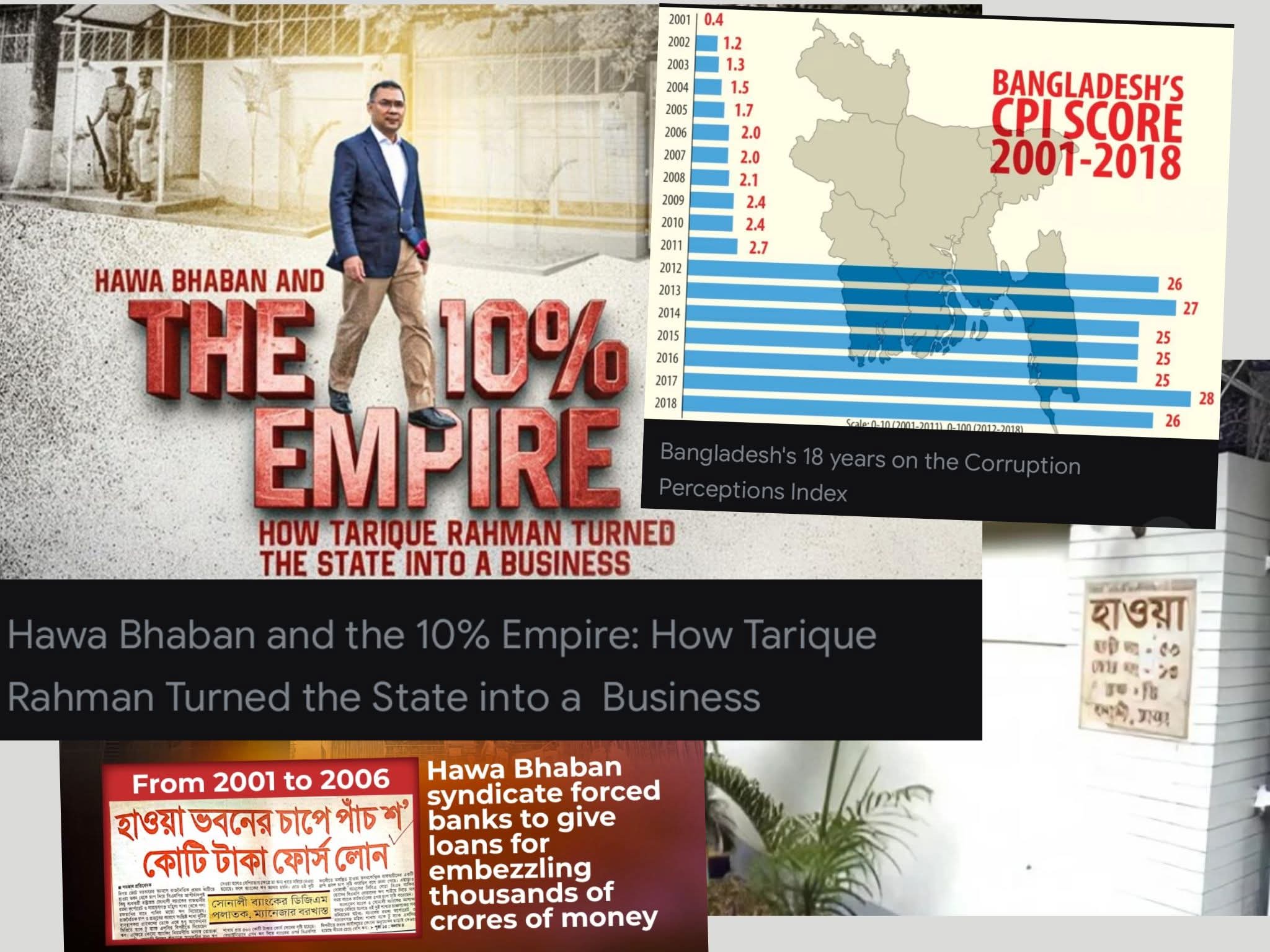
    Transparency International ranked Bangladesh as the world’s most corrupt country for five consecutive years (2001–2005) — every year of BNP’s rule. This was not opinion; it was TI’s Corruption Perceptions Index, a rigorous comparative measure across all nations.

    The Orphanage Trust embezzlement — diverting charity money meant for orphans — fit a well-documented pattern:

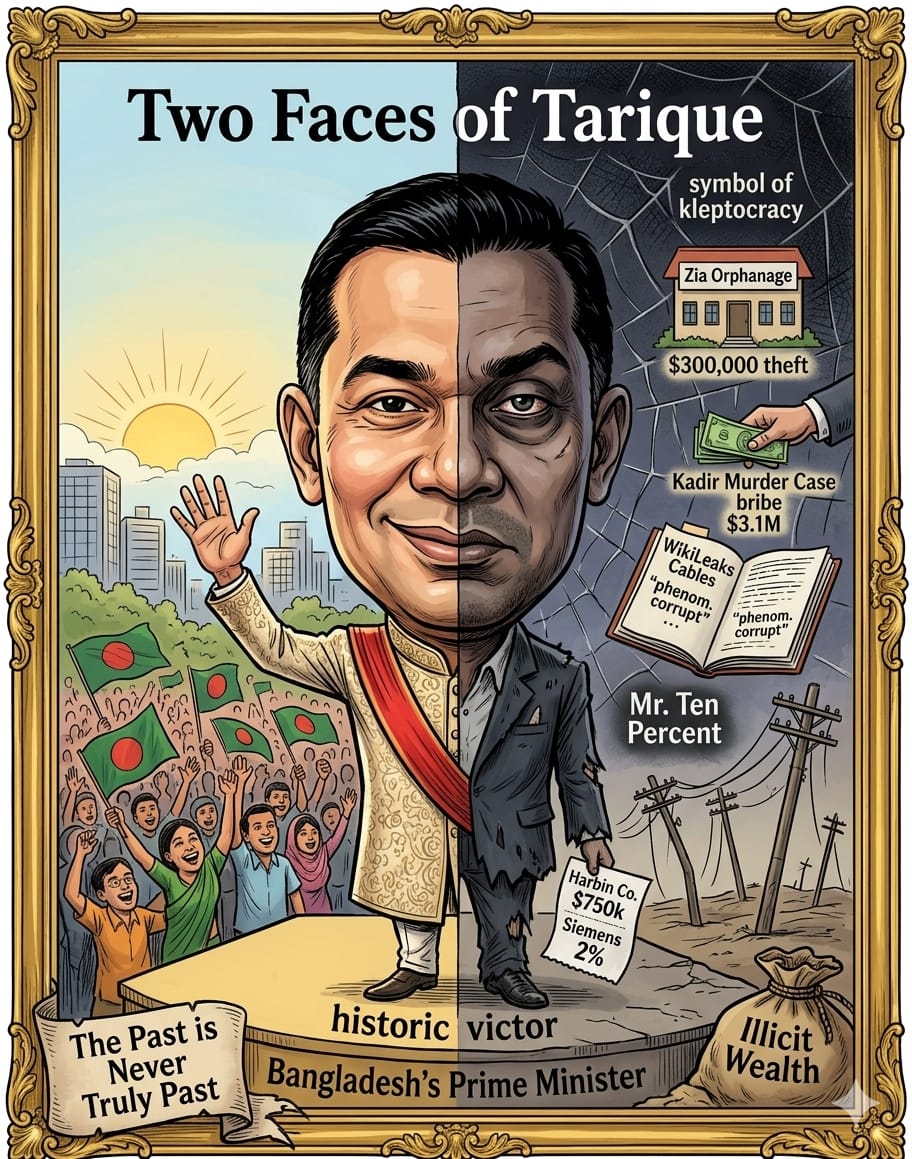
    • Tarique Rahman ran what US diplomats called a “parallel power center” at Hawa Bhaban, influencing government contracts in exchange for bribes. A 2005 US Embassy cable (later released by WikiLeaks) called him a “symbol of kleptocratic government” and the “Dark Prince.”
    • Shamim Iskander, Khaleda’s brother, extracted an estimated Tk 40 crore in commissions from Biman Bangladesh Airlines aircraft leases while the national carrier nearly went bankrupt.
    • The GATCO container management scandal, the power sector “Khamba” corruption, the arms haul cover-up — corruption permeated every arm of the BNP-led government.

    The Orphanage Trust was not an aberration. It was the Zia family’s personal contribution to a corruption ecosystem that the international community had documented extensively.

    Khaleda Zia in Prison — And the International Response

    Following her conviction and imprisonment in February 2018, Khaleda Zia’s health deteriorated. BNP and her family campaigned internationally for her release on medical grounds. She was eventually transferred from the converted jail room to BSMMU for treatment.

    The Sheikh Hasina government granted her repeated temporary medical releases — she was allowed to stay at her Gulshan residence rather than the prison — but refused to release her unconditionally or grant a formal pardon, citing the pending legal proceedings.

    BNP maintained throughout that the entire prosecution was political — that Hasina’s government had weaponized the judiciary to eliminate a political rival. Human rights organizations noted concerns about fair trial standards in Bangladesh generally, though none documented specific procedural irregularities in Khaleda’s cases that would invalidate the findings.

    The international community largely stayed silent on the specifics of the corruption charges — because the evidence, developed over years of ACC investigation and tested through multiple court proceedings including appeals, was substantial.

    2024: Everything Changes

    The July–August 2024 mass uprising that toppled Sheikh Hasina’s government changed the legal landscape overnight.

    As Bangladesh’s courts began reversing BNP-era verdicts at an extraordinary pace — acquitting Tarique Rahman of all 84 cases against him, clearing Lutfozzaman Babar in the grenade attack, freeing the arms haul accused — the Zia trust cases followed the same trajectory.

    On 11 November 2024, the Appellate Division stayed the High Court order that had enhanced Khaleda Zia’s sentence from 5 to 10 years. On 16 January 2025, the Supreme Court went further: it acquitted both Khaleda Zia and Tarique Rahman in the Orphanage Trust case entirely.

    The Charitable Trust case followed. On 27 November 2024, the High Court acquitted Khaleda Zia in that case, declaring the verdict null and void.

    After years of imprisonment, after two separate convictions across two courts, after sentence enhancements on appeal — all of it was erased. Both Khaleda and Tarique walked free of both trust cases.

    Khaleda Zia did not live to see much of this. She died on 30 December 2025, after prolonged illness, at her Gulshan residence. She was 79 years old.

    Tarique Rahman, cleared of all charges, returned to Bangladesh and won the 2026 general election. He was sworn in as Prime Minister on 17 February 2026 — the man once sentenced to 10 years for stealing from orphans, now leading the nation.

    The Pattern of Impunity: A Complete Scorecard

    The Zia trust acquittals were not isolated. They were part of a systematic reversal of every major BNP-era conviction following the change of government. The complete picture:

    Case Original Conviction Post-2024 Status
    Zia Orphanage Trust (Khaleda + Tarique) Convicted 2018; HC enhanced to 10 yrs Acquitted — Jan 2025
    Zia Charitable Trust (Khaleda + Tarique) Convicted 2018; 7 yrs rigorous imprisonment Acquitted — Nov 2024
    Tarique Rahman — Money Laundering (Tk 20.41 cr) HC sentenced 7 yrs + Tk 20 cr fine (2016) Acquitted — Mar 2025
    August 21 Grenade Attack (Tarique + all 49) Convicted 2018; Tarique life imprisonment All acquitted — Dec 2024
    Chittagong Arms Haul (Babar + others) Death sentences for Babar and 13 others (2014) Babar acquitted — Dec 2024
    Shamim Iskander — Biman corruption ACC filed case 2008; 36 prosecution witnesses Discharged — Mar 2025

    Every case. Every conviction. Every accused. Cleared.

    What the Courts Found — And What Was Erased

    Here is what is important to understand: the acquittals do not mean the evidence never existed. They mean a new set of judges, operating under a new political dispensation, reached different conclusions — or found procedural grounds to set aside previous rulings.

    The original convictions were not handed down carelessly. The Orphanage Trust case was investigated by the ACC with substantial documentation. It was tried in a Special Court. It survived an initial appeal — and the appellate court strengthened it. Multiple judges across multiple proceedings looked at the evidence and found Khaleda Zia and Tarique Rahman guilty of stealing from orphans.

    That judicial record does not disappear because a later court — operating after a political revolution that brought BNP to power — reached a different conclusion.

    Bangladesh’s documented history stands: the woman who led the country during the five years it held the world record for corruption was convicted of embezzling a children’s charity. Her son, convicted alongside her, is now Prime Minister.

    The Orphans

    In all the coverage of this case — the convictions, the appeals, the acquittals, the political drama — one group is almost never mentioned.

    The orphans.

    The foreign donors who contributed to the Zia Orphanage Trust believed their money would reach Bangladeshi children who had lost their parents. Whether those children ever received the help those donations were meant to provide is not documented in any court record or news report that Bangladesh Untold has been able to find.

    What is documented: over Tk 2.1 crore did not reach them.


    Sources and Citations

    • Anti-Corruption Commission (ACC), Bangladesh — Case records, Zia Orphanage Trust, filed 2009
    • Special Court, Dhaka — Verdict, State v. Khaleda Zia et al. (Orphanage Trust), 8 February 2018
    • Bangladesh High Court — Appeal judgment enhancing sentence, 30 October 2018
    • Supreme Court of Bangladesh (Appellate Division) — Acquittal order, 16 January 2025
    • Special Court, Dhaka — Verdict, Zia Charitable Trust case, 29 October 2018
    • Bangladesh High Court — Acquittal, Charitable Trust case, 27 November 2024
    • Transparency International, Corruption Perceptions Index 2001–2005 (Bangladesh ranked #1 most corrupt all five years)
    • US Embassy Dhaka, Diplomatic Cable (2005), published by WikiLeaks — Tarique Rahman described as “symbol of kleptocratic government” and “Dark Prince”
    • The Daily Star (Bangladesh) — Court coverage, 2018–2025
    • The Business Standard (Bangladesh) — Coverage of Khaleda Zia’s acquittals, 2025
    • Dhaka Tribune — Coverage of BNP-era case resolutions, 2024–2025
    • International Crisis Group, Asia Report No. 121, “Bangladesh Today”, October 2006
    • Human Rights Watch — Bangladesh country reports, 2002–2007
    • Human Rights Watch, “Judge, Jury, and Executioner: Torture and Extrajudicial Killings by Bangladesh’s Elite Security Force,” December 2006

    Bangladesh Untold is committed to factual, source-backed journalism. All claims in this article are drawn from court records, official investigations, and documented international sources. We welcome corrections supported by primary documentation.

  • “From Fugitive to Prime Minister” — The Incredible Escape, 17-Year Exile, and Return of Tarique Rahman

    “From Fugitive to Prime Minister” — The Incredible Escape, 17-Year Exile, and Return of Tarique Rahman

    “From Fugitive to Prime Minister” — The Incredible Escape, 17-Year Exile, and Return of Tarique Rahman

    Part 3 of “The Dark Prince” — Tarique Rahman Exposé. Read Part 1: World Champion of Corruption and Part 2: The Grenade Attack That Nearly Killed Democracy.

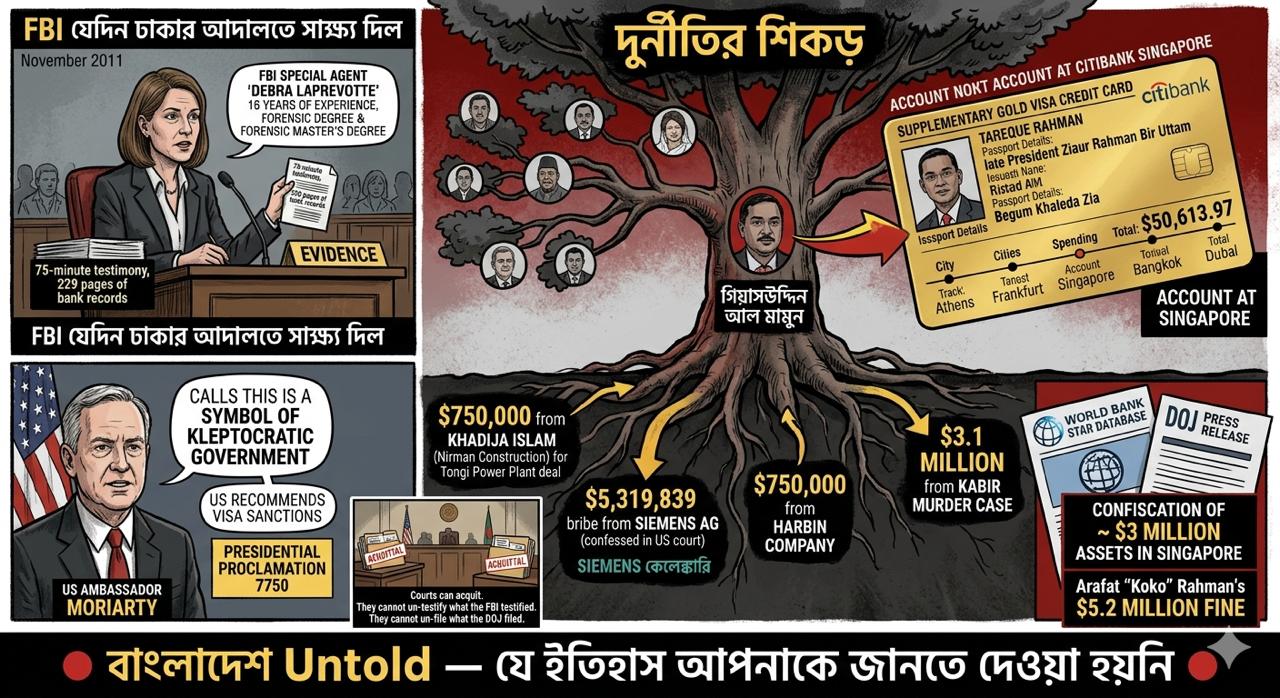
    In November 2008, the United States Ambassador to Bangladesh sent a classified cable to Washington describing a man he called a “symbol of kleptocratic government and violent politics.” The man was “notorious and widely feared” — someone who had “flagrantly and frequently” demanded bribes, who was linked to the deadliest political attack in Bangladesh’s history, and whose name had surfaced in an FBI investigation into transnational money laundering.

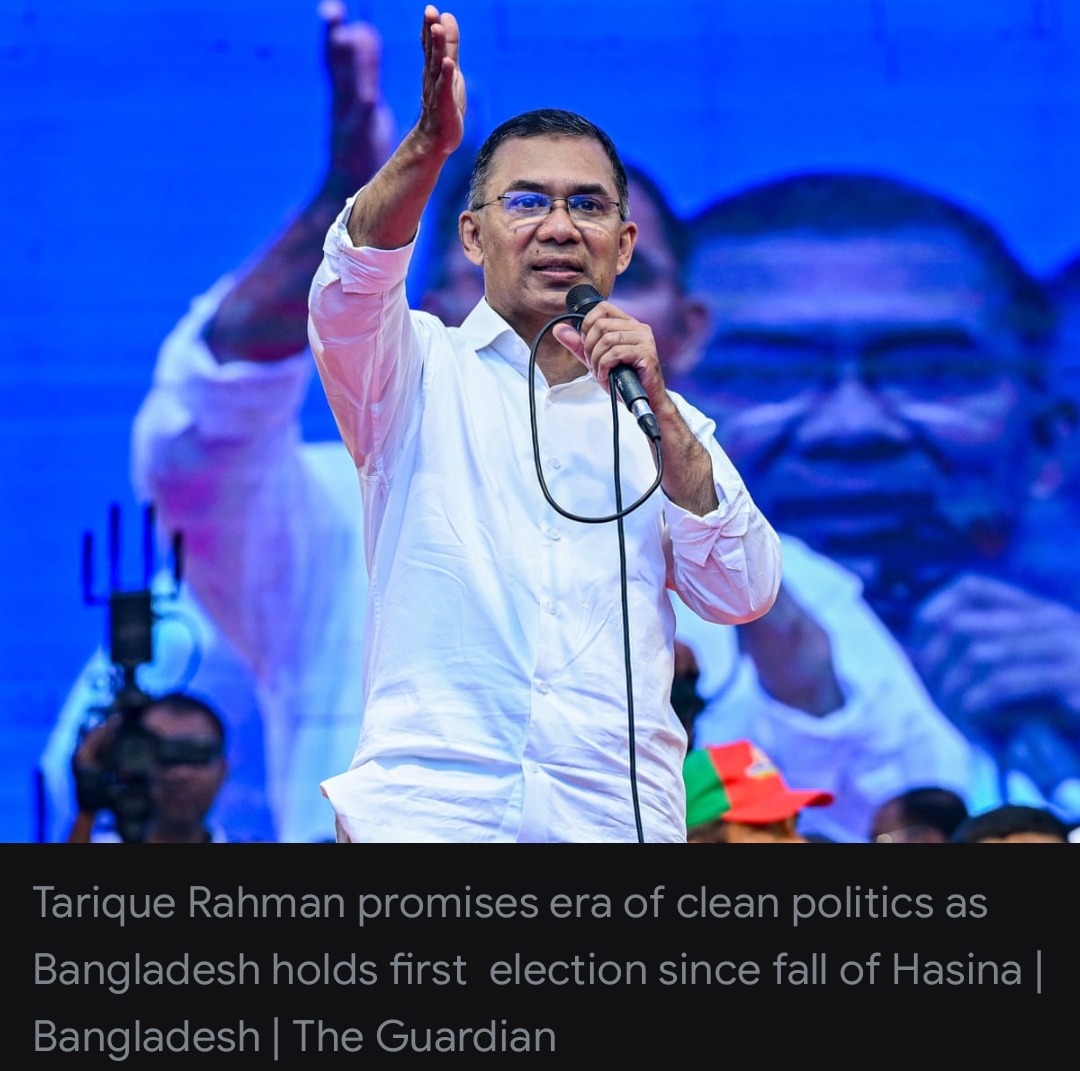
    Eighteen years later, on February 17, 2026, that same man took the oath of office as the Prime Minister of the People’s Republic of Bangladesh.

    His name is Tarique Rahman. And his journey — from arrest to exile, from fugitive to acquittal, from London drawing room to the Prime Minister’s residence — is perhaps the most extraordinary political resurrection in modern South Asian history. It is also, as this investigation argues, one of the most carefully engineered.

    This is the story of how it happened.


    Chapter 1: The Fall — Arrest Under 1/11 (March 2007)

    On January 11, 2007, Bangladesh’s military intervened. A caretaker government — nominally civilian but backed entirely by the armed forces — declared a state of emergency, suspended elections, and launched what it called a sweeping anti-corruption drive. The event is known simply as “1/11.”

    The two primary targets were the country’s rival political dynasties: the Awami League’s Sheikh Hasina and BNP’s Khaleda Zia. Both were arrested. So were hundreds of politicians, business leaders, and party operatives from both sides.

    But no arrest carried more symbolic weight than that of Tarique Rahman.

    On March 7, 2007, Tarique was detained by the National Security Intelligence (NSI) and subsequently placed under the custody of the Joint Forces — a combined military-civilian law enforcement body created under emergency powers. He was held for 18 months.

    The Charges

    The cases filed against Tarique during and after 1/11 were extensive. Over the course of the caretaker government’s tenure, a total of 84 cases were registered against him, spanning:

    • Money laundering — Tk 20.41 crore (approximately $2.4 million at the time) laundered through associates and shell entities
    • The Zia Orphanage Trust — Siphoning funds from a charitable trust established in the name of former President Ziaur Rahman
    • The August 21, 2004 grenade attack — 24 people killed, over 500 injured in a state-sponsored assassination attempt on opposition leader Sheikh Hasina (full investigation here)
    • Extortion, arms trafficking, and abuse of power — Cases linked to the Hawa Bhaban shadow government
    • The Chittagong arms haul — 10 truckloads of military weapons intercepted in 2004, intended for Indian insurgents (full investigation here)

    These were not politically invented charges by any normal measure. Several predated 1/11 entirely. The grenade attack investigation had been running since 2004, interrupted by the BNP government’s own cover-up involving a fabricated suspect named “Joj Mia.” The corruption charges were rooted in evidence collected by the Anti-Corruption Commission (ACC), and the money laundering investigation had drawn the attention of the FBI and the US Department of Justice.

    “Tarique Rahman, the notorious and widely feared son of former Prime Minister Khaleda Zia… Notorious for flagrantly and frequently demanding bribes in connection with government procurement actions and appointments to political office, Tarique is a symbol of kleptocratic government and violent politics in Bangladesh.”

    US Embassy Cable 08DHAKA1143, Ambassador James F. Moriarty, November 3, 2008 (WikiLeaks)

    Claims of Torture

    Tarique and his supporters have consistently claimed that he was tortured during his 18-month detention. BNP alleges that he was subjected to physical abuse by military intelligence officers, that he was denied adequate medical care, and that confessions and cooperation were coerced under duress.

    These claims have never been independently verified. No international human rights investigation was permitted access during his detention. What is documented is that Bangladesh’s detention conditions during the emergency period were broadly criticized — for all political detainees, not Tarique alone.

    However, the torture narrative would later become the central justification for the revenge that followed.


    Chapter 2: The Escape — September 11, 2008

    On September 11, 2008 — a date that would acquire its own symbolism — Tarique Rahman was released on bail. But his release came with a condition that would later be disputed, denied, and ultimately erased from history.

    According to multiple contemporaneous reports, Tarique signed a written declaration at Zia International Airport in which he agreed to:

    • Leave Bangladesh immediately
    • Resign from active politics
    • Seek medical treatment abroad

    He boarded a flight to London. He would not return for 17 years.

    The US Embassy cable, sent just weeks later, described the arrangement with clinical precision:

    “[Tarique] was released from prison in September 2008, partly on compassionate grounds and in connection with a written declaration at the airport that he was resigning from political activity.”

    US Embassy Cable 08DHAKA1143

    The cable also noted the broader context of the deal:

    “Following Tarique’s arrest in March 2007, his mother [Khaleda Zia] was arrested in September 2007 on corruption charges. Both were released before elections; Tarique was allowed to leave the country, reportedly after signing a declaration forgoing political activities.”

    The specifics of who negotiated the release and under what exact terms remain partially obscured. What is clear is that Tarique left Bangladesh as a man facing dozens of criminal charges, with a written promise to stay out of politics, and with the understanding that his departure was a negotiated arrangement — not an acquittal.


    Chapter 3: The London Years — Exile and Remote Control (2008–2025)

    For the next 17 years, Tarique Rahman lived in London — far from the courtrooms where his cases were being tried, far from the streets where BNP activists were being arrested, but never far from the party’s decision-making.

    Running BNP from Abroad

    Despite his written declaration to resign from politics, Tarique never stopped. From his London residence, he:

    • Maintained daily contact with BNP’s standing committee via phone and video conference
    • Approved (or vetoed) all major party decisions, from alliance strategies to candidate selections
    • Was formally elevated to Acting Chairman of BNP — effectively running the party while his mother Khaleda Zia was imprisoned in Dhaka
    • Directed BNP’s political strategy through a network of loyalists who traveled regularly between Dhaka and London
    • Coordinated with diaspora BNP chapters across the UK, US, and Middle East

    The irony was not lost on observers. A man who had signed a declaration renouncing politics was, from a flat in London, the single most powerful figure in Bangladesh’s largest opposition party.

    Convicted in Absentia

    While Tarique lived in London, Bangladesh’s courts continued to process the cases against him:

    • 2016: Convicted in the Zia Orphanage Trust case — 7 years imprisonment, Tk 10 lakh fine
    • 2018: Convicted in the August 21, 2004 grenade attack — life imprisonment. The court found that the attack was planned at Hawa Bhaban with Tarique’s direct involvement
    • Multiple money laundering and corruption convictions accumulated over the years

    Tarique’s legal team challenged every verdict. BNP called every conviction “politically motivated.” But the convictions stood — and they made Tarique a convicted criminal under Bangladesh law, ineligible to hold office, and subject to arrest the moment he set foot in the country.

    The October 2025 Appearance

    On October 2025, Tarique Rahman made his first media appearance in 17 years. In a video statement from London, he called the 1/11 military-backed caretaker government “maliciously motivated” and described its anti-corruption drive as a “conspiracy against democracy.”

    He framed the entire 1/11 period — the emergency, the arrests, the investigations, the charges — as an illegitimate exercise designed to destroy BNP and its leadership. The timing was deliberate. By October 2025, the political ground in Bangladesh had already shifted beneath everyone’s feet.


    Chapter 4: The Uprising — July 2024

    In July 2024, Bangladesh was convulsed by a student-led uprising that began as protests against a controversial job quota system and escalated into a full-scale movement demanding the resignation of Prime Minister Sheikh Hasina.

    The Hasina government’s response was brutal — security forces fired on protesters, internet was shut down nationwide, and hundreds were killed. But the movement could not be stopped. On August 5, 2024, Sheikh Hasina fled Bangladesh by military helicopter, ending 15 years of uninterrupted Awami League rule.

    An interim government led by Nobel laureate Dr. Muhammad Yunus took charge. The political landscape was suddenly, radically open. And for Tarique Rahman, the 17-year wait was nearly over.


    Chapter 5: The Great Acquittal — Erasing 84 Cases (Late 2024–2025)

    What happened next was one of the most systematic judicial reversals in modern history. Between late 2024 and mid-2025, every single one of Tarique Rahman’s 84 criminal cases was dismissed, acquitted, or otherwise disposed of.

    The pace and comprehensiveness of these acquittals were extraordinary:

    Case Original Verdict Acquittal Date
    August 21 Grenade Attack Life imprisonment (2018) December 1, 2024
    Zia Orphanage Trust 7 years imprisonment (2016) January 16, 2025
    Money Laundering (Tk 20.41 crore) Convicted March 6, 2025
    Remaining 81 cases Various charges Dismissed throughout 2024–2025

    Consider what this means. The August 21 grenade attack — in which 24 people died and over 500 were injured, in which the trial court heard from hundreds of witnesses, in which the judge found a “well-orchestrated plan executed through abuse of state power” — was overturned. The life sentence: gone.

    The Zia Orphanage Trust case — in which funds meant for orphans were allegedly siphoned into BNP’s political operations — was overturned. The money laundering case — which had drawn the attention of the FBI and the US Department of Justice, as documented in Cable 08DHAKA1143 — was overturned.

    Every case. Every conviction. Every sentence. All 84.

    Not a single conviction survived the new political dispensation. A man sentenced to life for the deadliest grenade attack in Bangladesh’s history walked free — not because new evidence proved his innocence, but because the political winds had changed.

    Critics — including international legal observers, human rights organizations, and the families of August 21 victims — noted that the acquittals followed a clear political pattern: they began only after Hasina’s ouster, accelerated as BNP’s political influence grew under the interim government, and were completed just in time for Tarique to return as a free man.


    Chapter 6: The Return — December 25, 2025

    On Christmas Day 2025 — December 25 — Tarique Rahman landed at Hazrat Shahjalal International Airport in Dhaka. He had left as a man on bail facing dozens of charges. He returned as a man acquitted of everything.

    Seventeen years. Six thousand two hundred and fourteen days. That is how long Tarique Rahman stayed away from the country where he was born, where he built his political empire, and where courts had sentenced him to life in prison.

    BNP organized massive rallies to welcome him. Hundreds of thousands of supporters lined the roads from the airport. The party machinery that had waited 17 years for this moment was in full operation.

    The man who left Bangladesh signing a declaration to quit politics had returned to claim its highest office.


    Chapter 7: The Victory — February 2026

    On February 12, 2026, Bangladesh held its national election. BNP won a landslide victory with a two-thirds parliamentary majority — the kind of supermajority that allows constitutional amendments.

    Five days later, on February 17, 2026, Tarique Rahman was sworn in as the Prime Minister of Bangladesh.

    The transformation was complete. The man described by the US Ambassador as a “symbol of kleptocratic government” now led the government. The man convicted of masterminding a grenade attack that killed 24 people now commanded the state. The man whose money laundering had been tracked by the FBI now controlled the nation’s treasury.


    Chapter 8: The Revenge — Arresting the Men Who Arrested Him

    Within weeks of taking power, the new government began systematically arresting the officials who had led the 1/11 anti-corruption drive — the very people who had detained Tarique Rahman in 2007.

    Lt. Gen. (Retd.) Masud Uddin Chowdhury — Arrested March 23, 2026

    Lt. Gen. (Retd.) Masud Uddin Chowdhury was a senior military officer during the 2007-2009 caretaker government. After his military career, he served as Bangladesh High Commissioner to Australia (2008–2014) and was later elected as a Member of Parliament from Feni-3.

    On March 23, 2026, he was arrested on 11 charges. His arrest came barely five weeks after Tarique Rahman took office.

    Lt. Gen. (Retd.) Sheikh Mamun Khaled — Arrested March 26, 2026

    Three days later, Lt. Gen. (Retd.) Sheikh Mamun Khaled — another key military figure during 1/11 — was arrested on charges of murder and corruption.

    Mohammad Afzal Naser — Arrested March 30, 2026

    On March 30, 2026, Mohammad Afzal Naser was arrested. The prosecution’s statement was remarkably explicit about the motivation:

    Mohammad Afzal Naser was arrested because he was “involved in the arrest and torture of Tarique Rahman” during the 2007-2009 caretaker government.

    Bangladesh prosecution statement, March 30, 2026

    There was no pretense of neutral justice here. The state openly acknowledged that the arrest was connected to what had been done to Tarique Rahman — not to any ongoing criminal investigation, not to any fresh evidence, but to the fact that this man had participated in detaining the person who was now Prime Minister.

    International Response

    Human Rights Watch took notice immediately. In a statement on April 1, 2026, HRW confirmed that all three arrested officials were “key figures during the 2007-2009 military-backed government” and called for scrutiny of the legal basis for their detention.

    India’s NE News was more blunt, describing the arrests as:

    “Acts of revenge and retaliation” by the new government against those who had carried out the 2007 anti-corruption drive.

    NE News India, April 2026

    The pattern was unmistakable. The people being arrested were not random officials. They were the specific individuals who had been involved in Tarique Rahman’s detention, investigation, and prosecution. The new government was not pursuing justice — it was settling scores.


    Chapter 9: Why It Matters — The Strategic Logic of Revenge

    The arrests of 1/11 officials are not merely acts of personal vengeance. They serve a sophisticated multi-layered strategic purpose:

    1. Delegitimizing the Evidence

    By framing the entire 1/11 period as illegitimate — as a “maliciously motivated” conspiracy rather than a legitimate anti-corruption drive — the Tarique government retroactively undermines every piece of evidence gathered during that period. If the arrests were illegal, then the investigations were tainted. If the investigations were tainted, then the convictions were unjust. If the convictions were unjust, then the acquittals were not political favors — they were corrections of historic wrongs.

    This is circular logic disguised as legal principle.

    2. Justifying the Acquittals

    The mass acquittal of 84 cases is politically unsustainable without a narrative. The narrative is: 1/11 was a coup, everything that followed was illegitimate, and therefore Tarique was always innocent. The arrests of 1/11 officials reinforce this narrative by turning the investigators into the accused.

    3. Exacting Personal Revenge

    The prosecution’s own statement — that Afzal Naser was arrested for being “involved in the arrest and torture of Tarique Rahman” — makes the personal dimension explicit. This is the Prime Minister using state power to punish those who once exercised state power against him.

    4. Eliminating Witnesses

    Several of the 1/11 officials cooperated with international agencies — including the FBI — during their investigation of Tarique’s financial network. As documented in Part 1 of this series, the FBI investigated a $2 million payment from a Singaporean businessman to Tarique, and the US State Department imposed a visa ban on him based on the evidence gathered.

    Officials who cooperated with these international investigations are now being arrested. The message to anyone who might testify about Tarique’s past is unmistakable: cooperate at your own risk.

    5. Rewriting History

    If 1/11 is successfully reframed as a conspiracy rather than an anti-corruption intervention, then everything that came from it — the evidence, the court proceedings, the international cooperation, the WikiLeaks cables — can be dismissed as fruit of a poisoned tree. The entire historical record of BNP’s corruption, Tarique’s money laundering, and the grenade attack conspiracy can be buried under a counter-narrative of persecution.


    Chapter 10: The India Connection

    Perhaps the most revealing dimension of Tarique Rahman’s ascent is the role of India.

    For 15 years, India under Prime Minister Narendra Modi maintained a close strategic partnership with Sheikh Hasina’s government. India considered Hasina a reliable partner on border security, counter-terrorism, and the containment of Islamist militancy in the region.

    When Hasina fell in August 2024, India faced a strategic dilemma. The interim government under Muhammad Yunus was viewed with suspicion in New Delhi. The possibility of a Jamaat-e-Islami-influenced government — BNP’s traditional coalition partner — was India’s nightmare scenario.

    India’s Pivot to Tarique

    India’s solution was pragmatic and rapid: cultivate Tarique Rahman directly.

    • PM Modi was the FIRST world leader to call Tarique on February 12, 2026 — election day — to congratulate him on BNP’s victory. Not after the results were final. On the day itself.
    • India sent the Lok Sabha Speaker — one of the highest constitutional officials — to Tarique’s oath-taking ceremony on February 17, carrying a personal letter from PM Modi.
    • Indian diplomatic sources described the outreach as a “strategic recalibration” — India would work with whoever was in power, as long as they were “cooperative.”

    The calculation was straightforward: India preferred a cooperative Prime Minister with a corruption past it could leverage over an unpredictable Jamaat-influenced alternative it could not control. A compromised leader is, from a strategic standpoint, a useful leader.

    India’s pivot from Hasina to Tarique was not an endorsement of his innocence — it was an acknowledgment of his inevitability. In the cold arithmetic of South Asian geopolitics, a pliant partner with baggage beats an ideological wildcard every time.

    As India Today and the Indian Express reported extensively, India’s diplomatic machinery moved with unusual speed to establish rapport with Tarique — a man whose party had historically been considered anti-India and whose coalition partner, Jamaat-e-Islami, had openly opposed Bangladesh’s independence in 1971.

    The message from New Delhi was clear: the past is negotiable when the future is at stake.


    The Full Circle: From “Kleptocrat” to Prime Minister

    Consider the arc:

    • 2001–2006: Tarique Rahman runs a shadow government from Hawa Bhaban, overseeing the most corrupt administration in Bangladesh’s history. The country is ranked the most corrupt nation on Earth for five consecutive years.
    • 2004: A grenade attack planned at Hawa Bhaban kills 24 people. The government blames a pickpocket.
    • 2005: The US Ambassador calls him a “symbol of kleptocratic government.”
    • 2007: Arrested. Held for 18 months.
    • 2008: Released on bail. Signs declaration to quit politics. Flees to London.
    • 2008–2025: Runs BNP from exile for 17 years while being convicted in absentia on multiple charges including a life sentence for mass murder.
    • 2024: The political landscape shifts. Hasina falls.
    • 2024–2025: All 84 cases systematically acquitted.
    • December 2025: Returns to Bangladesh.
    • February 2026: Sworn in as Prime Minister.
    • March 2026: Begins arresting the people who arrested him.

    This is not a story about justice delayed. This is a story about justice reversed.


    What This Means for Bangladesh

    The implications of Tarique Rahman’s ascent extend far beyond one man’s political career. They reach into the foundations of Bangladesh’s democratic institutions.

    The judiciary has demonstrated that convictions — even for murder, even based on extensive evidence and witness testimony — can be overturned when political power shifts. Every future court verdict in Bangladesh now carries an implicit asterisk: subject to change based on who is in power.

    The anti-corruption apparatus has been gutted. Officials who participated in legitimate investigations are being arrested. The message to every future investigator, prosecutor, and judge is: do not pursue the powerful, because the powerful will one day come for you.

    International cooperation on corruption and terrorism — with the FBI, with Interpol, with foreign intelligence agencies — has been rendered dangerous. Bangladeshi officials who cooperated with international investigations are now facing prosecution. No rational official will cooperate again.

    Historical truth is being rewritten in real time. The 1/11 anti-corruption drive — which, whatever its flaws, produced evidence that has been validated by international agencies, cited in US diplomatic cables, and adjudicated in courts over more than a decade — is being refashioned as a conspiracy. The message: evidence means nothing. Power means everything.

    And the victims — the 24 people killed on August 21, 2004, the 500 injured, the families who waited years for justice — have been told, definitively, that their lives mattered less than one man’s political ambition.

    This is the story of a man who was called a kleptocrat by the United States, convicted of mass murder by his own country’s courts, banned from entry by the world’s most powerful nation — and who today sits in the Prime Minister’s chair, using the power of the state to arrest the people who once dared to hold him accountable.

    If this does not alarm you, nothing will.


    This is Part 3 of “The Dark Prince” — a three-part investigation into Tarique Rahman by Bangladesh Untold.


    Sources

    • WikiLeaks — US Embassy Cable 08DHAKA1143_a, Ambassador James F. Moriarty, November 3, 2008
    • Human Rights Watch — Statement on arrests of former military officials, April 1, 2026
    • NE News India — “Acts of revenge and retaliation,” April 2026
    • BBC News, Al Jazeera, Reuters, The Guardian — Coverage of Bangladesh 2024 uprising and 2026 elections
    • India Today, Indian Express — Coverage of India-Tarique diplomatic relations, February 2026
    • Dhaka Tribune, The Daily Star, The Business Standard — Contemporaneous reporting on acquittals, 2024–2025
    • Transparency International — Corruption Perceptions Index, 2001–2005
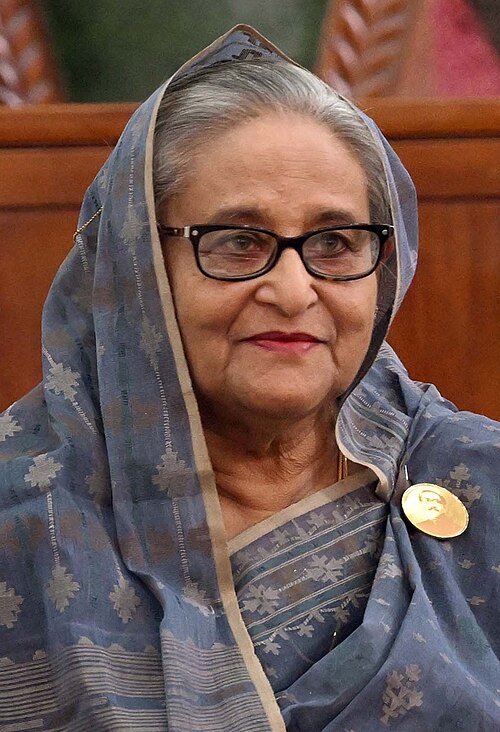
  • August 17, 2005: When JMB Bombed 63 Districts in a Single Day — The Attack That Exposed a Government in Denial

    August 17, 2005: When JMB Bombed 63 Districts in a Single Day — The Attack That Exposed a Government in Denial

    On the morning of August 17, 2005, approximately 500 bombs detonated across 63 of Bangladesh’s 64 districts within a span of thirty minutes. It was the single largest coordinated terrorist attack in Bangladesh’s history — and it happened under a government that had denied the attackers even existed just seven months earlier.

    The bombs were small — roughly the size of salt shakers. They were calibrated not to maximize casualties, but to maximize terror. And they succeeded. Two people died. Over 115 were injured. But the real damage was the message: a militant Islamist organization that the BNP government had publicly denied existed had just demonstrated the ability to strike every corner of the nation simultaneously.

    This is the story of how Jamaat-ul-Mujahideen Bangladesh (JMB) grew from a fringe group into a nationwide terrorist network under the protection of a government that refused to see — or chose not to see — the monster it had nurtured.


    11:00 AM, August 17, 2005: 30 Minutes That Shook a Nation

    At exactly 11:00 AM Bangladesh Standard Time, the first bombs detonated. Within the next thirty minutes, approximately 459 to 500 bombs exploded at 300 locations across 63 of Bangladesh’s 64 districts. Only Munshiganj was spared.

    The targets were carefully chosen for symbolic impact:

    • Dhaka: Bombs detonated near the Bangladesh Secretariat, the Supreme Court Complex, the Prime Minister’s Office, the Dhaka University campus, the Dhaka Sheraton Hotel, and Zia International Airport
    • District towns: Government buildings, courthouses, and railway stations were hit across the country
    • Strategic timing: The attacks occurred during working hours to ensure maximum public witnesses and media coverage

    The Daily Star captured the scale in its headline the next morning: “459 Blasts in 63 Districts in 30 Minutes” (Daily Star, August 18, 2005).

    The Victims

    Two people were killed:

    • Abdus Salam, a 10-year-old schoolboy, was injured when a bomb exploded outside his house in Savar. He died in the hospital.
    • Rabiul Islam, a rickshaw driver, was injured when seven bombs exploded at Biswa Road crossing near Shah Neamatullah College in Nawabganj. He died on the way to Rajshahi Medical College Hospital.

    Over 115 others were injured, many of them bystanders, market vendors, and government workers caught in the blasts.

    The Leaflets

    At nearly every bomb site, investigators found leaflets in Bangla and Arabic. They carried a chilling declaration:

    “We’re the soldiers of Allah. We’ve taken up arms for the implementation of Allah’s law the way the Prophet, Sahabis and heroic Mujahideen have done for centuries… it is time to implement Islamic law in Bangladesh.

    — JMB leaflet recovered from bomb sites (Bangladesh Observer, August 18, 2005)

    Five days later, on August 22, JMB posted a declaration on a jihadist website: “We only want to see the rule of Allah,” it read, and warned of “direct action” should the government “try to repress the clerics and intellectuals of Islam.”


    The Organization Behind the Attack: JMB

    Jamaat-ul-Mujahideen Bangladesh was founded in April 1998 by Shaykh Abdur Rahman, a graduate of Madina University who had traveled to Afghanistan to participate in jihad. His co-leader was Siddiqul Islam, known as “Bangla Bhai” — a former member of Islami Chhatra Shibir, the student wing of Jamaat-e-Islami.

    This detail is critical: both of JMB’s top leaders were products of the Jamaat-e-Islami ecosystem — the very party that sat in Khaleda Zia’s coalition government as a full partner (Jamestown Foundation, “The Bengali Taliban,” 2006).

    JMB’s Structure

    By 2005, JMB had built an organizational infrastructure that rivaled a military operation:

    Level Name Members Role
    Tier 1 Eshar ~200 Full-time operatives reporting to Central Committee
    Tier 2 Gayeri Easher ~10,000 Regional network members
    Tier 3 Sathis/Sudhis Thousands Young foot soldiers and assistants

    The group was governed by a seven-member Majlis-e-Shura (Central Committee), had 16 regional commanders and 64 district heads. They maintained at least 10 training camps in Rajshahi, Naogaon, and Natore districts, where recruits were trained using footage from al-Qaeda’s Afghan camps and recorded speeches of Osama bin Laden (Star Weekend Magazine, December 5, 2005).

    They even had a dedicated suicide squad: the Shahid Nasirullah Arafat Brigade, whose members received “insurance policies” from the organization (UPI, March 2, 2006).

    Funding

    JMB’s operations were funded through a combination of:

    • Robbery and extortion from local businesses
    • Illegal tolls on traders in areas they controlled
    • Donations from sympathetic patrons and expatriate Bangladeshis
    • 10 Islamic charities and NGOs identified in a joint 2005 report by Bangladesh’s Special Branch, NSI, and DGFI as promoting and funding extremist groups including JMB

    A Government in Denial — Or in Collusion?

    Perhaps the most damning aspect of the August 17 bombings is not the attack itself, but what preceded it. The BNP government had years of warnings about JMB — and systematically ignored, downplayed, or suppressed every single one.

    The Timeline of Denial

    2003: Bangladeshi intelligence agencies warned the BNP government about JMB and the threat it posed to the state (Daily Star, August 28, 2005). The warning was ignored.

    January 26, 2005: A BNP state minister publicly denied JMB’s existence — just seven months before the group bombed 63 districts (Council on Foreign Relations, August 29, 2005).

    February 23, 2005: JMB and its twin organization JMJB were finally banned — but only after attacks on NGOs and under direct pressure from the United States and the European Union. The ban was largely cosmetic.

    Shortly after the ban: Bangla Bhai, the JMJB leader, was allowed to escape across the Indian border. No serious effort was made to apprehend him (CFR, August 29, 2005).

    August 17, 2005: 500 bombs across 63 districts. The government expressed “shock” at JMB’s organizational capabilities — capabilities its own intelligence agencies had warned about two years earlier.

    Why Did the Government Look Away?

    The answer lies in the BNP’s coalition politics. The BNP-led Four-Party Alliance included Jamaat-e-Islami — whose student wing, Islami Chhatra Shibir, had produced both JMB leaders. As the Jamestown Foundation documented:

    “JMB drew its ideological and political support from Jamaat-e-Islami — both executed JMB leaders Abdur Rahman and Bangla Bhai were active members [of Shibir] — which was the reason why the BNP government, which relies on JeI support, dragged its feet in taking strong action against religious extremist groups despite credible evidence.

    — Jamestown Foundation, “The Bengali Taliban: Jamaat-ul-Mujahideen Bangladesh”

    The International Crisis Group was equally direct:

    “Though religious extremism arose under its watch, the BNP-led coalition government (2001-2006), which included the Jamaat, did not target radical Islamist groups.

    — ICG Asia Report No. 277, April 2016

    And in a separate report:

    “Bangladesh’s political mainstream has either deliberately used [JMB] for narrow political ends, as during the coalition government led by BNP from 2006 to 2007, or been distracted by other concerns.”

    — ICG Asia Report No. 187, March 2010, “The Threat from Jamaat-ul Mujahideen Bangladesh”

    Political Connections Exposed After Arrest

    After the August 17 bombings, phone records and interrogation reports revealed direct lines of communication between JMB leaders and BNP officials:

    • After the bombings, Bangla Bhai had a mobile phone conversation with then Deputy Minister Ruhul Quddus Talukder Dulu
    • He also spoke with BNP Member of Parliament Nadim Mostafa and then Rajshahi City Mayor Mizanur Rahman Minu
    • During interrogation, Bangla Bhai stated that BNP MP Abu Hena maintained regular contact with JMB through his nephew

    The Aftermath: Too Little, Too Late

    The Delayed Crackdown

    Only after the August 17 bombings did the BNP government finally move against JMB — and even then, only under enormous pressure from the Bangladesh Army and public outrage.

    The government offered a reward of US$70,000 for information leading to the arrest of Bangla Bhai and Abdur Rahman (Refworld/BBC, 2006). But the arrests didn’t come for another seven months.

    The Escalation That Followed

    Between the August 17 bombings and the eventual arrests, JMB escalated dramatically:

    November 14, 2005: Two judges were killed by a bomb thrown at their vehicle in Jhalakathi, 120 kilometers south of Dhaka.

    November 29, 2005: Bangladesh experienced its first-ever suicide bombing. Seven people were killed in Gazipur, including the suspected bomber. Two police officers were killed in a separate attack in Chittagong. At least 16 others were injured.

    These attacks — judge assassinations and suicide bombings — represented a terrifying escalation that might have been prevented had the government acted on its intelligence in 2003.

    The Final Reckoning

    March 2, 2006: Bangla Bhai was captured by RAB in Mymensingh after a firefight.

    March 6, 2006: Shaykh Abdur Rahman was arrested.

    March 29, 2007: Six JMB leaders were executed by hanging:

    1. Shaykh Abdur Rahman — JMB founder and chief
    2. Siddiqul Islam / Bangla Bhai — military commander
    3. Ataur Rahman Sunny — military wing leader
    4. Abdul Awal — organizational leader
    5. Khaled Saifullah — operative
    6. Iftekhar Hasan Mamun — operative

    By 2013, courts had disposed of 200 out of 273 cases filed in connection with the bombings. 58 people were sentenced to death, 150 to life imprisonment, and 300 others to various prison terms (Dhaka Tribune, August 16, 2013).


    The BNP Response: Blame Everyone Else

    In the immediate aftermath, BNP leaders scrambled to deflect responsibility:

    • Motiur Rahman Nizami, the Jamaat-e-Islami chief serving as Industries Minister in BNP’s cabinet, blamed India for the bombings (The Economist, August 25, 2005)
    • Moudud Ahmed, the BNP Law Minister, dismissed the threat entirely: “If they try for 100 years, they will not turn Bangladesh into a Taliban state” (The Economist, August 25, 2005)

    This was the same Motiur Rahman Nizami who was later convicted of war crimes during the 1971 Liberation War and executed in 2016. And the same government that had arms smuggling operations passing through state intelligence agencies (see: The Chittagong Arms Haul).


    International Alarm

    “Bangladeshi officials were shocked by JMB’s ability to pull off such a well-organized attack; after all, a state minister denied the group’s existence as recently as January 26.”

    — Council on Foreign Relations, August 29, 2005

    Ahmad Tariq Karim, former Bangladeshi Ambassador to the United States and senior adviser at the University of Maryland, warned: “The government has been complacent. It needs to get its act together or risk being overrun by fringe groups of radicals” (CFR, 2005).

    The South Asia Intelligence Review‘s editor wrote: “That a conspiracy of such magnitude could escape the notice of intelligence agencies defies belief” (August 22, 2005).

    The Council on Foreign Relations noted that the government’s crackdowns on militants had been “halfhearted” and that “experts say this is the work of government officials who sympathize with the radical Islamists.”


    The Bigger Picture: A Pattern of State-Enabled Terror

    The August 17, 2005 bombings cannot be understood in isolation. They were the culmination of a systematic pattern under BNP-Jamaat rule:

    Year Event State Role
    2001 Post-election violence — 18,000+ rapes, targeted minority attacks BNP supporters; 25 MPs identified by judicial commission
    2002 Operation Clean Heart — 44+ deaths in custody Government-ordered military operation; deaths covered by Indemnity Act
    2004 Chittagong Arms Haul — 4,930 guns, 27,020 grenades seized NSI, DGFI officials charged; weapons for ULFA insurgents
    2004 August 21 Grenade Attack — 24 killed targeting Sheikh Hasina 19 sentenced to death including State Home Minister Babar
    2004 Bangla Bhai terrorizes northwest Bangladesh Operated openly with police cooperation; 500+ tortured
    2005 August 17 — 500 bombs across 63 districts Government denied JMB existed 7 months prior; Jamaat links to JMB leadership

    As the International Crisis Group concluded, the BNP-Jamaat coalition’s complicity “allowed groups like JMB, HuJI-B, and JMJB to establish training camps, often in collaboration with the Rohingya Solidarity Organization in Bandarban” (Global CDG).


    The Uncomfortable Questions

    1. How did JMB build a 10,000-member network with training camps, a suicide squad, and district-level commanders across 64 districts without the government noticing? Intelligence agencies warned the government in 2003. Someone chose to ignore them.
    2. Why was Bangla Bhai allowed to escape after the February 2005 ban? He was the most wanted militant in the country, and he walked across the border.
    3. Why did it take seven months after the bombings to arrest the leaders? The government had offered a $70,000 reward but couldn’t find two men its own intelligence agencies had been tracking for years.
    4. What was the full extent of BNP-JMB coordination? Phone records showed direct contact between JMB leaders and BNP ministers. What other communications were never investigated?
    5. Why has the current government — led by many of the same BNP figures — never addressed these questions? Tarique Rahman, now Prime Minister, was convicted (later acquitted) in connection with the August 21 grenade attack. His coalition partner Jamaat-e-Islami produced both JMB leaders.

    A Child Named Abdus Salam

    On the morning of August 17, 2005, ten-year-old Abdus Salam was at home in Savar when a bomb exploded outside his house. He was rushed to the hospital. He didn’t make it.

    Abdus Salam didn’t know what JMB was. He didn’t know about Bangla Bhai or Abdur Rahman or the Majlis-e-Shura. He didn’t know that a state minister had denied the existence of the organization that killed him. He was ten years old.

    He is the reason this history matters. He is the reason we document. He is the reason we refuse to let a government’s willful blindness be forgotten.

    Because when a government knows a terrorist organization exists, has the intelligence to prove it, and chooses to look away because that organization is politically useful — the blood of a ten-year-old boy is on the government’s hands.


    Sources

    Bangladesh Untold documents the events that shaped Bangladesh’s modern history — using international sources, court records, and official reports. For the full 1/11 Chronicle series, see Part 1, Part 2, Part 3, and Part 4.

  • 28 Judges Punished for Speaking Up — While Parliament Dismantles Judicial Independence

    28 Judges Punished for Speaking Up — While Parliament Dismantles Judicial Independence

    28 Judges Punished for Speaking Up — While Parliament Dismantles Judicial Independence

    On April 8, 2026, Bangladesh’s Law Ministry issued show cause notices to 28 lower court judges for posting on Facebook about judicial independence. Their crime? Expressing concern about the very institution they serve — the judiciary — on their personal social media accounts.

    The same week, Bangladesh’s parliament moved to repeal three ordinances that were the only legal safeguards protecting judicial independence from executive control.

    And just one day earlier, the High Court published a 185-page verdict ordering the establishment of a separate judiciary secretariat — a ruling that the government’s own legislative actions are now poised to render meaningless.

    This is not a coincidence. This is a coordinated dismantling of judicial independence in Bangladesh, happening in plain sight.


    The Show Cause Notices: Silencing the Judiciary from Within

    The Law Ministry’s show cause letters, issued Tuesday, accused the 28 judges of making “adverse comments” and “provocative statements” about their “appointing and controlling authority” on social media. The judges were charged under two provisions:

    • Violation of the High Court Division’s directive on social media use by judicial officers
    • Rule 2(চ)(2) of the Bangladesh Judicial Service (Discipline) Rules, 2017 — engaging in acts “detrimental to the discipline of service,” classified as misconduct

    The judges have been given 7 working days to submit written explanations under Rule 3(2) of the same discipline rules.

    But here’s what makes this particularly alarming: these judges weren’t leaking state secrets or making partisan political statements. They were expressing concern about judicial independence — the very principle that underpins the rule of law in any democracy.

    “আপনি সামাজিক যোগাযোগ মাধ্যম ব্যবহার করে আপনার নিয়োগকারী ও নিয়ন্ত্রণকারী কর্তৃপক্ষ সম্পর্কে নানাবিধ বিরূপ মন্তব্য উসকানি প্রদানের মাধ্যমে ব্যক্তিগত অনুভূতি প্রকাশ করে… সামাজিক যোগাযোগ মাধ্যম ব্যবহার-সংক্রান্ত নির্দেশনা অমান্য করেছেন, যা অসদাচরণ (Misconduct) হিসেবে গণ্য।”

    — From the Law Ministry’s show cause notice

    Translation: “You have used social media to express personal sentiments through various adverse comments and provocations about your appointing and controlling authority… violating the High Court Division’s directive on social media use, which constitutes Misconduct.”

    The message is unmistakable: criticize the government’s control over the judiciary, and you will be punished.


    The Bigger Picture: Parliament Repeals Judicial Independence Safeguards

    The show cause notices didn’t happen in a vacuum. They came during the same week that Law Minister Md Asaduzzaman introduced bills in parliament to repeal three critical ordinances issued by the interim government to protect judicial independence:

    1. The Supreme Court Judges Appointment (Repeal) Bill, 2026 — repealing the ordinance that created a statutory process for appointing Supreme Court judges, with the Chief Justice advising the president on appointments
    2. The Supreme Court Secretariat (Repeal) Bill, 2026 — repealing the ordinance that established an independent secretariat for the Supreme Court under the Chief Justice’s control
    3. The Supreme Court Secretariat (Amendment) Ordinance, 2026 — also targeted for repeal

    These ordinances were designed to do something Bangladesh has never sustainably achieved: remove the executive branch’s stranglehold over the judiciary.

    Under the secretariat ordinance, authority over the transfer, promotion, and discipline of lower court judges would have been vested in the Supreme Court — not the Law Ministry. Under the appointments ordinance, Supreme Court judges would have been selected through a statutory process rather than pure executive discretion.

    Now, both are being repealed.

    The Rushed Timeline

    The parliamentary process itself has been a study in democratic deficit. A special committee was tasked with reviewing 133 ordinances from the interim government. Out of those, the committee recommended approving 98 in original form and 15 with amendments. But of the 20 it recommended against, four were the judicial independence ordinances.

    Chief Whip Nurul Islam admitted that all 133 ordinances had to be passed by April 9 — giving parliament barely any time for meaningful debate. Jamaat-e-Islami MP Saiful Alam Khan stood on a point of order to note that members received a 49-page bill just moments before voting, rather than the required three days in advance.

    Three Jamaat-e-Islami MPs issued notes of dissent on all three judiciary-related ordinances. But the bills were pushed through anyway.

    “The real question before parliament now is brutally simple. Does it want an independent judiciary, or merely a friendlier one?”

    The Daily Star, April 6, 2026


    The High Court’s 185-Page Verdict — Already Being Undermined

    In a bitter irony, on April 7 — one day before the show cause notices — the High Court published its full 185-page verdict ordering the establishment of a separate, independent secretariat for the Supreme Court within three months.

    The bench of Justice Ahmed Sohel and Justice Debasish Roy Chowdhury went further: they invalidated the provision of Article 116 of the Constitution that assigned control over subordinate court judges to the president, and cancelled the 2017 Judicial Service (Discipline) Rules entirely.

    Read that again. The very discipline rules being used to show-cause the 28 judges were cancelled by the High Court one day earlier.

    The verdict returned control of lower court judges to the Supreme Court — exactly as the original 1972 Constitution intended, before the Fourth Amendment of 1974 transferred that power to the executive.

    But with parliament simultaneously repealing the ordinances that would operationalize this independence, the High Court’s landmark ruling risks becoming a dead letter.


    TIB Sounds the Alarm

    Transparency International Bangladesh (TIB) has publicly condemned the rollback. TIB Executive Director Dr. Iftekharuzzaman stated that the government is “signalling retreat on judiciary, corruption and enforced disappearance issues.”

    TIB specifically called for retaining the Supreme Court Judges Appointment Ordinance and the Supreme Court Secretariat Ordinance, warning that their repeal threatens institutional frameworks for the rule of law, justice, and human rights.

    TIB also raised concerns about the Bangladesh Telecommunications Regulation Ordinance’s inclusion of “content-related issues,” which could be used to suppress dissenting views — a concern that seems prescient given the show cause notices targeting judges’ Facebook posts.


    A Pattern as Old as Bangladesh Itself

    Bangladesh has been here before. Every government promises judicial independence. Every government undermines it.

    The Constitutional History

    Year Action Effect
    1972 Original Constitution Chief Justice role in appointments; Supreme Court controls subordinate judges
    1974 Fourth Amendment Control of subordinate judges transferred to the president (executive)
    2011 Fifteenth Amendment (Awami League) Restored consultation with Chief Justice for permanent appointments under Art. 95 — but deliberately excluded Art. 98 (initial appointments), keeping the entry point under executive control
    2025 Interim Government Ordinances Created statutory appointment process; established independent Supreme Court Secretariat
    2026 New Parliament Repeals All safeguards stripped. Back to square one.

    The Judicial Capture Playbook

    As legal analyst Khan Khalid Adnan wrote in The Daily Star on April 6:

    “A politically pliant judiciary helps governments do three things that raw executive power alone cannot do: it sanitises persecution, legitimises constitutional vandalism, and disciplines dissidents through procedure rather than openly through force.”

    The evidence is overwhelming:

    • Chief Justice SK Sinha — Forced to resign and flee the country after the 16th Amendment judgment. In his book A Broken Dream, he alleged intimidation by intelligence officials and coercion by the prime minister, law minister, and attorney general at Bangabhaban to deliver a favorable judgment.
    • Chief Justice Khairul Haque — Author of the 13th Amendment judgment, in custody since July 24, 2025.
    • Chief Justice Obaidul Hassan — Resigned in August 2024 after the July uprising, confirming how shattered public confidence in judicial neutrality had become.
    • Khaleda Zia’s prosecution — The Appellate Division later described it as a “manifestly contrived misapplication of the law” amounting to “malicious prosecution.”

    And now, 28 lower court judges are being punished for talking about this pattern on Facebook.


    What This Means

    When a government simultaneously:

    1. Repeals the legal framework protecting judicial independence
    2. Punishes judges who speak up about it
    3. Rushes legislation through parliament without adequate debate
    4. Ignores High Court verdicts ordering separation of powers

    …it is not building democracy. It is constructing the infrastructure of control.

    The 28 judges who posted on Facebook understood this. They saw the ordinances being repealed. They saw their independence being stripped away. And they spoke up — knowing the personal risk.

    The Law Ministry’s response proved them right.


    Sources

    This article is part of Bangladesh Untold’s ongoing coverage of institutional capture and democratic erosion in Bangladesh.

  • “Follow the Money” — FBI, Singapore, and the $20 Million Trail of Tarique Rahman

    “Follow the Money” — FBI, Singapore, and the $20 Million Trail of Tarique Rahman

    This is Part 2 of a three-part investigative series, “The Dark Prince” — The Tarique Rahman Exposé, documenting the corruption, extortion, and international money trail of the man who now leads Bangladesh as Prime Minister. Read Part 1: “Mr. Ten Percent” — How Tarique Rahman Ran a Parallel Government from Hawa Bhaban.

    In Part 1, we documented how Tarique Rahman ran a shadow government from Hawa Bhaban, extorting billions from Bangladesh’s business community between 2001 and 2006. But extortion was only the beginning. The real story — the one that caught the attention of the FBI, the U.S. Department of Justice, and governments across three continents — is about what happened to the money afterward. Where did the hundreds of millions go? The answer leads to a single bank in a city-state 3,200 kilometers from Dhaka: Citibank, Singapore.

    This is the story of how U.S. federal investigators followed a money trail from Bangladeshi construction sites and telecom contracts to numbered bank accounts in Singapore — and how, for the first time in history, an FBI agent walked into a Dhaka courtroom to testify about what she found.

    The Singapore Connection: Citibank Account #158052

    FBI Agent Debra LaPrevotte testified in Dhaka courtroom with 229 pages of bank records from Citibank Singapore

    Every money laundering scheme needs an offshore destination — a place where dirty money can be cleaned, stored, and spent beyond the reach of domestic law enforcement. For Tarique Rahman, that destination was Singapore.

    According to the FBI’s investigation and U.S. Department of Justice filings, the central node of Tarique Rahman’s offshore financial network was a set of accounts at Citibank Singapore, held under account numbers 158052-008 and 158052-016. The accounts were registered in the name of Giasuddin Al Mamun — Tarique’s business partner and the man who served as the financial conduit for the operation.

    But the accounts weren’t just Mamun’s. FBI investigators discovered that a supplementary Gold Visa credit card — number 4568-8170-1006-4122 — was issued on Mamun’s Citibank Singapore account in the name of Tarique Rahman. A photocopy of Tarique’s passport (number Y0085483), listing his father as “late President Ziaur Rahman Bir Uttam” and his mother as “Begum Khaleda Zia,” had been submitted to Citibank Singapore to obtain the card.

    This was no loose association. This was Tarique Rahman’s name, passport, and credit card — directly linked to an account that would become the subject of an international money laundering investigation.

    How the Money Moved

    The scheme operated with brutal simplicity. Bribes were collected in Bangladesh — from construction companies, telecom firms, Chinese state enterprises, and individual businesspeople seeking government favor. The cash, almost always in U.S. dollars, was then physically transported or wire-transferred to Singapore, where it was deposited into Mamun’s Citibank accounts. From there, the funds were used for international travel, luxury purchases, and further investments — all accessible to Tarique Rahman through his supplementary credit card.

    Bank records obtained by the FBI covering 2002–2006 revealed that Tarique’s credit card was used for $50,613.97 in charges, including travel to Athens, Frankfurt, Singapore, Bangkok, and Dubai, along with shopping and medical expenses. This may seem modest for a man accused of laundering millions — but the credit card was merely the visible tip of a vast submerged iceberg. The real money sat in the accounts themselves, fed by a steady stream of bribe payments from across Bangladesh’s public contracting landscape.

    The FBI Comes to Dhaka: Debra LaPrevotte’s Historic Testimony

    On November 16, 2011, something unprecedented happened in a Dhaka courtroom. FBI Supervisory Special Agent Debra LaPrevotte took the witness stand in Special Judge’s Court-3 to testify in the money laundering case against Tarique Rahman and Giasuddin Al Mamun. It was the first time in Bangladesh’s history that an FBI agent had testified before a court in the country.

    LaPrevotte, then 50 years old and a 16-year FBI veteran with a master’s degree in forensic science and advanced training in money-laundering techniques, introduced herself to the court with a statement that underscored the gravity of her presence:

    “I’m a supervisory special agent for the Federal Bureau of Investigation. I’ve been an FBI agent for 16 years. I have a master’s degree in forensic science and advanced training in money-laundering techniques. In my country, I’m considered an expert in international money-laundering for testimony purposes.”

    — FBI Supervisory Special Agent Debra LaPrevotte, testimony before Dhaka Special Judge’s Court-3, November 16, 2011 (The Daily Star)

    How the Investigation Began

    LaPrevotte told the court that in 2008, Bangladesh’s interim government had submitted a mutual legal assistance request to the United States, asking for help investigating the asset recovery cases connected to Tarique Rahman and his associates. In response, the U.S. government sent representatives from the Department of Justice to Dhaka to assess the request and meet with the Anti-Corruption Commission (ACC).

    But here is the critical detail — one that demolishes any claim that the investigation was a political witch hunt:

    “The US reviewed this request to ensure that it was not politically motivated.”

    — FBI SSA Debra LaPrevotte, Dhaka court testimony, November 16, 2011

    The United States government independently verified that the investigation was legitimate before authorizing FBI involvement. This was not a favor to any Bangladeshi political faction. It was a deliberate, vetted decision by the U.S. Department of Justice to pursue evidence of international money laundering that had touched U.S. financial institutions.

    What the FBI Found

    After receiving authorization, LaPrevotte began her investigation and quickly discovered the Singapore accounts. Through mutual legal assistance requests to Singapore, she obtained detailed banking records for Citibank accounts 158052-008 and 158052-016 for the years 2004 and 2005.

    Her findings, presented in a 75-minute deposition, were devastating:

    • Two credit cards were issued against Mamun’s account — one Visa card in Mamun’s name (number 4568-8170-0006-4124) and one in Tarique Rahman’s name (number 4568-8170-1006-4122).
    • A photocopy of Tarique’s passport (number Y0085483) had been submitted to Citibank Singapore to obtain the card, confirming Tarique’s direct knowledge of and participation in the account.
    • A Bangladeshi businesswoman named Khadiza Islam had transferred $750,000 into Mamun’s Singapore account on August 18, 2003. This single transfer constituted the majority of the funds in the account — the same funds used to make payments on Tarique Rahman’s credit card.
    • LaPrevotte presented 43 pages of documentary evidence to the court, followed by an additional 229 pages of banking records.
    • In December 2009, LaPrevotte had certified that the records received from Singapore by the U.S. and by the Bangladesh government were identical, establishing an unbroken evidentiary chain.

    As she concluded her testimony:

    “These funds were transferred on August 18, 2003. This makes up most of the funds in Mr. Mamun’s account at Citibank Singapore, which was used to make payments from Tarique Rahman’s credit card. That is my testimony.”

    — FBI SSA Debra LaPrevotte, final statement to the court, November 16, 2011 (The Daily Star)

    Throughout the proceedings, Giasuddin Al Mamun stood in the dock at the back of the courtroom. Tarique Rahman was absent — a fugitive living in London.

    The $750,000 Khadiza Islam Bribe

    Who was Khadiza Islam, and why did she transfer three-quarters of a million dollars to a Singapore bank account belonging to a BNP operative?

    Khadiza Islam was the chairperson of Nirman Construction Company Ltd. According to the Anti-Corruption Commission’s case statement, she paid BDT 20.41 crore (approximately $2.66 million at the time) to Mamun in exchange for securing a contract for an 80-megawatt power plant in Tongi, near Dhaka. The money was transferred to Mamun’s Citibank NA account in Singapore.

    The $750,000 transfer that FBI Agent LaPrevotte traced was a component of this broader payment — the portion that landed directly in the Citibank account that funded Tarique Rahman’s credit card. This was a textbook quid pro quo: a businesswoman pays for government favor, and the money flows offshore to the accounts of the man who controlled those government decisions.

    The Siemens Scandal: A 2% Commission on Everything

    The Khadiza Islam bribe was damaging. The Siemens scandal was catastrophic — because it wasn’t just a Bangladeshi case. It was part of one of the largest corporate bribery prosecutions in history.

    On December 15, 2008, Siemens Aktiengesellschaft (Siemens AG), the German industrial conglomerate, and three of its subsidiaries pleaded guilty to violations of the U.S. Foreign Corrupt Practices Act (FCPA). In its plea, Siemens Bangladesh admitted that from May 2001 to August 2006, it caused corrupt payments of at least $5,319,839 to be made through purported “business consultants” to Bangladeshi officials in exchange for favorable treatment during the bidding process on a mobile telephone project.

    But the Bangladesh angle went deeper than Siemens’ global guilty plea. According to the classified U.S. Embassy cable 08DHAKA1143_a, authored by Ambassador James F. Moriarty:

    “According to a witness who funneled bribes from Siemens to Tarique and his brother Koko, Tarique received a bribe of approximately two percent on all Siemens deals in Bangladesh (paid in US dollars). This case is currently being pursued by DOJ Asset Forfeiture (POC: Deputy Chief Linda Samuels) and by the FBI (POC: Debra Laprevotte).”

    — U.S. Embassy Cable 08DHAKA1143_a, classified by Ambassador James F. Moriarty, November 3, 2008 (WikiLeaks)

    Two percent on all Siemens deals. Not one contract. Not one project. Every single Siemens transaction in Bangladesh carried a hidden tax — a personal commission paid in U.S. dollars to Tarique Rahman and his brother Arafat Rahman “Koko.” Given Siemens’ massive footprint in Bangladesh’s telecommunications and energy infrastructure during this period, the total amount funneled to the Rahman brothers would have run into the millions.

    And Siemens admitted it. This was not an allegation from a political rival. It was a confession by one of the world’s largest corporations, entered as part of a guilty plea in U.S. federal court.

    DOJ Asset Forfeiture: $3 Million in Singapore

    On January 8, 2009, the U.S. Department of Justice escalated the case to its logical conclusion. Acting Assistant Attorney General Matthew Friedrich of the Criminal Division announced that the DOJ had filed a forfeiture action against accounts worth nearly $3 million in Singapore — accounts alleged to hold the proceeds of “a wide-ranging conspiracy to bribe public officials in Bangladesh.”

    “This action shows the lengths to which U.S. law enforcement will go to recover the proceeds of foreign corruption, including acts of bribery and money laundering. Not only will the Department, for example, prosecute companies and executives who violate the Foreign Corrupt Practices Act, we will also use our forfeiture laws to recapture the illicit facilitating payments often used in such schemes.”

    — Acting Assistant Attorney General Matthew Friedrich, DOJ Press Release #09-020, January 9, 2009 (U.S. Department of Justice)

    The DOJ’s forfeiture complaint related primarily to bribes paid to Arafat “Koko” Rahman — Tarique’s younger brother — in connection with public works projects awarded by the Bangladesh government to Siemens AG and China Harbor Engineering Company. The China Harbor project involved building a new mooring containment terminal at the port of Chittagong.

    Key facts from the DOJ filing:

    • The bribe payments from Siemens and China Harbor were made in U.S. dollars
    • The funds flowed through U.S. financial institutions before being deposited in Singapore accounts — giving the U.S. jurisdiction
    • The case was investigated by the FBI’s Washington Field Office in cooperation with Bangladeshi law enforcement
    • The case was prosecuted by Deputy Chief Linda Samuel and Trial Attorney Frederick Reynolds of the Criminal Division’s Asset Forfeiture and Money Laundering Section

    Koko was ultimately fined $5.2 million, and assets including those of a company in Singapore called Fairhill — also set up by Koko — were confiscated. The case is documented in the World Bank’s Stolen Asset Recovery Initiative (StAR) database, which tracks international kleptocracy cases.

    The Full Bribery Ledger: What the U.S. Embassy Documented

    The DOJ’s asset forfeiture was aimed at Koko’s accounts, but the U.S. Embassy’s classified cable — 08DHAKA1143_a, signed by Ambassador Moriarty — painted a far broader picture of Tarique Rahman’s personal corruption. The cable, sent on November 3, 2008, laid out case after case in clinical detail:

    Source of Bribe Amount Purpose
    Siemens AG ~2% of all deals (USD) Commission on all Siemens contracts in Bangladesh
    Harbin Company (Chinese) $750,000 Paid to open a plant; transported to Citibank Singapore
    Monem Construction $450,000 To secure government contracts
    Khadiza Islam / Nirman Construction $750,000+ For power plant contract; transferred to Singapore
    Kabir Murder Case $3.1 million (BDT 210M) To thwart prosecution of Sanvir Sobhan
    Al Amin Construction $150,000 Extortion — pay or face company closure

    The Harbin Company Payment

    The Harbin Company, a Chinese construction firm, paid $750,000 to Tarique to secure permission to open a plant in Bangladesh. According to ACC sources cited in the Embassy cable, “one of Tarique’s cronies received the bribe and transported it to Singapore for deposit with Citibank.” The same Citibank. The same Singapore. The same pipeline.

    Monem Construction

    An ACC investigator advised U.S. Embassy officials that Monem Construction paid a bribe worth $450,000 to Tarique to secure government contracts. In a country where the per capita income was roughly $500 at the time, this single payment represented nearly a thousand lifetimes of average earnings.

    The Kabir Murder Case: $3.1 Million to Obstruct Justice

    Perhaps the most disturbing item on the ledger involves murder. According to the Embassy cable, the ACC had evidence that Tarique accepted a 210 million taka ($3.1 million USD) bribe to thwart the prosecution of Sanvir Sobhan, son of the chairman of the Bashundara Group — one of Bangladesh’s most powerful industrial conglomerates. Sanvir was accused of killing Humayun Kabir, a Bashundara Group director.

    “The ACC has evidence that Tarique accepted a 210 million taka (3.1 million USD) bribe to thwart the prosecution of a murder case against Sanvir Sobhan. Sanvir is the son of the chairman of the Bashundura Group… Sanvir was accused in the killing of Humayun Kabir, a Bashundura Group director. An investigation by the ACC confirmed Tarique had solicited the payment, promising to clear Sanvir of all charges.”

    — U.S. Embassy Cable 08DHAKA1143_a, paragraph 6(D) (WikiLeaks)

    This was not a bribe for a contract or a favorable business decision. This was $3.1 million to obstruct a murder prosecution. Tarique was selling impunity itself.

    Al Amin Construction: “Pay or We Shut You Down”

    The extortion was not always sophisticated. In the case of Al Amin Construction, the method was pure coercion. According to the cable, Tarique “threatened Al Amin Construction owner Amin Ahmed with closure of the company unless he received a payment of $150,000 USD.” This was documented alongside similar accusations from multiple business leaders, including Mohammad Aftab Uddin Khan of Reza Construction, Mir Zahir Hossian of Mir Akhter Hossain Ltd., and Harun Ferdousi — each describing “a systematic pattern of extortion on a multi-million dollar scale.”

    The U.S. Verdict: Visa Ban and “Hundreds of Millions”

    Faced with this mountain of evidence, the U.S. Embassy in Dhaka took the extraordinary step of recommending that Tarique Rahman be banned from entering the United States. The cable explicitly requested a security advisory opinion under Section 212(f) of the Immigration and Nationality Act and Presidential Proclamation 7750, which allows the President to suspend the entry of foreign nationals involved in egregious public corruption.

    Ambassador Moriarty did not mince words in his assessment:

    “Tarique reportedly has accumulated hundreds of millions of dollars in illicit wealth.”

    — Ambassador James F. Moriarty, U.S. Embassy Cable 08DHAKA1143_a, paragraph 5 (WikiLeaks)

    Not millions. Hundreds of millions. And this assessment came not from a political opponent, not from the Awami League, not from a Bangladeshi newspaper — but from the United States Ambassador to Bangladesh, in a classified cable to the Secretary of State.

    The cable went further, describing Tarique as:

    “Notorious for flagrantly and frequently demanding bribes in connection with government procurement actions and appointments to political office, Tarique is a symbol of kleptocratic government and violent politics in Bangladesh… In short, much of what is wrong in Bangladesh can be blamed on Tarique and his cronies.”

    — U.S. Embassy Cable 08DHAKA1143_a, paragraphs 4 and 9 (WikiLeaks)

    The Money Laundering Case: Convicted, Then Acquitted

    The domestic legal proceedings that followed the FBI’s investigation tell a story that raises profound questions about the independence of Bangladesh’s judiciary.

    On October 26, 2009, the Anti-Corruption Commission filed the money laundering case, accusing Mamun of laundering BDT 20.41 crore (approximately $2.66 million) to Singapore. The ACC submitted a charge sheet against both Tarique Rahman and Mamun on July 6, 2010, and charges were formally framed on August 8, 2011.

    During the trial, 13 witnesses testified — including FBI Agent Debra LaPrevotte. The documentary evidence included hundreds of pages of banking records from Citibank Singapore, passport photocopies, credit card statements, and the FBI’s certification of the records.

    Here is the timeline of what followed:

    • November 17, 2013: Dhaka Special Judge’s Court-3 acquitted Tarique Rahman but sentenced Mamun to seven years in jail with a BDT 40 crore fine.
    • December 5, 2013: The ACC appealed Tarique’s acquittal.
    • July 21, 2016: The High Court reversed the acquittal, sentencing Tarique to seven years in prison and a BDT 20 crore fine, while upholding Mamun’s conviction.
    • March 6, 2025: After the July 2024 political upheaval that ousted the Awami League government, the Appellate Division — headed by Chief Justice Syed Refaat Ahmed — acquitted both Tarique Rahman and Mamun.

    From conviction to acquittal. From seven years in prison to a clean record. The reversal came not because new evidence emerged exonerating Tarique — but because a political earthquake reshaped the Bangladeshi judiciary.

    84 Cases. All Acquitted.

    The money laundering case was not an isolated reversal. According to multiple reports in Bangladeshi media, including BD24, India Today, and Time Magazine, all 84 cases filed against Tarique Rahman during the 2007–2008 caretaker government period — including embezzlement, money laundering, extortion, and the August 21, 2004 grenade attack case — were systematically dismissed or resulted in acquittal between December 2024 and May 2025, following the July 2024 uprising that toppled the Awami League government.

    Eighty-four cases. FBI testimony. DOJ filings. Siemens’ guilty plea. Hundreds of pages of Singapore bank records. Credit card numbers. Passport photocopies. Thirteen witnesses. A U.S. Ambassador’s classified assessment.

    All of it — acquitted. Every last case.

    The question that hangs over Bangladesh is not whether the evidence existed. It is documented in U.S. federal court filings, in classified diplomatic cables, and in the sworn testimony of an FBI supervisory special agent. The question is: what does it mean for a nation when its judiciary can erase everything?

    What the Money Trail Tells Us

    Follow the money, and the money tells you everything. It tells you that between 2001 and 2006, Tarique Rahman and his associates operated an international money laundering pipeline that moved millions of dollars from Bangladesh to Singapore. It tells you that the FBI investigated and confirmed the existence of the accounts, the credit cards, the passport submissions, and the fund transfers. It tells you that the U.S. Department of Justice considered the evidence strong enough to file a federal forfeiture action. It tells you that Siemens AG pleaded guilty to paying bribes to Tarique’s brother in connection with Bangladesh contracts. It tells you that the U.S. Ambassador assessed Tarique’s illicit wealth at “hundreds of millions of dollars.”

    And it tells you that in 2025, all of it was swept away.

    The bank accounts in Singapore are a matter of record. The FBI testimony is a matter of record. The DOJ filing is a matter of record. The Siemens guilty plea is a matter of record. The classified cables are a matter of record.

    Courts can acquit. They cannot un-document what happened. They cannot un-testify what an FBI agent said under oath in a Dhaka courtroom. They cannot un-file a DOJ forfeiture action. And they cannot un-write a diplomatic cable that described Tarique Rahman as “a symbol of kleptocratic government and violent politics in Bangladesh.”

    The money trail is permanent.


    Coming in Part 3: “The Fugitive Returns” — Tarique Rahman’s escape to London, 17 years of exile, the fall of the Hasina government, and the extraordinary political resurrection that made a convicted money launderer the Prime Minister of Bangladesh. Subscribe to Bangladesh Untold to be notified when Part 3 is published.


    Sources

  • “Mr. Ten Percent” — How Tarique Rahman Ran a Parallel Government from Hawa Bhaban (2001-2006)

    “Mr. Ten Percent” — How Tarique Rahman Ran a Parallel Government from Hawa Bhaban (2001-2006)

    This is Part 1 of a three-part investigative series, “The Dark Prince” — The Tarique Rahman Exposé, documenting the corruption, extortion, and international money trail of the man who now leads Bangladesh as Prime Minister.

    In February 2026, Tarique Rahman — son of former Prime Minister Khaleda Zia, convicted felon, and a man once barred from entering the United States for “egregious political corruption” — became the Prime Minister of Bangladesh. To understand how a nation arrived at this moment, you must first understand what happened between 2001 and 2006, when a single building in Dhaka became the real seat of power in Bangladesh. That building was Hawa Bhaban, the BNP party headquarters. And the man who ran it was Tarique Rahman — known to diplomats as “The Dark Prince,” to contractors as “Mr. Ten Percent,” and to ordinary Bangladeshis as “Khamba Tarique.”

    This is the story of how one unelected man ran a parallel government, looted billions of taka from public coffers, extorted the nation’s biggest businesses, stole from orphans, and corrupted the justice system — all while his mother sat in the Prime Minister’s office. Every claim in this article is sourced from declassified U.S. diplomatic cables, Transparency International data, Bangladesh Anti-Corruption Commission (ACC) investigations, and reporting from international media including Time Magazine, the Hindustan Times, and The Daily Star.

    The Shadow Government at Hawa Bhaban

    When the Bangladesh Nationalist Party (BNP) won a landslide victory in October 2001, Khaleda Zia became Prime Minister for the second time. But from the very beginning of her tenure, a different kind of power structure took shape. Real decisions — about government contracts, political appointments, civil service postings, and even criminal prosecutions — were not made at the Prime Minister’s Office in the Secretariat. They were made at Hawa Bhaban, the BNP headquarters in Dhaka’s Mogbazar area, under the direct control of Khaleda’s eldest son, Tarique Rahman.

    Tarique held the party title of Senior Joint Secretary General of the BNP — a position with no constitutional authority over state affairs. Yet as U.S. diplomatic cables later revealed, he operated what amounted to a “parallel administration.” According to a Hindustan Times report citing WikiLeaks cables, U.S. diplomats described Tarique as “the architect of a parallel administration operating out of Hawa Bhaban.” The phrase that circulated in Dhaka’s political circles during those years summed it up plainly: “Nothing moved without Hawa Bhaban’s approval.”

    Government ministers, secretaries, and bureaucrats understood the chain of command. If you wanted a contract approved, a posting confirmed, or a tender awarded — you went to Hawa Bhaban first. The Prime Minister’s Office was, for all practical purposes, a rubber stamp.

    How the System Worked

    The mechanism was straightforward and ruthless. Tarique and his inner circle of loyalists — referred to in diplomatic cables as “cronies” — controlled access to state resources. Every significant government procurement action, every major political appointment, ran through Hawa Bhaban’s informal approval process. Businessmen, contractors, and even aspiring politicians quickly learned that the price of doing business in Bangladesh was a payment to Tarique Rahman.

    As U.S. Ambassador James F. Moriarty documented in his confidential cable to the Secretary of State:

    “[Tarique is] notorious for flagrantly and frequently demanding bribes in connection with government procurement actions and appointments to political office.”

    — U.S. Ambassador James F. Moriarty, Cable 08DHAKA1143_a, November 3, 2008

    This was not speculation. It was the official assessment of the United States government, based on years of intelligence gathering, business community reports, and evidence compiled by Bangladesh’s own Anti-Corruption Commission.

    “The Dark Prince” — Named by America’s Own Ambassador

    The nickname “Dark Prince” was not coined by opposition politicians or Bangladeshi tabloids. It originated in U.S. diplomatic circles, used by Ambassador Moriarty and his staff to describe the man who wielded enormous, unaccountable power from behind the scenes. The Hindustan Times reported in February 2026 that multiple leaked cables from 2008-2009, authored by Moriarty, painted a devastating portrait of Tarique Rahman:

    “[Tarique Rahman is] phenomenally corrupt… inspires few but unnerves many.”

    — U.S. Embassy Dhaka cables, 2008-2009, as reported by Hindustan Times, February 13, 2026

    The cables described him as “the notorious and widely feared son of former Prime Minister Khaleda Zia” — a man who was not just personally corrupt, but who had built an entire ecosystem of corruption that permeated the Bangladeshi state. Ambassador Moriarty’s language was unusually blunt for diplomatic communication. In his recommendation that Tarique be banned from entering the United States, he wrote:

    “Tarique is a symbol of kleptocratic government and violent politics in Bangladesh.”

    — Cable 08DHAKA1143_a, WikiLeaks

    And in what may be the most damning single sentence ever written by a U.S. ambassador about a foreign political figure:

    “In short, much of what is wrong in Bangladesh can be blamed on Tarique and his cronies.”

    — U.S. Ambassador James F. Moriarty, Cable 08DHAKA1143_a, November 3, 2008

    “Mr. Ten Percent” — The Systematic Extortion Machine

    Tarique Rahman did not merely accept the occasional bribe. He built a systematic extortion machine that extracted payments from virtually every major contractor, foreign corporation, and business owner operating in Bangladesh. The scale was staggering, and the evidence — compiled by the Bangladesh Anti-Corruption Commission and corroborated by U.S. diplomatic intelligence — reads like the ledger of a mafia operation.

    The Contractor Shakedowns

    According to the WikiLeaks cable 08DHAKA1143_a, the ACC documented a pattern of extortion targeting Bangladesh’s largest construction and infrastructure companies:

    • Monem Construction: Paid a bribe of $450,000 USD to Tarique to secure government contracts.
    • Al Amin Construction: Owner Amin Ahmed was threatened with closure of his entire company unless he paid $150,000 USD to Tarique.
    • Reza Construction, Ltd: Owner Mohammad Aftab Uddin Khan filed formal accusations detailing systematic extortion on a “multi-million dollar scale.”
    • Mir Akhter Hossain Ltd: Owner Mir Zahir Hossain filed similar accusations of systemic extortion.

    These were not anonymous allegations. These were named business owners who filed formal legal complaints, testified before the ACC, and put their names and livelihoods on the line to expose the extortion. The cable noted that “multiple extortion cases” were pending against Tarique, “founded on the testimony of numerous prominent business owners who he victimized and exploited.”

    The Siemens Commission: 2% on Every Deal

    Tarique’s corruption was not limited to domestic companies. The cable reveals that he also extracted payments from multinational corporations — including the German industrial giant Siemens. According to the ACC investigation and the WikiLeaks cable:

    “According to a witness who funneled bribes from Siemens to Tarique and his brother Koko, Tarique received a bribe of approximately two percent on all Siemens deals in Bangladesh (paid in US dollars).”

    — Cable 08DHAKA1143_a, WikiLeaks

    This was not a one-time payment. It was a standing commission — roughly 2% of every Siemens contract in the country flowed directly to Tarique Rahman. The case was serious enough that it was being actively pursued by the U.S. Department of Justice Asset Forfeiture division and the FBI.

    This is how the nickname “Mr. Ten Percent” was earned — though in reality, the percentage varied by the deal. The principle was consistent: no major contract in Bangladesh moved forward without Tarique’s cut.

    “Khamba Tarique” — Electric Poles to Nowhere

    Perhaps no single scandal better captures the brazen absurdity of Tarique Rahman’s corruption than the “Khamba” (electric pole) controversy — the scandal that gave him his most enduring and mocking nickname: “Khamba Tarique.”

    As reported by Time Magazine in January 2026, the scandal involved thousands of electricity poles that were purchased from an associate of Tarique at grossly inflated prices. These poles were then installed in rural areas across Bangladesh — areas where impoverished villagers desperately needed electricity. There was just one problem: the poles were never connected to any power grid.

    Rows of electric poles stood uselessly in fields and along roads, connected to nothing, powering nothing. They became a darkly comic symbol of the BNP government’s corruption — monuments to greed standing in the countryside, mocking the very people they were supposed to help. The Hindustan Times reported that U.S. cables tracked the scandal, noting that “Rahman and his associates used Hawa Bhaban to influence government contracts, specifically the procurement of thousands of electric poles, at inflated prices.”

    To ordinary Bangladeshis, these useless poles became the perfect metaphor for Tarique’s governance: grand promises, massive spending, zero benefit for the people, and enormous profit for the connected few. The nickname “Khamba Tarique” stuck. As Time Magazine noted, it persists to this day — even as that same man now occupies the office of Prime Minister.

    Stealing from Orphans: The Zia Orphanage Trust Scandal

    If there is a single act that distills the moral bankruptcy of Tarique Rahman’s corruption, it is the looting of the Zia Orphanage Trust — a charitable fund established in the name of his own father, assassinated President Ziaur Rahman, to support orphaned children in Bangladesh.

    According to the WikiLeaks cable and ACC investigations:

    “With the help of several accomplices, Tarique succeeded in looting 20 million taka (300,000 USD) from the Zia Orphanage Trust fund. According to an ACC source, Tarique, who is a co-signer on the trust fund account, used funds from the trust for a land purchase in his hometown. He also provided signed checks drawn from the orphanage fund accounts to BNP party members for their 2006 election campaigns.”

    — Cable 08DHAKA1143_a, WikiLeaks

    Let this sink in: Tarique Rahman, son of a former president, took $300,000 from a charity for orphaned children — children who had lost their parents — and used the money to buy land for himself and fund political campaigns. He was a co-signer on the trust, meaning he had a fiduciary duty to protect those funds. Instead, he treated the orphan trust as his personal bank account.

    This was not an allegation from political opponents. This was documented by the Anti-Corruption Commission of Bangladesh and cited in an official U.S. diplomatic cable from the American Ambassador to the Secretary of State.

    The $3.1 Million Kabir Murder Bribe

    Tarique’s corruption extended beyond financial extortion into the obstruction of justice — including in a murder case. The WikiLeaks cable documents one of the most shocking allegations:

    “The ACC has evidence that Tarique accepted a 210 million taka (3.1 million USD) bribe to thwart the prosecution of a murder case against Sanvir Sobhan. Sanvir is the son of the chairman of the Bashundara Group, one of the nation’s most prominent industrial conglomerates. Sanvir was accused in the killing of Humayun Kabir, a Bashundara Group director. An investigation by the ACC confirmed Tarique had solicited the payment, promising to clear Sanvir of all charges.”

    — Cable 08DHAKA1143_a, WikiLeaks

    A man was murdered. The accused was the son of one of Bangladesh’s wealthiest industrialists. And Tarique Rahman allegedly accepted $3.1 million to make the prosecution disappear. This is not corruption in the traditional sense — this is the sale of justice itself. For the right price, you could literally get away with murder in Tarique Rahman’s Bangladesh.

    The Singapore Money Trail: $750,000 to Citibank

    The cables also document Tarique’s use of international banking channels to move illicit wealth offshore. In one case involving the Chinese Harbin Company:

    “ACC sources report that the Harbin Company, a Chinese construction company, paid 750,000 USD to Tarique to open a plant. According to the ACC, one of Tarique’s cronies received the bribe and transported it to Singapore for deposit with Citibank.”

    — Cable 08DHAKA1143_a, WikiLeaks

    This single transaction reveals the sophistication of Tarique’s operation: bribes received in Bangladesh, physically transported to Singapore, and deposited in an international bank. This was not petty corruption. This was an organized, international money laundering operation.

    Bangladesh: World’s Most Corrupt Country, Five Years Running

    The cumulative impact of the Hawa Bhaban parallel government was measured by the world’s foremost anti-corruption organization. Transparency International’s Corruption Perceptions Index (CPI) ranked Bangladesh as the most corrupt country in the world for five consecutive years: 2001, 2002, 2003, 2004, and 2005 — the exact period of the BNP government during which Tarique Rahman operated his extortion machine from Hawa Bhaban.

    This was not a ranking among developing nations or South Asian countries alone. Bangladesh was ranked dead last — the single most corrupt country on the entire planet — for five straight years. As Ambassador Moriarty noted in the cable: “Through 2006, the nation topped Transparency International’s ranking of the world’s most corrupt governments four years in a row.”

    The cable further noted that “corruption has lowered Bangladesh’s growth rate by two percent per year, according to experts.” In a country where millions lived below the poverty line, Tarique Rahman’s corruption machine was literally stealing food from the mouths of the poor.

    “Hundreds of Millions of Dollars in Illicit Wealth”

    The U.S. assessment of Tarique’s total accumulated corruption was breathtaking in scale:

    “Tarique reportedly has accumulated hundreds of millions of dollars in illicit wealth.”

    — Cable 08DHAKA1143_a, WikiLeaks

    Hundreds of millions. Not taka — dollars. In a country where the per capita income was roughly $400 per year during that period, Tarique Rahman amassed a fortune that would be obscene by the standards of any nation on earth. The ACC had filed charges of “concealing ill-gotten wealth,” and the National Board of Revenue brought tax evasion charges. The charges against him included, in the cable’s own words: “corruption, extortion, bribery, embezzlement and tax evasion.”

    And what was the impact? Ambassador Moriarty spelled it out:

    “His theft of millions of dollars in public money has undermined political stability in this moderate, Muslim-majority nation and subverted US attempts to foster a stable democratic government, a key objective in this strategically important region.”

    — Cable 08DHAKA1143_a, WikiLeaks

    The Man Who Is Now Prime Minister

    After the BNP government fell in 2006 and the military-backed Caretaker Government took power in January 2007, Tarique was arrested in the anti-corruption crackdown. He was released on bail in September 2008 and promptly left for London, where he lived in exile for 17 years — managing the BNP by video link from the suburbs of Richmond.

    During his exile, Bangladeshi courts — under the Awami League government of Sheikh Hasina — convicted him in multiple cases, including a life sentence for the 2004 grenade attack. After the July 2024 uprising toppled Hasina, and under the interim government of Nobel laureate Muhammad Yunus, courts began overturning Tarique’s convictions, citing “procedural irregularities.”

    In February 2026, the BNP won parliamentary elections. Tarique Rahman returned from London in triumph. The man the U.S. Ambassador once called a “symbol of kleptocratic government” — the man who stole from orphans, took $3.1 million to obstruct a murder prosecution, and ran an extortion ring that made Bangladesh the most corrupt country on earth — is now the Prime Minister of the People’s Republic of Bangladesh.

    As the Hindustan Times headline on February 13, 2026 put it: “Tarique Rahman goes from ‘symbol of kleptocracy’ to ‘historic victor.’”

    Sources

    • WikiLeaks Cable 08DHAKA1143_a (November 3, 2008) — “VISAS DONKEY CORRUPTION 212(F) (RAHMAN, TARIQUE),” classified by Ambassador James F. Moriarty. Full cable text
    • Transparency International — Corruption Perceptions Index, 2001-2005. Bangladesh ranked most corrupt country globally for five consecutive years.
    • Time Magazine (January 28, 2026) — “Bangladesh Election: Tarique Rahman’s Big Test.” Read article
    • Hindustan Times (February 13, 2026) — “Tarique Rahman goes from ‘symbol of kleptocracy’ to ‘historic victor’: Leaked US cables on Bangladesh’s next PM.” Read article
    • The Daily Star Bangladesh — “Tarique symbol of violent politics.” Read article
    • bdnews24.com — “US envoy recommended ban on Tarique: Wikileaks.” Read article
    • Bangladesh Anti-Corruption Commission (ACC) — Multiple case filings and investigations referenced in Cable 08DHAKA1143_a.

    Next in the series: Part 2 of “The Dark Prince” exposé follows the money trail from Dhaka to Singapore to London — the FBI investigation, the Siemens bribery case, the offshore accounts, and how Tarique Rahman moved hundreds of millions of dollars out of one of the world’s poorest countries. Subscribe to Bangladesh Untold to be notified when Part 2 drops.

    Have documents, tips, or firsthand accounts related to Tarique Rahman’s corruption? Contact Bangladesh Untold securely through our website: bangladeshuntold.org

  • When Victims Become Perpetrators: BNP’s Crackdown on Critics Mirrors the Authoritarianism They Once Opposed

    When Victims Become Perpetrators: BNP’s Crackdown on Critics Mirrors the Authoritarianism They Once Opposed


    When Victims Become Perpetrators: BNP’s Crackdown on Critics Mirrors the Authoritarianism They Once Opposed

    When Victims Become Perpetrators: BNP’s Crackdown on Critics Mirrors the Authoritarianism They Once Opposed

    International rights groups sound alarm as Rahman government uses same repressive tactics BNP once condemned under Sheikh Hasina

    April 6, 2026 — In Patuakhali’s Kalapara area, 45-year-old Md Idris made a critical comment on Facebook about a local BNP leader. Within days, he was beaten to death.

    Across the country, someone else was detained simply for criticizing Prime Minister Tarique Rahman on social media. Eight journalists face charges under the Cyber Security Act. Two more were arrested for allegedly “offending religious sentiments.”

    These aren’t isolated incidents. They represent a systematic pattern of repression that has emerged in the two months since Rahman took power — a pattern that bears an uncomfortable resemblance to the very authoritarianism that the Bangladesh Nationalist Party (BNP) spent 15 years condemning under Sheikh Hasina’s Awami League.

    The irony is as stark as it is disturbing: the victims have become the perpetrators.

    🚨 The HRSS Documentation

    The grim statistics come from the Human Rights Support Society (HRSS), which released its monthly report on April 4, 2026, covering political violence in March.

    The report, published in the Dhaka Tribune, documented not just the usual political clashes that have plagued Bangladesh for decades, but something more sinister: the systematic use of state power to silence critics.

    “Separately, under different sections of the Cybersecurity Act, eight journalists were charged in two separate cases. One individual was detained for criticizing Prime Minister Tarique Rahman, and two were arrested for allegedly offending religious sentiments.”

    — HRSS Report, April 4, 2026

    But the most chilling entry was buried in the middle of the report:

    “In Patuakhali’s Kalapara area, Md Idris (45) was beaten to death for posting critical comments on Facebook against BNP leader Zahirul Islam.”

    Read that again. A 45-year-old man was beaten to death for a Facebook post.

    📢 International Alarm

    The pattern hasn’t gone unnoticed internationally. On March 19, 2026, nine major human rights organizations wrote an unprecedented joint letter to Prime Minister Rahman, demanding immediate action to protect press freedom and human rights.

    The signatories read like a who’s who of international human rights advocacy:

    • Committee to Protect Journalists (CPJ)
    • Amnesty International
    • Article 19
    • CIVICUS
    • FIDH
    • Fortify Rights
    • Human Rights Watch
    • Kennedy Human Rights Center
    • Tech Global Institute

    Their demands were specific and urgent:

    1. Release detained journalists immediately
    2. Review cases filed under cybercrime laws including the Digital Security Act and Cyber Security Act
    3. End arbitrary surveillance and censorship
    4. Investigate attacks on major news outlets including Prothom Alo and Daily Star

    The fact that these organizations felt compelled to write such a letter barely two months into Rahman’s tenure speaks volumes about how quickly the situation has deteriorated.

    ⚖️ The Same Playbook

    What makes this crackdown particularly disturbing is how closely it mirrors the tactics that BNP spent 15 years condemning under Sheikh Hasina’s rule.

    Under Hasina (2009-2024):

    • Used Digital Security Act to arrest social media critics
    • Targeted journalists and bloggers for “anti-government” content
    • Arrested people for Facebook posts critical of the government
    • Made arrests without warrants under cybercrime laws

    BNP’s response at the time was unequivocal. They called Hasina’s government “fascist” and “authoritarian.” They claimed that over 300,000 of their leaders and activists faced “false and fabricated” cases. They demanded international intervention to protect human rights.

    Under Rahman (2026-present):

    • Using Cyber Security Act to arrest social media critics
    • Targeting journalists and activists for “anti-government” content
    • Arresting people for Facebook posts critical of the government
    • Making arrests without warrants under cybercrime laws

    The playbook is identical. Only the party in power has changed.

    🔄 The Cyber Security Act: A Tool of Repression

    The weapon of choice remains the same: Bangladesh’s cybercrime legislation.

    The Digital Security Act, passed in 2018 under Hasina, was widely condemned by international rights groups as “draconian.” It was nominally replaced by the Cyber Security Act in 2023, but rights groups immediately noted that the new law retained the most problematic provisions of its predecessor.

    The U.S. Embassy in Bangladesh stated bluntly that “the new legislation continues to criminalize freedom of expression, retains non-bailable offenses, and too easily could be misused to arrest, detain, and silence critics.”

    Amnesty International called it “a replication of the ‘draconian’ Digital Security Act.”

    Key provisions that enable repression:

    • Police can arrest without warrants
    • Non-bailable offenses for online criticism
    • Broadly defined “anti-state” activities
    • Power to confiscate equipment without court orders

    Under the previous Digital Security Act, approximately 2,000 cases were filed, with journalists often targeted. About 1,000 people were arrested under its predecessor, the Information and Communication Technology Act.

    Now, just two months into Rahman’s tenure, the arrests have resumed under the Cyber Security Act — but this time targeting critics of BNP rather than Awami League.

    📊 The Historical Context

    This isn’t the first time BNP has wielded state power to silence critics. The original Information and Communication Technology Act was actually passed in 2006 under a BNP-Jamaat government and was used to arrest more than 1,200 people.

    As Al Jazeera Media Institute noted in 2022: “These digital security laws did not spring out of a vacuum… It has been actively used by all parties, not just BNP-Jamaat.”

    The pattern is clear: regardless of which party holds power, Bangladesh’s cybercrime laws become tools of political repression.

    🌍 International Precedent

    Bangladesh’s use of cybercrime laws to silence critics fits a global pattern documented by human rights organizations.

    Human Rights Watch’s 2018 report “No Place for Criticism: Bangladesh Crackdown on Social Media Commentary” detailed how “dozens of arbitrary arrests” occurred under these laws, with “police making arrests without warrant.”

    The report noted that as of April 2018, police had submitted 1,271 charge sheets to cyber crime tribunals — a staggering number that illustrated the systematic nature of the crackdown.

    What’s happening now under Rahman appears to be a continuation of this pattern, just under different political leadership.

    ⚰️ The Ultimate Price

    But the case of Md Idris represents an escalation beyond even what occurred under Hasina. While the previous government relied primarily on legal harassment and detention, the beating death of a Facebook critic suggests that violence has now been added to the toolkit of repression.

    The fact that Idris was killed for criticizing a local BNP leader — not even the Prime Minister himself — suggests that the culture of impunity extends down to the grassroots level of the party.

    This represents a dangerous normalization of violence as a response to political criticism.

    🔍 What This Means

    The emergence of this repression so early in Rahman’s tenure raises several disturbing questions:

    1. Institutional Continuity: Does this suggest that Bangladesh’s repressive apparatus transcends party politics? That regardless of who holds power, the tools of authoritarianism remain the same?

    2. The Victim-Perpetrator Cycle: How quickly do those who suffered under repression become willing to use the same tactics against their own critics?

    3. Democratic Consolidation: If both major parties resort to the same authoritarian tactics when in power, what hope is there for democratic consolidation in Bangladesh?

    4. International Response: How will the international community, which welcomed Rahman’s democratic victory, respond to evidence that his government is replicating the authoritarianism it replaced?

    📸 The Broader Pattern

    This crackdown doesn’t exist in isolation. It’s part of a broader pattern of score-settling that has emerged since Rahman took power:

    • March 23: Lt. Gen. (Retd.) Masud Uddin Chowdhury arrested — a key 1/11 figure
    • March 26: Lt. Gen. (Retd.) Sheikh Mamun Khaled arrested — former DGFI chief
    • March 30: Mohammad Afzal Naser arrested — prosecution openly stated he was detained for being “involved in the arrest and torture of Tarique Rahman”

    The arrest of critics appears to be part of a broader campaign to eliminate opposition voices and consolidate power.

    🎭 The Irony of History

    Perhaps the most damning aspect of this crackdown is how it exposes the hollowness of BNP’s previous rhetoric about democracy and human rights.

    For 15 years, BNP leaders gave impassioned speeches about the need to protect free speech. They welcomed international criticism of Hasina’s repression. They positioned themselves as the democratic alternative to authoritarianism.

    Yet when given power, they have reached for the same tools of repression they once condemned.

    This suggests that their opposition to these tactics was never principled — it was simply partisan. They opposed repression when they were the targets, but they’re perfectly willing to use it when they’re in control.

    ⏰ A Critical Moment

    Bangladesh stands at a critical juncture. The country has just emerged from 15 years of increasingly authoritarian rule under Sheikh Hasina. The February 2026 election was seen as a chance for democratic renewal.

    But the early signs from the Rahman government suggest that rather than breaking the cycle of authoritarianism, Bangladesh may simply be changing the victims.

    The death of Md Idris for a Facebook post should serve as a wake-up call. When criticism becomes a capital offense — literally — democracy is already dead.

    The question now is whether Bangladesh’s democratic institutions, civil society, and international partners will act to prevent further deterioration, or whether they will stand by as the victims of yesterday become the perpetrators of today.

    The nine international human rights organizations who wrote to Prime Minister Rahman have sounded the alarm. The question is whether anyone is listening.

    And whether, in a country where someone can be beaten to death for a Facebook post, anyone dares to speak up at all.


    📚 Sources

    • Human Rights Support Society (HRSS) Report, Dhaka Tribune, April 4, 2026
    • Committee to Protect Journalists Joint Letter, March 19, 2026
    • Human Rights Watch: “No Place for Criticism: Bangladesh Crackdown on Social Media Commentary” (2018)
    • Amnesty International: “Restore freedom of expression in Bangladesh & repeal Cyber Security Act” (2024)
    • Al Jazeera Media Institute: “Bangladesh’s Digital Security Act is criminalising journalism” (2022)
    • U.S. Embassy Bangladesh statements on Cyber Security Act
    • Transparency International Bangladesh: Position Paper on Digital Security Act 2018 and Draft Cyber Security Act 2023

    🔴 Bangladesh Untold — The History You Were Never Told